Category Archives: Uncategorized

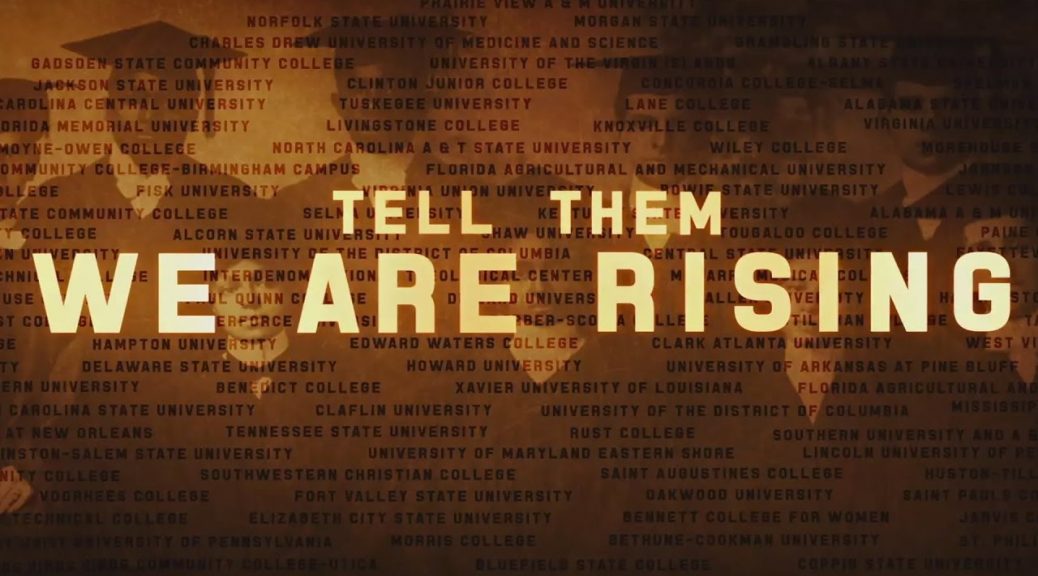
Tennessee State University and other local HBCUs join State to highlight history and students’ rise to success

NASHVILLE, Tenn. (TSU News Service) – When Sydnie Davis was pondering what higher education institution to attend after graduating from high school, the Nashville native concluded she wanted an HBCU experience – a Big Blue one.

“When I got here, I fell in love,” says Davis, a fifth generation TSU Tiger now in her junior year. “I saw what my family had seen the many generations before me. I feel I’ve been able to succeed like no other, and the family atmosphere and love you feel on campus is overwhelmingly positive. HBCUS are one of the last safe havens for African American students.”

Davis is among thousands of students across the country who each year attend historically black colleges or universities rather than predominantly white institutions. Their reasons will be part of a discussion on Monday, Feb. 26, that will take place before the showing of the PBS documentary, “Tell Them We Are Rising: The Story of Black Colleges and Universities,” which shares the history and impact of HBCUs.

The event is at 6:30 p.m. in TSU’s Performing Arts Center and is sponsored by TSU, Fisk and the Tennessee Higher Education Commission. The documentary first aired nationwide on PBS on Feb. 19 and will be available on local public broadcasting stations through March 22.

“Tell Them We Are Rising is a compelling documentary and gives an in-depth look at the need and establishment of historically black colleges and universities for people of color,” says Tennessee State University President Glenda Glover.  “TSU, like other HBCUs, has been, and remains, a cradle for black achievement that all of America should proudly embrace.”

Dr. Glover says she’s proud of the contributions the institution and other HBCUs have made, and continue to make, to society.

 “Through our doors have passed some of the country’s most notable and successful individuals, with outstanding contributions to the nation, and the world. Among these have been scientists, engineers, doctors, educators, entertainers, business people, sports legends, and the list goes on. Regardless of the challenges HBCUs may face, our institutions will always rise up, and strive to produce the very best.”

Founded in 1912 as the Agricultural and Industrial Normal School for Negroes, Tennessee State University today is a comprehensive, urban, coeducational, land-grant institution serving students from all across the globe. From 247 students who began their academic career on June 19, 1912, the University has more than 8,000 students on two locations—the 500-acre main campus and the downtown Avon Williams campus. TSU has earned a top-20 ranking for Historically Black Colleges and Universities according to U.S. News and World Report, and rated as one of the top universities in the country by Washington Monthly for social mobility, research and community service.

The University is recognized as a Carnegie Doctoral/Research institution and offers 38 bachelor’s degrees, 25 master’s degrees and seven doctoral degrees. It also boasts an outstanding athletics and sports legacy with 40 Olympic medals, and has produced outstanding graduates who are impacting the world in science, research, the arts, theater and many other areas.

TSU mass communications major Tramon Jones says TSU’s esteemed alumni, like media mogul Oprah Winfrey, Olympic gold medalist Wilma Rudolph and NFL Hall of Famer Richard Dent, were part of his attraction to the university.

“When I saw that, I knew TSU was the place for me,” says Jones, a junior from Columbia, Tennessee.

Andrianna Johnson, a TSU psychology major who will be graduating in May, says she’s glad she attended an HBCU, especially TSU.

“TSU has been one amazing experience,” says the Chicago native. “The love, the support, the activism that happen within the community around TSU is also amazing. That’s definitely a highlight of coming to Tennessee State.”

HBCUs have a history dating back to 1837, but most of them began as Freedmen’s schools after 1864, and grew to some 240 schools, colleges, and universities. Some 119 were eligible for collegiate accreditation by 1929. Today, there are about 100 accredited HBCUs – and their impact is felt nationwide, historians say.

“Without the HBCUs, thousands of highly educated college graduates will not be produced in the U.S.,” says Dr. Bobby Lovett, a nationally recognized historian and former TSU history professor.

Dr. Learotha Williams, an associate professor of history at TSU who will be a panelist at Monday’s event, agrees.

“HBCUs … produce the vast majority of the professional class,” says Williams. “Doctors, lawyers, professors, engineers. If you search their economic background, you’ll see that in some way or another they were affiliated with an HBCU, either as an undergrad, or via graduate school.”

Department of Media Relations

Tennessee State University
3500 John Merritt Boulevard
Nashville, Tennessee 37209
615.963.5331

About Tennessee State University

With more than 8,000 students, Tennessee State University is Nashville’s only public university, and is a comprehensive, urban, co-educational, land-grant university offering 38 bachelor’s degree programs, 25 master’s degree programs and seven doctoral degrees. TSU has earned a top 20 ranking for Historically Black Colleges and Universities according to U.S. News and World Report, and rated as one of the top universities in the country by Washington Monthly for social mobility, research and community service. Founded in 1912, Tennessee State University celebrated 100 years in Nashville during 2012. Visit the University online at tnstate.edu.
TSU First to Host NSF Day in Nashville

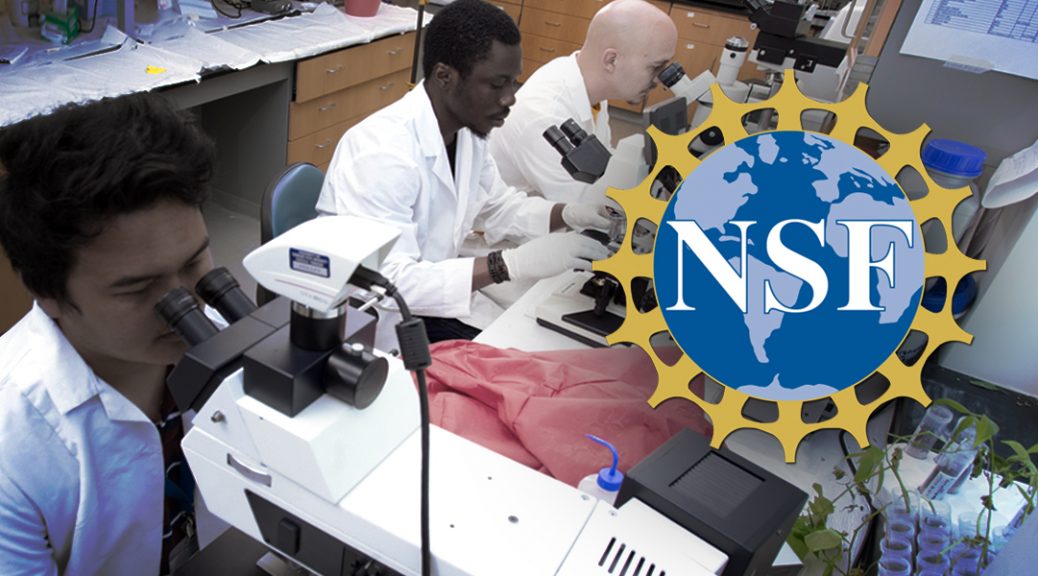
NASHVILLE, Tenn. (TSU News Service) – Science, engineering and education researchers will have a unique opportunity to gain insight about how to secure research funding from the National Science Foundation (NSF) at a workshop on February 22 at Tennessee State University.

The daylong workshop, dubbed NSF Day, will include discussions about how to submit fundable proposals, as well as discipline-specific breakout sessions featuring NSF representatives. This is the first time NSF Day is being hosted in Nashville.

“We are excited to bring an NSF Day to Tennessee State University,” said Holly Brown, NSF Lead for the TSU NSF Day. “Not only do these events provide a phenomenal opportunity for us to share vital information on our proposal and merit review processes, we are able to engage with some of the brightest minds in science and engineering.”

Robert Turner, senior mechanical engineering major

One student who has benefited from TSU’s partnership with NSF is Robert Turner, a senior mechanical engineering major from Nashville, Tennessee. Turner said working on an NSF funded research project has enhanced his experience at TSU in many ways.

“It has given me a perspective on what I would like to do for graduate school,” he said. “It is also exposing me to different technologies that I wouldn’t necessarily get exposed to throughout my undergraduate curriculum.”

After graduation, Turner plans to pursue a graduate degree in material science. He said working with Dr. Frances Williams, associate dean for Graduate Studies and Research in the College of Engineering, has helped him expand his breadth of knowledge and given him the opportunity to network within the field of engineering.

“Dean (Williams) has always been helpful to me by setting me up with the right opportunities and helping me whenever I needed it,” he said. “The other researcher assigned to the project, Dr. Yury Barnakov, has also been helpful, as well as the graduate student that I am working with.”

John Barfield, TSU director of engagement and visibility in the Division of Research and Institutional Advancement, said students are the primary beneficiaries when universities receive research funding.

“Research projects train students to use innovative and new techniques,” he said. “They aid them in becoming accepted to internships, and graduate and medical schools. Research becomes paid jobs and scholarships for students, both of which increase student retention and matriculation rates.”

The NSF is the federal agency created by Congress in 1950 “to promote the progress of science; to advance national health, prosperity, and welfare; and to secure the national defense,” according to the foundation’s website. NSF supports fundamental research in science, engineering and education across all disciplines.

Dr. Marie Hammond, TSU professor of psychology and principal investigator for two NSF grants currently funded at the university, said her research is geared toward constructing a framework for a theory of African American STEM career development.

Dr. Marie Hammond, TSU associate professor of psychology in the College of Education

Hammond said that she, along with a team of other researches at TSU, are attempting to increase the ability of African Americans to commit to and manage their STEM careers to ensure that they have the greatest likelihood of persisting to graduation and into the next phase of their STEM careers.

“The reason this research is so important is because the STEM workforce is primarily made up of Caucasian males.,” Hammond said.  “Think about what we are missing with only 5% of African Americans spread out across all the STEM fields.  What are we missing that African American men and women would pick up on to help improve healthcare, safety and our living environments.”

Hammond has secured close to $2.5 million in funding from NSF during her career at TSU, which has allowed her to hire a total of almost 50 graduate assistants. Currently, she has nine graduate assistants who aid with research, as well as four undergraduate students who collect data.

Nicholas Kovach, research specialist in the TSU Division of Research and Institutional Advancement, said the university secured more than $2 million from NSF in the last fiscal year. He said NSF representatives will be on hand all day to answer questions and personally engage in discussions with attendees.

“This is a rare opportunity,” he said. “The National Science Foundation holds only a few of these workshops each year, at different institutions across the country, and they are coming here to our campus.”

NSF Day provides background on the foundation, its mission, and priorities. Program managers and staff give overviews on proposal writing, programs that fall within and across NSF’s seven scientific and engineering directorates, and NSF’s merit review process.

Presale admission tickets are available on the TSU Research and Sponsored Programs website:  http://www.tnstate.edu/research/. Admission includes parking on the main campus with a shuttle service downtown, breakfast, lunch, and light snacks throughout the day.

For additional information about the NSF Day program, visit www.nsf.gov/nsfdays


Department of Media Relations

Tennessee State University
3500 John Merritt Boulevard
Nashville, Tennessee 37209
615.963.5331

About Tennessee State University

With more than 8,000 students, Tennessee State University is Nashville’s only public university, and is a comprehensive, urban, co-educational, land-grant university offering 38 bachelor’s degree programs, 25 master’s degree programs and seven doctoral degrees. TSU has earned a top 20 ranking for Historically Black Colleges and Universities according to U.S. News and World Report, and rated as one of the top universities in the country by Washington Monthly for social mobility, research and community service. Founded in 1912, Tennessee State University celebrated 100 years in Nashville during 2012. Visit the University online at tnstate.edu.

Unflagging commitment: Tennessee State University student pursues dreams through Aristocrat of Bands

Courtesy: The Tennessean

During her first two years in the Tennessee State University band, Deprea Crane lived off campus — on the other side of Nashville — a two-hour city bus ride away.

She couldn’t afford otherwise.

Deprea Crane (Tennessean Photo)

So on the mornings of flag corp pre-drills, she would get up at 3 a.m. to catch a pair of buses from beyond the airport to school.

And after late-night practice, she would again endure the long bus ride that would put her home around 1 a.m.

But she never missed a rehearsal. And she never fretted the sleeplessness.

Band, to her, is one of the best things in life.

“I just love doing it,” Crane gushes, her caramel-colored eyes brightening. “I love performing.”

On Saturday, Jan. 27, Crane and TSU’s Aristocrat of Bands performed in one of the most prestigious events of the year as part of the Honda Battle of the Bands in Atlanta.

‘Exciting and humbling’

The annual live showcase was created to celebrate and support the excellence of college marching bands at historically black colleges and universities (HBCUs).

On Jan. 27 Crane took part in the Honda Battle of the Bands Invitational. (Tennessean Photo)

“The Honda Battle of the Bands is basically a showcase to allow people to see the top eight black college bands in the country,” says Dr. Reginald McDonald, TSU’s band director. “There’s no placement in regards to first, second or third. By being selected you’ve won.”

Each year, eight bands are selected from across the country to perform. The high-stepping, drum-thundering theatrics and music become a show-stopping event for thousands of spectators.

At one point during its performance, the Aristocrat of Bands spelled out “OPRAH” — who received a degree in Mass Communication from TSU and has provided scholarships for students at her alma mater.

“Everyone in the building, please give it up for Tennessee State University alum Miss Oprah Winfrey,” the announcer said over the band. “O, are you running for president in 2020?”

Being chosen for the Honda Battle of the Bands means rigorous practice schedules that must be juggled with class and homework demands.

But the reward, for many of the marching Aristocrats, goes beyond the field on which they play.

Every school participating in the Honda Battle of the Bands receives a $20,000 grant. At TSU, which will mark its eighth appearance at the event, that money goes to further support its music education program.

“Several kids in the band are currently here at TSU because of that commitment,” says McDonald. “It’s refreshing and exciting and humbling to me as a band director.”

For Crane, it’s personal.

Making music a visual experience 

Crane is paying her own way through college.

A Nashville native, the business information systems major is a member of the Honors College. She holds a 3.6 grade point average and has made the dean’s list each semester.

She will graduate this spring, a year early.

And every bit of her schooling has been funded through state and school scholarships.

That includes support from the Battle of the Bands grant. In fact, this year she is able to live on campus because of that aid.

But her schedule is still grueling.

Last semester she had three night classes. This semester she has more. That means taking a shuttle to TSU’s downtown campus and then hopping back on that same bus to the main campus — and then sprinting to band practice.

When she rushes in just after 7 p.m., her book bag slung over her shoulder, she’s already missed an hour. She quickly has to catch up on changes in choreography, learning new moves and new positioning.

But as she swings the silver pole of her big blue flag, artfully weaving it behind her back and tossing it in circles above her head, she doesn’t stress. She smiles.

This is her happy place.

And the whips and ripples from the blue cloth she flings are her favorite type of band accompaniment.

“We show visually what the music is saying,” she says. “In a band, you have to be very attuned with what you hear, but for us, we are able to show it.”

The White House, Atlanta and more

These students get a lot to show for it.

In 2016, the band performed on the White House lawn at a reception honoring the opening of the National Museum of African American History and Culture.

President Barack Obama and Michelle Obama were there that day, as were music icon Quincy Jones, former basketball star Kobe Bryant and actor Samuel L. Jackson, to name a few.

“Being a part of this band has opened up so many avenues for me,” Crane says. “And has opened up my eyes to so many things.

“We went to the White House. That’s not something you can just say that you did because you went to college. That’s an experience because you were a part of a prestigious unit, a band.

“We all do this together, we all work hard together, that way we can all benefit together.”

It’s all about unity

And every appearance at the Honda Battle of the Bands means performing with the top programs among HBCU bands in America.

“Any time you have something of that caliber it brings out your best,” McDonald says.

For Crane, the showcase — which is more like a talent show than a competition — is about unity.

“You get to connect with other people that enjoy something as much as you do,” she says. “To come to college and choose to do band, you have to have a lot of dedication and really love something like this to be a part of it.

“To find people who are like-minded, that is absolutely wonderful.”

And worth every bus ride.

Department of Media Relations

Tennessee State University
3500 John Merritt Boulevard
Nashville, Tennessee 37209
615.963.5331

About Tennessee State University

With more than 8,000 students, Tennessee State University is Nashville’s only public university, and is a comprehensive, urban, co-educational, land-grant university offering 38 bachelor’s degree programs, 25 master’s degree programs and seven doctoral degrees. TSU has earned a top 20 ranking for Historically Black Colleges and Universities according to U.S. News and World Report, and rated as one of the top universities in the country by Washington Monthly for social mobility, research and community service. Founded in 1912, Tennessee State University celebrated 100 years in Nashville during 2012. Visit the University online at tnstate.edu.


TSU takes on state opioid epidemic, will use nasal spray to prevent deaths

 NASHVILLE, Tenn. (TSU News Service) – Tennessee State University has joined the fight to address the state’s opioid epidemic. The university recently implemented a new overdose prevention program to stop deaths associated with misuse and addiction.

Dr. Wendelyn Inman

Under the initiative, certified TSU police officers will be able to administer NARCAN Nasal Spray, a prescription medicine used for the treatment of an opioid emergency, such as an overdose. The initiative is in conjunction with Nashville Prevention, a division of the Tennessee Department of Mental Health and Substance Abuse Services.

“Our goal at the TSU Police Department is to minimize the likelihood that someone on our campus dies from an overdose of opiates,” said Aerin Washington, TSUPD’s crime prevention officer. “We want to be on the cutting edge of this movement as we strive to serve the community in every aspect that we can.”

Opioids are a class of drugs that include the illicit drug heroin, as well as the licit prescription pain relievers oxycodone, hydrocodone, codeine, morphine, fentanyl and others.

Of the 20.5 million Americans 12 or older that had a substance use disorder in 2015, two million had a substance use disorder involving prescription pain relievers and 591,000 had a disorder involving heroin, according to the American Society of Addiction Medicine.

TSU health experts say the university’s overdose prevention program falls in line with other preventive measures being used nationally to address the opioid crisis.

“This is one of the safe and effective methods of overdose prevention that is saving lives and supporting addiction recovery,” said Dr. Wendelyn Inman, associate professor of public health, healthcare administration and health services at TSU.

Dr. Charles Brown

“As first responders on TSU’s campus, trained officers can be the difference between a fatal outcome and a survivor.”

Earlier this week, Tennessee Gov. Bill Haslam announced an aggressive and comprehensive plan to end the opioid epidemic in Tennessee by focusing on three major components: prevention, treatment and law enforcement. Called TN Together, the plan includes providing every Tennessee state trooper with naloxone (NARCAN) for the emergency treatment of opioid overdose.

Dr. Charles Brown, also an assistant professor in public health at TSU, said the opioid epidemic is impacting people from all walks of life.

“It’s a drug that’s just not impacting the poor, but it’s also impacting the middle class and the healthy class as well,” he said. “It’s very important to understand the abuse from that standpoint. It can happen to anyone.”

In Tennessee, roughly 300,000 people are misusing drugs and about 82,000 of them are addicted, according to the Department of Mental Health and Substance Abuse Services.  The opioid problem claimed 1,186 lives in Tennessee through overdoses in 2016, which amounts to 17.8 people per 100,000, the state Department of Health says.

For more information about TN Together, including help for those suffering from addiction and other available resources, visit https://www.tn.gov/opioids.


Department of Media Relations

Tennessee State University
3500 John Merritt Boulevard
Nashville, Tennessee 37209
615.963.5331

About Tennessee State University

With more than 8,000 students, Tennessee State University is Nashville’s only public university, and is a comprehensive, urban, co-educational, land-grant university offering 38 bachelor’s degree programs, 25 master’s degree programs and seven doctoral degrees. TSU has earned a top 20 ranking for Historically Black Colleges and Universities according to U.S. News and World Report, and rated as one of the top universities in the country by Washington Monthly for social mobility, research and community service. Founded in 1912, Tennessee State University celebrated 100 years in Nashville during 2012. Visit the University online at tnstate.edu.

Getahn Ward Remembered For Excellence, Community Service and Dedication To Students

NASHVILLE, Tenn. (TSU News Service) – Nashville’s most prominent journalists, as well as residents from Middle Tennessee, around the nation and the world, gathered in north Nashville Friday night to celebrate the life of journalist, professor and community leader Getahn Moses Ward.

Ward, who taught journalism as an adjunct professor at Tennessee State University, died Dec. 16 after a brief illness. He was 45 years old.

Varying emotions filled the high-spirited event as family members, coworkers and friends shared heartfelt testimonies in the crowded sanctuary of Born Again Church where Ward served as a deacon.

“He was a man of peace,” said Born Again Church Elder Jerome Brown.  “He was always busy, but he always did it from a place of peace.”

Described by Nashville Mayor Megan Barry as “the hardest-working reporter in Nashville,” Ward migrated from his native Liberia to Nashville in the early 90s, enrolling at TSU where he quickly rose to become editor-in-chief of the university’s student newspaper, The Meter.  He worked as a reporter with the Nashville Banner before it closed in 1997, and then served as a business reporter with The Tennessean beginning in 1998 until his death.

NewsChannel 5 weatherman and “Talk of the Town” co-host Lelan Statom said Ward’s passing is a reminder that “we need to celebrate life.”  Statom, who serves as the treasurer of the Nashville Chapter of the National Association of Black Journalists, worked for years alongside Ward, who served as the organization’s longtime parliamentarian.

“Just last month we asked him if he had an interest in being interim president,” said Statom.  “He politely declined on that because he knew where his passion was.  His passion wasn’t necessarily to be at the top of the chart for the organization.  It was to help students, which is something he did by serving as the chair of the scholarship committee for us.”

Since Ward’s death, TSU, The Tennessean, the Gannett Foundation and NABJ have partnered to create a scholarship in Ward’s name that will benefit aspiring journalists. The new scholarship is the first endowed scholarship in the history of the TSU Department of Communications. Organizers have already raised more than $30,000 with the goal of raising $50,000.

“It is a great way to honor the life of someone who gave back so much to the Nashville Community,” Statom said.

Individuals who would like to give to the scholarship fund should write a check to Tennessee State University, 3500 John A. Merritt Blvd., Nashville, TN, 37209-1561. Online donations can be made at bit.ly/getahnward.


Department of Media Relations

Tennessee State University
3500 John Merritt Boulevard
Nashville, Tennessee 37209
615.963.5331

About Tennessee State University

With more than 8,000 students, Tennessee State University is Nashville’s only public university, and is a comprehensive, urban, co-educational, land-grant university offering 38 bachelor’s degree programs, 25 master’s degree programs and seven doctoral degrees. TSU has earned a top 20 ranking for Historically Black Colleges and Universities according to U.S. News and World Report, and rated as one of the top universities in the country by Washington Monthly for social mobility, research and community service. Founded in 1912, Tennessee State University celebrated 100 years in Nashville during 2012. Visit the University online at tnstate.edu.

TSU, faith community, city officials begin New Year with 6th Annual Presidential Prayer Service

NASHVILLE, Tenn. (TSU News Service) – Tennessee State University and the Nashville faith-based community began the New Year with a morning of prayer during the 6th Annual Presidential Prayer Service on Wednesday.

Mayor Megan Barry. (photo by John Cross, TSU Media Relations)

The service was held at Jefferson Street Missionary Baptist Church in Nashville, Tennessee. TSU President Glenda Glover was the keynote speaker.

“As we start another semester, another year at TSU, we start with prayer, with thanks,” Glover said. “I am truly thankful that God has blessed me to lead such a marvelous university. I thank you for your prayers, and for embracing and supporting TSU; and for supporting me as your president.”

Faith-based leaders of various denominations from across Metro Nashville participated on the program or were in attendance, including gospel legend and TSU alum Dr. Bobby Jones, and community activist and pastor Bishop Joseph Walker III.

Others in attendance were Nashville Mayor Megan Barry, as well as other city and state officials, including State Reps. Harold Love, Jr. and Brenda Gilmore, and Councilwoman Sharon Hurt.

“It is so wonderful to be here, because today we’re celebrating Dr. Glover, and also recognizing the incredible power that TSU has in our community,” said Mayor Barry. “You make Nashville better, stronger, more just, more equitable. And you are producing graduates every day that are ready to serve and lead, including several who are on my staff, and several who work in metro government.”

TSU honor students Chris Buford, II and Breanna Brown participate in prayer service. (photo by John Cross, TSU Media Relations)

Jefferson Street Church senior pastor Aaron Marble, who succeeds community activist James Thomas, said he’s glad to be collaborating with TSU and plans to continue the tradition.

“TSU has strong ties to the Nashville community, and so does Jefferson Street,” Marble says. “So uniting the university, the church and the community, is just awesome.”

The service was followed by a breakfast in the lower auditorium of the church that was open to the public.


Department of Media Relations

Tennessee State University
3500 John Merritt Boulevard
Nashville, Tennessee 37209
615.963.5331

About Tennessee State University

With more than 8,000 students, Tennessee State University is Nashville’s only public university, and is a comprehensive, urban, co-educational, land-grant university offering 38 bachelor’s degree programs, 25 master’s degree programs and seven doctoral degrees. TSU has earned a top 20 ranking for Historically Black Colleges and Universities according to U.S. News and World Report, and rated as one of the top universities in the country by Washington Monthly for social mobility, research and community service. Founded in 1912, Tennessee State University celebrated 100 years in Nashville during 2012. Visit the University online at tnstate.edu.

Colleague, friend remembers TSU alum and adjunct professor Getahn Ward

By Dr. Karen Brown Dunlap

Getahn Ward

Getahn Ward’s life crisscrossed mine for over 20 years, causing me to think of him as my best student that I never taught.

It all started at Tennessee State University.

Ward came to TSU as a student from Liberia shorty after I left the faculty to teach in Florida. He soon became editor of the TSU student newspaper, The Meter. I had been Meter adviser for a decade. We began to hear of each other and he sought me out for advice.

His career moved to reporting for the Nashville Banner, then business reporter for The Tennessean. Mine moved to the University of South Florida in Tampa then the Poynter Institute in St. Petersburg, Florida, an international school for professional journalists. I rose from Poynter faculty to dean then president.

During that time, Ward attended programs at Poynter twice and we talked. I admired his quiet smarts in making connections and getting things done, his instincts for helping others and his passion for journalism.

When I retired from Poynter in 2014, I returned to Nashville and taught a class or two each semester at TSU. Ward was my colleague. He taught an early morning journalism class before going to The Tennessean, so we talked teaching techniques and resources. He was energetic, creative and willing to share with me and with students and to seek my advice.

I resumed membership at Nashville’s Born Again Church, and found Getahn servicing as usher and deacon. He led an annual cultural day of short speeches, food, dance and other expressions of the nations represented by members. He and his committee put young people out front and upheld two of Born Again’s values: expressions of the arts in worship and excellence in all things.

Most Sunday’s after church Getahn and I spotted each other in the lobby and talked in the driveway. He gave me updates on the local chapter of the National Association of Black Journalists since I was back and forth to Tampa. We talked about family, school, and the news, especially his stories.

Ward’s business reporting exemplified the journalism I championed at Poynter.

He was on top of changes in a fast-growing Nashville. He broke the news, but also brought context and completeness. Reading his work was a daily treat.

I got a call Saturday from my friend, Sandra Long Weaver, an NABJ founder, TSU adjunct and current adviser to The Meter. She told me of Getahn’s death following a brief illness.

The shock and the sorrow are deep for me and for others, but so is the inspiration. He touched so many. He achieved so much. What are we doing with our lives?

May we savor the time we had with Getahn; may we grow from his example.  May he be long remembered and loved.

To read more about Getahn Ward, visit http://www.tennessean.com/story/money/2017/12/16/getahn-ward-longtime-tennessean-reporter-beloved-community-leader-dies-45/958327001/


TSU Health Experts Urge Tennesseans To Get Flu Shot

NASHVILLE, Tenn. (TSU News Service) – If you’re still unsure about whether or not to get a flu shot, Tennessee State University researchers have a message for you: Stop thinking about it, and get one. This comes as the National Centers for Disease Control (CDC) observes the first week in December as National Influenza Week.

Dr. Wendelyn Inman, TSU Associate Professor of Public Health, Healthcare Administration and Health Sciences

“Most people think you get the flu, you just get sick, and you recover,” said Dr. Wendelyn Inman, TSU associate professor of Public Health, Healthcare Administration and Health Sciences. “That is true if you are relatively healthy. But it is important for us to be sure that, like in any group of people, most people are immunized so that the frail and fragile are not exposed to the flu and die from it.”

According to the CDC, people at high risk of developing flu-related complications include children younger than 5 (but especially children younger than 2 years old), adults 65 years of age and older, pregnant women, residents of nursing homes and other long-term care facilities, and American Indians and Alaskan Natives.

One popular misconception, said Inman, who teaches Epidemiology on the undergraduate and graduate levels, is that individuals actually contract the flu as a result of taking the vaccination. She said suspicions about taking the flu shot persist because many people remain unaware that infectious diseases have an incubation period.

“Let’s say you went to a cocktail party, and you got exposed. Then you go to the pharmacist to get the prescription on Monday, and you have flu symptoms on Friday. You’re going to think you got the flu from the flu shot,” she said. “Well, actually you didn’t get the flu from getting the flu shot. You got it from someone else. It’s the timing.”

Dr. Ivan Davis, TSU director of Student Health Services

Dr. Ivan Davis, TSU director of Student Health Services, said one of the most dangerous consequences of not getting a flu shot is that it can lead to pneumonia. He said even if the vaccination does not have the same strain of the virus, taking it usually makes the illness much milder. Instead of being five to seven days and protracted, he said the illness is “shortened by several days.”

Davis said it takes about four weeks for the immunity from the shot to “kick-in.” He said people are unable to get the illness from the vaccine because it contains a dead virus.

“The vaccination uses the genome, the nucleus of the virus, so there is no way you can get the flu from the shot. It’s not a live virus,” he said. “Even if you come down with a different strain, it has been proven that because you have had the shot, your chance of having a real bad infection is lessened.”

The exact timing and duration of flu season can vary extending from October through May, but most peak between December and February, according to the CDC. In 2005, the agency designated the first full week in December to highlight the importance of continuing flu vaccination through the holiday season and beyond. This year the center recommends that only injectable flu vaccines be given.

Inman said the changing nature of the virus is another reason she stresses taking the flu shot.

“To me it’s too big of a gamble to take for your health because each year the virus changes and the severity is different. No one can verify that this is a mild version and not the killer version that swept through in 1918,” she added.

According to health experts, in 1918 the flu pandemic killed an estimated 500 million people worldwide including about 675,000 Americans.

“Any immunization keeps anything you catch from being as bad because it jumpstarts your immune system,” Inman said. “You’ll be safer and less sorry if you get the flu shot.”

The Tennessee Department of Health reports that the highest number of flu cases in Tennessee are typically recorded in January and February each year.

For more information about where you can get the flu shot in Tennessee, visit http://tn.gov/health/topic/localdepartments.


Department of Media Relations

Tennessee State University
3500 John Merritt Boulevard
Nashville, Tennessee 37209
615.963.5331

About Tennessee State University

With more than 8,000 students, Tennessee State University is Nashville’s only public university, and is a comprehensive, urban, co-educational, land-grant university offering 38 bachelor’s degree programs, 25 master’s degree programs and seven doctoral degrees. TSU has earned a top 20 ranking for Historically Black Colleges and Universities according to U.S. News and World Report, and rated as one of the top universities in the country by Washington Monthly for social mobility, research and community service. Founded in 1912, Tennessee State University celebrated 100 years in Nashville during 2012. Visit the University online at tnstate.edu.

Holidays bring increased demand for goat meat, TSU experts say

NASHVILLE, Tenn. (TSU News Service) – Looking for an alternative to turkey this Thanksgiving? Try goat meat.

Goat meat dish at Jamaicaway restaurant in Nashville. (photo by Courtney Buggs, TSU Public Relations)

Experts in Tennessee State University’s College of Agriculture say the holidays, particularly Thanksgiving and Christmas, bring increased demand for goat meat – a national area of research for TSU.

“Just like turkey, goat is kind of a holiday meat, for a lot of different cultures,” said Dr. Richard Browning, lead goat researcher at TSU, which has received nearly half a million dollars from the U.S. Department of Agriculture to expand its research on goat meat production.

As the holiday season kicks in, immigrants, in particular, flock to butcher shops, meatpacking plants, farms, and any place that provides goat meat, according to researchers.

Ouida Bradshaw owns two Jamaicaway restaurants in Nashville and has had goat meat on her menu since she opened 14 years ago. She said this time of the year she starts to see an increase in orders for goat meat.

“There’s definitely an increase around Thanksgiving and Christmas,” Bradshaw said. “People put in special orders. They use it as one of their entrees for their Thanksgiving and Christmas celebration.”

Besides being tasty, goat meat enthusiasts say it’s a healthier choice of meat because its naturally lean, meaning it is much lower in saturated fat and cholesterol, having a naturally higher HDL count (the good cholesterol) and a naturally low LDL count (the bad kind of cholesterol), according to the National Kiko Registry. It is also lower in calories than other meats, like beef, and is easier to digest.

Whether it’s goat meat, turkey or any other holiday fixings, Dr. Sandria Godwin, a family and consumer science professor at TSU, said people should make sure they properly handle food.

For instance, if turkey is the main entrée, then she said a thermometer should be used to make sure it’s fully cooked – usually 165 degrees Fahrenheit.

But probably most important, Godwin said, is to make sure that leftovers don’t remain out over two hours.

“Some people leave food out and eat it throughout the day, but that’s not safe,” said Godwin, whose Human Sciences Department at TSU has received a $2.4 million USDA grant to study poultry and food safety.

“It should go in the refrigerator within two hours.”

For more information about TSU’s Human Sciences Department and food safety, visit http://www.tnstate.edu/familyscience/foodnutrition.aspx

For more information about TSU’s goat research, visit http://www.tnstate.edu/faculty/rbrowning/


Department of Media Relations

Tennessee State University
3500 John Merritt Boulevard
Nashville, Tennessee 37209
615.963.5331

About Tennessee State University

With more than 8,000 students, Tennessee State University is Nashville’s only public university, and is a comprehensive, urban, co-educational, land-grant university offering 38 bachelor’s degree programs, 25 master’s degree programs and seven doctoral degrees. TSU has earned a top 20 ranking for Historically Black Colleges and Universities according to U.S. News and World Report, and rated as one of the top universities in the country by Washington Monthly for social mobility, research and community service. Founded in 1912, Tennessee State University celebrated 100 years in Nashville during 2012. Visit the University online at tnstate.edu.


TSU Research May Prevent Unnecessary Hurricane Evacuations

A team of engineers, including Dr. Muhammad K. Akbar, Tennessee State University Assistant Professor of Mechanical and Manufacturing Engineering, is diligently working to more accurately predict which areas should be evacuated during threats of hurricanes.

Dr. Muhammad K. Akbar

Akbar said when people are asked to evacuate unnecessarily, they lose trust and become less likely to evacuate when future warnings are given. Accurate surge storm predictions save lives and properties through timely evacuations, he said.

The team is developing a new implicit solver-based storm surge model called CaMEL(Computation and Modeling Engineering Laboratory).  It is being evaluated against ADCIRC (ADvanced CIRCulation Model), an established storm surge model.  Akbar said that while the ADCIRC model is faster, CaMEL is more stable.

Storm surge, according to the National Weather Service, is the change in the water level that is due to the presence of the storm. Storm surges are caused primarily by the strong winds in a hurricane or tropical storm.

Akbar said they input meteorological data approximately every six hours to forecast the hurricane’s wind track and strength for the entire duration through its landfall and beyond. Their results help emergency management to communicate with first responders which areas should be evacuated.

“Our goal is to merge the good features of both models in one to improve our prediction capabilities,” he said.  Scientists are working on different fronts to understand the complex physics of hurricanes and evolution of storm surges.

“Understanding the underlying physics will help us to improve the prediction capabilities of hurricane storm surges,” Akbar said.  “An accurate storm surge model could save millions of dollars by preventing unnecessary evacuations.”

A native of Bangladesh, Akbar cites the devastation caused by the Bhola Cyclone that killed nearly 500,000 people in his homeland in 1970, as one of the major motivations for his research.

Aided by a $209,403 grant from the National Science Foundation, Akbar also receives funding from the Department of Homeland Security and the US Army Engineer Research and Development Center.

Part of his work includes advising graduate students like Kyra Bryant, who is currently pursing a doctorate in Computer Information Systems Engineering at TSU. Bryant received the Graduate Master’s Thesis Award in February at the Tennessee Conference of Graduate Schools for her research on storm surges.

“Receiving the award is a great honor for Ms. Bryant, and all of us at Tennessee State University,” Akbar said. “It is an encouragement and motivation for us to advance the research to the next level.”

According to NOAA, the National Oceanic and Atmospheric Administration, each year, the United States averages some 10,000 thunderstorms, 5,000 floods, 1,300 tornadoes and two Atlantic hurricanes, as well as widespread droughts and wildfires. Weather, water and climate events, cause an average of approximately 650 deaths and $15 billion in damage per year and are responsible for some 90 percent of all presidentially-declared disasters.


Department of Media Relations

Tennessee State University
3500 John Merritt Boulevard
Nashville, Tennessee 37209
615.963.5331

About Tennessee State University

With more than 8,000 students, Tennessee State University is Nashville’s only public university, and is a comprehensive, urban, co-educational, land-grant university offering 38 bachelor’s degree programs, 25 master’s degree programs and seven doctoral degrees. TSU has earned a top 20 ranking for Historically Black Colleges and Universities according to U.S. News and World Report, and rated as one of the top universities in the country by Washington Monthly for social mobility, research and community service. Founded in 1912, Tennessee State University celebrated 100 years in Nashville during 2012. Visit the University online at tnstate.edu.