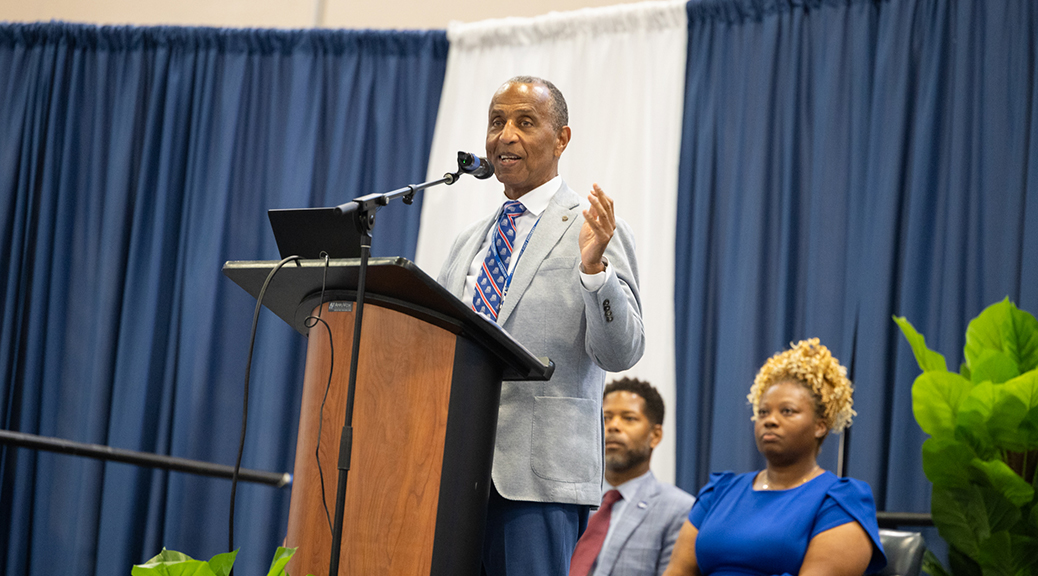
NASHVILLE, Tenn. (TSU News Service) – Tennessee State University President Dwayne Tucker held a special campus-wide address on June 2 in Kean Hall, gathering faculty and staff to outline the university’s future trajectory. Marking a little over a year since he took the helm at the institution in 2025, Tucker’s address focused on “reaffirming our shared expectations and commitment to growth and service,” emphasizing a pressing need for transformational change across university operations.
Opening his speech with the phrase, “What a difference a year makes,” Tucker painted a picture of tangible operational growth, thanking the faculty and staff for their resilience and collective efforts.
“Today, I want to revisit the vision I shared when I became president of the university,” Tucker said. “When I arrived in 2025, I outlined three priorities that would guide our work: culture, transparency, and accountability.”
Tucker detailed how the university reshaped its campus culture to prioritize student success, pointing to reimagining the graduation process, where student experience is now the focus. He also reinforced TSU’s renewed focus on customer service, announcing systems to reward good work. These include the newly instituted annual Impact Awards for exemplary employees, and a specially minted coworker appreciation coin.
On his core pillars of transparency and accountability, Tucker said, “Whether speaking with students, faculty, staff, alumni, legislators, or community partners, we must be honest about both our successes and the areas where we need improvement… Sustainable transformation requires accountability at every level.”
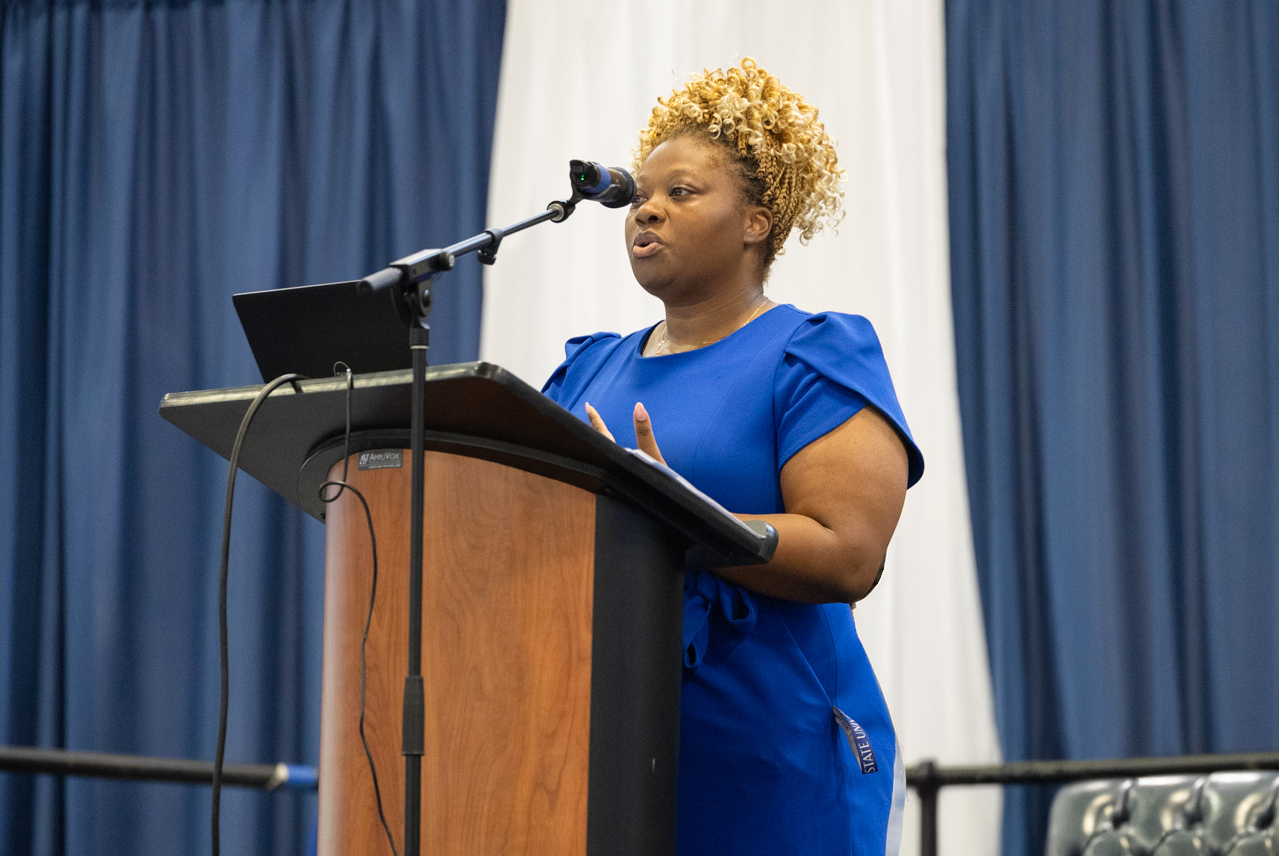
The president’s address included detailed presentations from Chief Financial Officer April Robinson, and Dr. Eric Stokes, vice president of Enrollment Management.
Robinson, who joined the university on Jan. 2, gave a candid assessment of the university’s fiscal status, aligning her presentation with the president’s mandate for open communication.

“As I stand before you today, I want to continue the theme of transparency,” Robinson said, pointing to a comprehensive financial reset launched within her first 30 days to address historical audit findings.
Robinson outlined the difficult economic realities facing the institution, noting that TSU operates in one of the state’s most expensive metropolitan areas while remaining one of its most affordable universities. To offset rising utility and operational costs, a slight tuition increase has been recommended, and is awaiting final approval, she said.
Robinson also announced major progress toward stabilizing TSU’s finances through disciplined spending and a successful Voluntary Separation Plan. The personnel program drew 43 applicants, with 40 meeting eligibility, projecting a $4.3 million payout this fiscal year but generating an estimated $4.8 million in long-term savings next year.
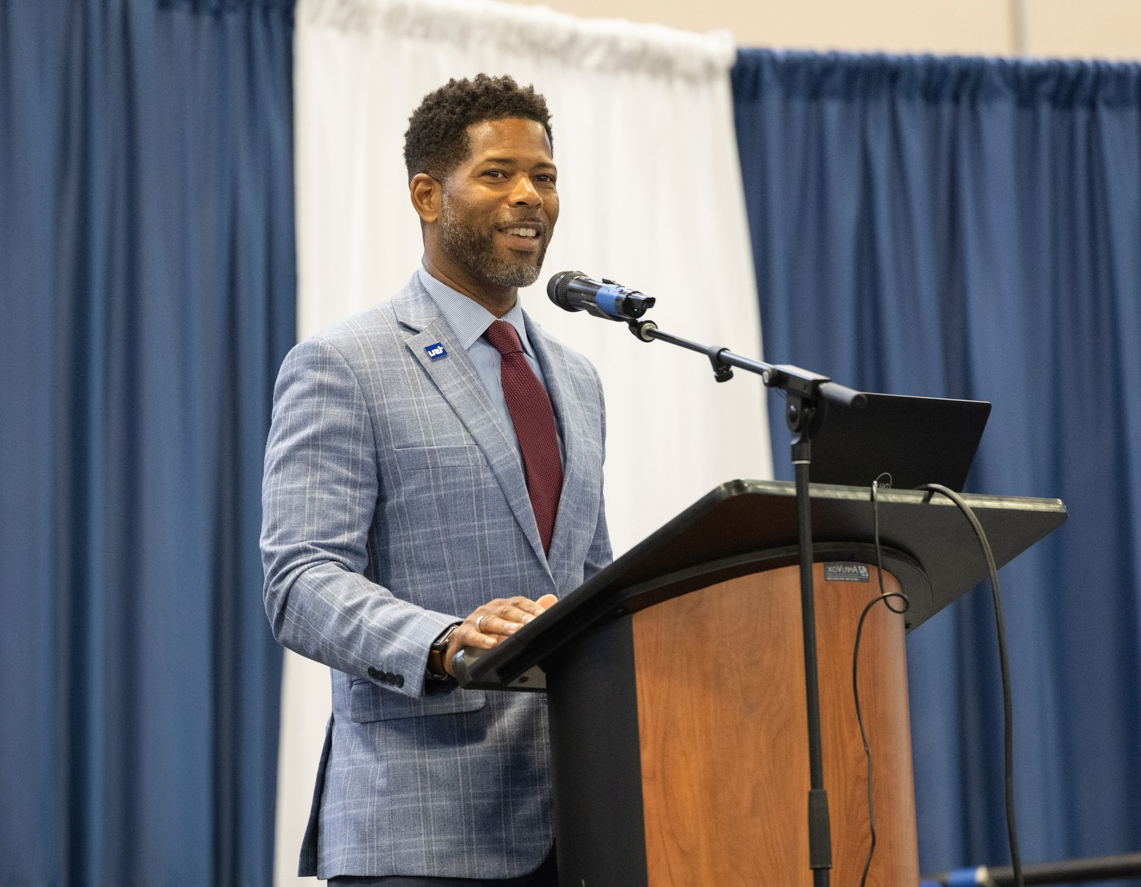
Shifting the focus, Dr. Eric Stokes shared highly optimistic news regarding the university’s upcoming recruitment cycles, invoking the Kwanzaa principle of Ujima, collective work and responsibility.
“The success we’re seeing today is the result of a community effort,” Stokes said, thanking campus staff for their roles in outreach, tours, and system management.
Stokes said that recruitment efforts are yielding massive returns. To date, 1,853 prospective students have paid enrollment deposits for the fall semester, and 1,515 have already registered for New Student Orientation, which begins its freshman sessions this week.
Supported by a successful transfer orientation and an innovative personal postcard campaign driven by academic deans, Stokes projected an incoming fall class of between 1,800 and 2,000 students if current trends hold, significantly outplacing previous enrollment numbers.
Closing his address, Tucker expressed confidence in TSU’s upward trajectory. “By aligning our fiscal responsibility with our passion for student excellence, we aren’t just stabilizing this institution, we are positioning TSU to thrive as a premier destination for higher education.” Tucker said.
Featured Photo: In a special address to faculty and staff a little over a year in office, President Dwayne Tucker revisits his priority areas – culture, transparency, and accountability – that he said would guide his vision for the university. (Photo by Aaron Grayson)
About Tennessee State University
Founded in 1912, Tennessee State University is Nashville’s only public land-grant university offering 41 bachelor’s degrees, 15 graduate certificates, 27 master’s degrees, and nine doctoral degrees. TSU’s campus spans 500 acres. The university is committed to academic excellence, providing students with a quality education in a nurturing and innovative environment that prepares them as alumni to be global leaders. Visit tnstate.edu for more details.