
By Charlie Reed
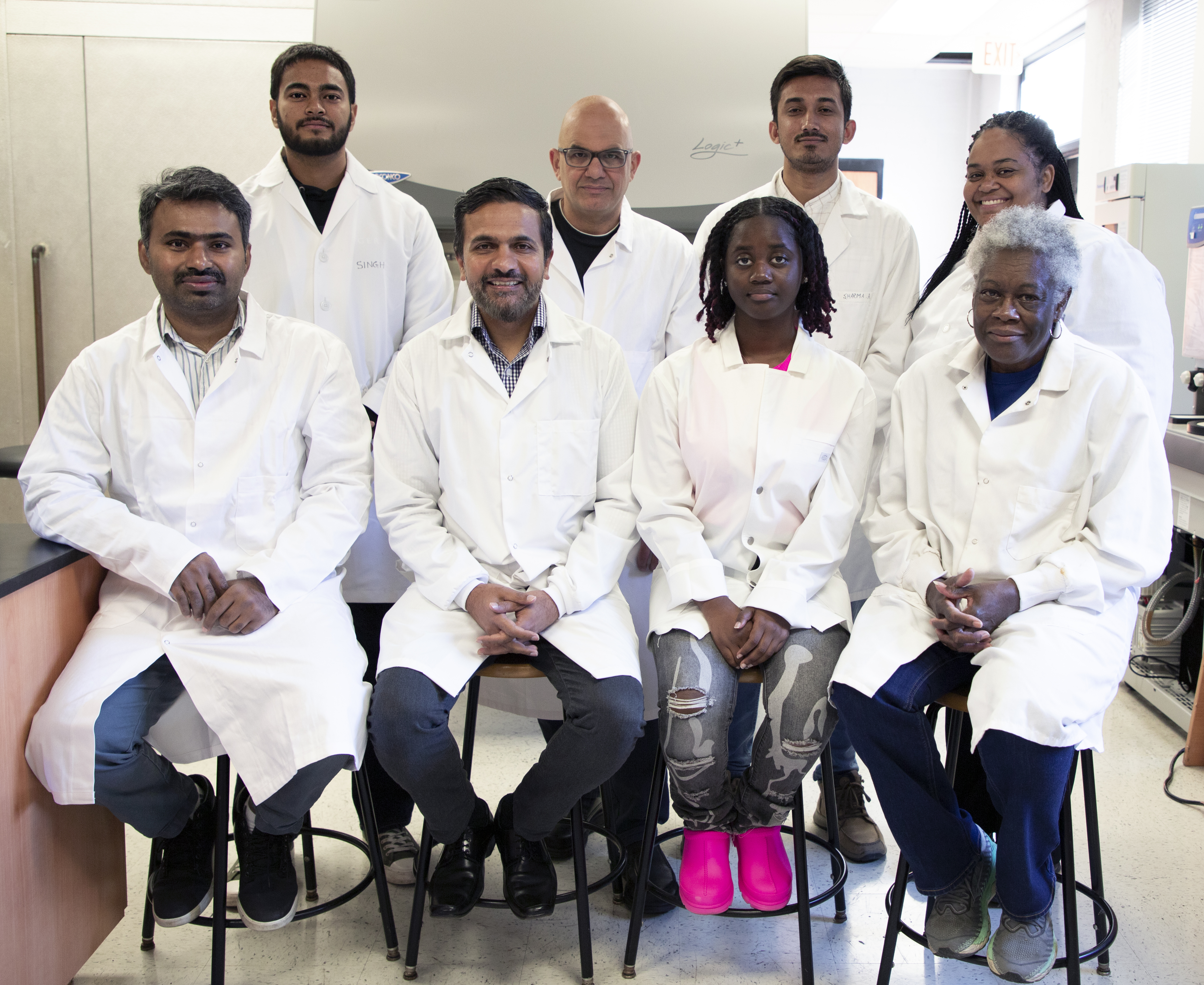
NASHVILLE, Tenn. (TSU News Service) – Tennessee State University has achieved a historic milestone in campus innovation, executing its first faculty research licensing agreement. The deal transitions a novel food-processing technology from the lab to the marketplace through FloUV Technologies, a startup co-founded by Dr. Ankit Patras, professor of food and biosystems engineering. The agreement allows FloUV to commercialize Patras’ UV-based platform, which disinfects milk, juice, and other opaque liquids without heat, preserving natural flavor, color, and nutritional value.

The breakthrough was accelerated by TSU’s Office of Research and Sponsored Programs and the Tennessee Technology Advancement Consortium (TTAC), a Launch Tennessee initiative that provides tech transfer and commercialization support to state universities. A $25,000 TTAC proof-of-concept grant in 2024 enabled Patras to build a larger prototype, while a subsequent Launch Tennessee event connected the venture with global investor SOSV, securing $200,000 in funding. Today, FloUV has commenced field testing.
“TTAC and Launch Tennessee accelerated everything,” said Patras. “They helped us scale the system, understand the market, and get in front of investors.”

As an 1890 land-grant Historically Black University, TSU boasts robust agricultural and engineering research sectors, which accounted for $30.2 million and $7.1 million, respectively, of the university’s $78.5 million in total FY2025 grants and contracts.
“Our technology transfer office is still new, and partnerships with TTAC, Launch Tennessee, and the Tennessee Department are helping us build that capacity,” said Dr. Quincy Quick, associate vice president for research and sponsored programs and TSU’s chief research officer. “The overall goal of research is supposed to be for the benefit of society. One of the primary ways we can do that is by way of commercialization.”
TSU’s momentum extends further into the state ecosystem. Two other TSU-affiliated companies, Pangea and PnTBiologicals, were recently selected for Launch Tennessee’s SBIR/STTR Matching Fund. State-supported companies have generated over $1.1 billion in economic impact since 2017. Deputy Gov. and TNECD Commissioner Stuart C. McWhorter noted that when the state invests in university research, the goal is to deliver tangible benefits for Tennesseans, whether through a new product, company, or employment opportunity. TSU’s first license underscores the importance of creating these pathways statewide, McWhorter added.
To sustain this momentum, TSU is utilizing the Tennessee Innovation Exchange (TNIX), an online catalog that connects university research directly with investors and industry partners. TSU already has nine proposals and six active sponsors on the platform.
Alancia Wicks, TSU’s director of technology transfer and innovation, leads the foundational push on campus, helping faculty navigate intellectual property and rebranding rigorous programs like NSF I-Corps into accessible innovation “boot camps” to show researchers that they belong in the commercial sphere.
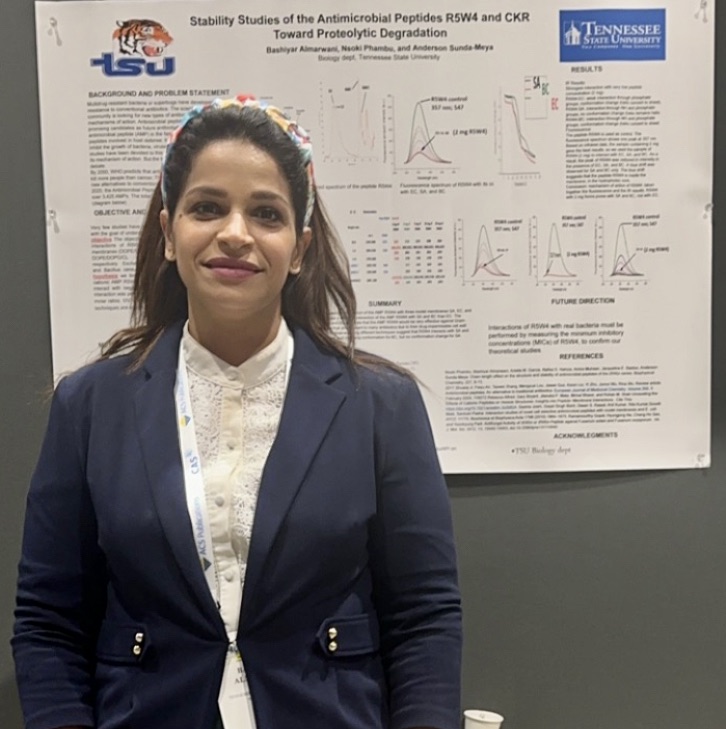
This infrastructure is already fueling a diverse research pipeline across TSU. In targeted cancer therapeutics, Dr. Bashiyar Almarwani, an adjunct biological sciences professor, is developing penetratin peptide mechanisms to deliver existing cancer drugs more precisely to target cells while sparing healthy tissue. Supported by TTAC, she recently presented her findings at the BIO International Convention. Meanwhile, in chemistry, Dr. Koen Vercruysse accidentally discovered a repeatable, sticky residue in his lab that creates melanin-like materials. Now listed on TNIX, the technology holds commercial potential for cosmetics and industrial coatings. Also, Dr. Joshua O’Hair, assistant professor of microbiology, is using a $500,000 NSF grant to study how heat-tolerant Yellowstone bacteria can ferment local school food waste into commercial lactic acid and ethanol, mitigating landfill accumulation.
By blazing this new trail, the success of FloUV Technologies is already shifting the culture of research on campus. “Dr. Patras shows what’s possible here, Quick added. “This first licensing agreement gives other researchers something concrete to point to.”
Charlie Reed is a freelance journalist.
About Tennessee State University
Founded in 1912, Tennessee State University is Nashville’s only public land-grant university offering 41 bachelor’s degrees, 15 graduate certificates, 27 master’s degrees, and nine doctoral degrees. TSU’s campus spans 500 acres. The university is committed to academic excellence, providing students with a quality education in a nurturing and innovative environment that prepares them as alumni to be global leaders. Visit tnstate.edu for more details.