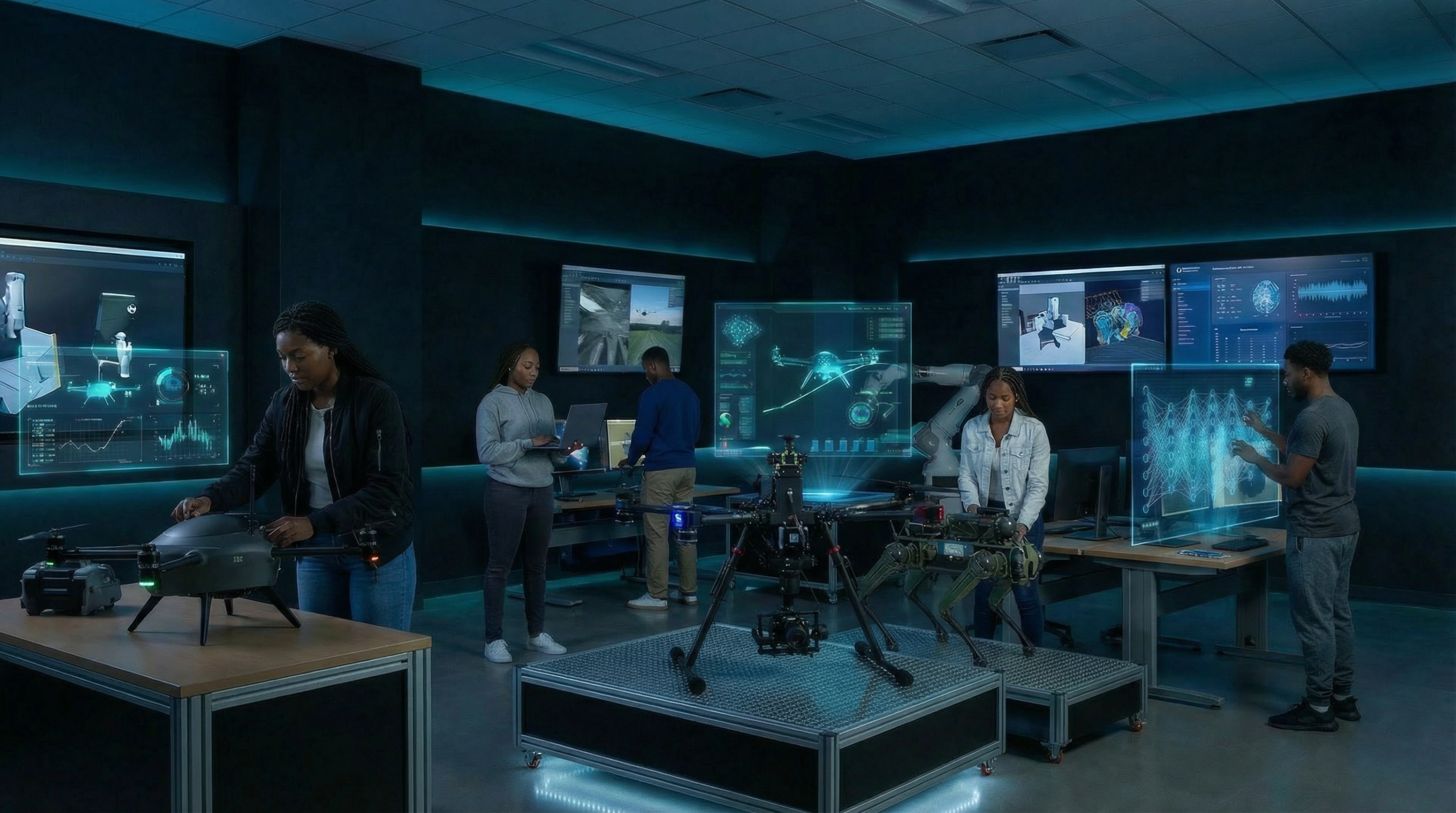
NASHVILLE, Tenn. (TSU News Service) – Tennessee State University has received a $1 million grant from the U.S. Department of War to establish a Robotics, Artificial Intelligence, Visualization, and Simulation (RAIVS) Laboratory. The initiative aims to fulfill an urgent national need by enhancing educational programs that train students in Human-Machine Teaming (HMT) skills, preparing them for key roles in a technology-driven workforce.

The RAIVS Laboratory will integrate advanced robotics and artificial intelligence into existing curricula, with the goal of equipping students with hands-on experience and essential skills necessary to thrive in a rapidly evolving technological landscape. Engineering faculty at TSU say the focus is not only on enhancing technical knowledge but also on meeting the increasing demand for professionals who can operate and maintain sophisticated systems that blend human and machine capabilities.
Dr. Charles D. McCurry, the project’s principal investigator and interim associate dean of the College of Engineering, expressed his enthusiasm for the grant. “I am incredibly thrilled about this award, which represents a significant step forward in advancing engineering education and research at Tennessee State University,” McCurry said. “This project will provide students with access to cutting-edge technology and hands-on learning experiences, fostering critical thinking and collaboration skills necessary for addressing real-world challenges. By integrating HMT concepts into our curriculum, our faculty will prepare students to excel in the evolving technological landscape and contribute to national security and workforce development.”
Students like Ipek Ishmael, a master’s student in civil engineering, are particularly excited about the impact the RAIVS Laboratory will have on their education and research opportunities.
“Conducting transportation research at TSU under Dr. Deo Chimba (Professor & Interim Chair of Civil & Architectural Engineering) has been invaluable. The support from the DoD will enable us to acquire an advanced driving simulator for our lab, marking a significant step forward in transportation engineering education,” Ishmael said. “The simulator will allow us to analyze critical traffic operations and to experience realistic driving environments, enhancing our understanding of driver interactions with roadway infrastructure.”
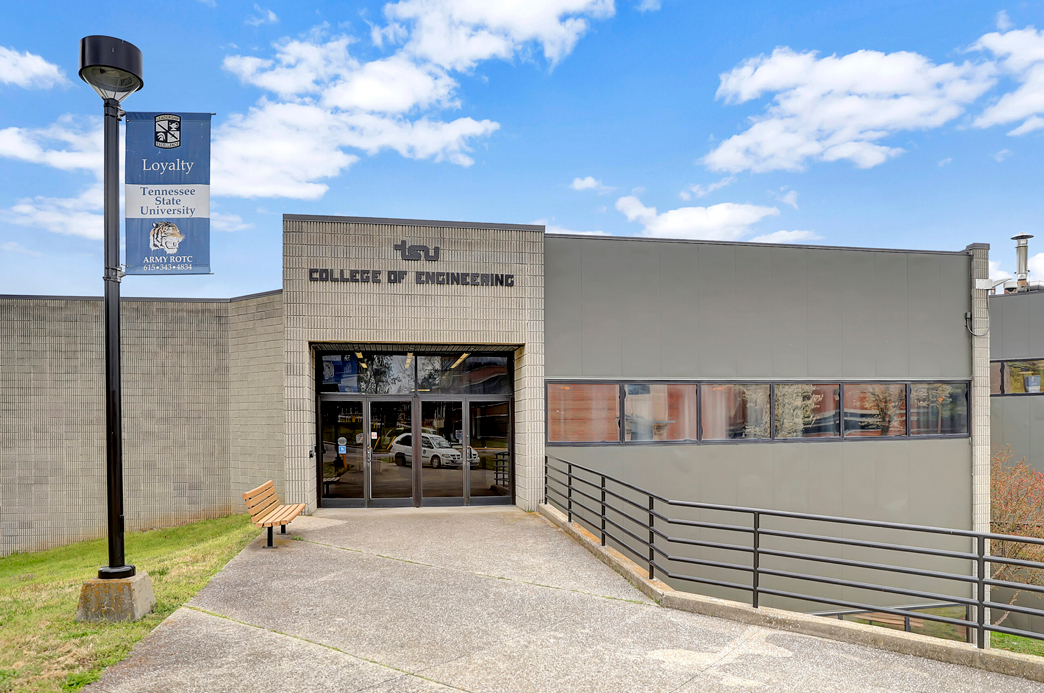
According to McCurry, the RAIVS Laboratory project will involve a collaboration among faculty in the College of Engineering – including Applied Industries and Technology, Civil and Architectural Engineering, Computer Science, Mechanical Engineering, and Electrical and Computer Engineering – and will also explore the ethical implications of AI and automation. As the expected outcome, McCurry said the lab’s advanced equipment will enhance classroom instruction and contribute significantly to faculty research activities, enabling increased productivity and improved student recruitment.
Dr. Lin Li, dean of the College of Engineering, emphasized the importance of the grant: “This funding is vital for the College of Engineering at TSU. It will enhance the infrastructure of the RAIVS Laboratory, fostering breakthroughs in robotics, AI, and visualization research. This interdisciplinary project will improve workforce training across various engineering disciplines.”
Dr. Saleh Zein-Sabatto, chair of the Department of Electrical and Computer Engineering, added, “This unique award from the DoD will have a direct, positive impact on both our graduate and undergraduate students, exposing them to state-of-the-art equipment and providing skills they need to excel in Human-Machine Teaming technology.”
Through initiatives like the RAIVS Laboratory, TSU is enhancing the quality of education and research in engineering, significantly contributing to the nation’s technology workforce and ensuring students are well-prepared to meet future challenges.
For more information about the RAIVS Laboratory and the TSU College of Engineering, visit www.tnstate.edu/engineering/
Featured Photo: The RAIVS Laboratory will equip students with hands-on experience and essential skills necessary to thrive in a rapidly evolving technological landscape. (Adrian Marcus)
About Tennessee State University
Founded in 1912, Tennessee State University is Nashville’s only public land-grant university offering 41 bachelor’s degrees, 15 graduate certificates, 27 master’s degrees, and nine doctoral degrees. TSU’s campus spans 500 acres. The university is committed to academic excellence, providing students with a quality education in a nurturing and innovative environment that prepares them as alumni to be global leaders. Visit tnstate.edu for more details.