Category Archives: FACULTY

TSU expert warns of triple threat from flu, COVID, RSV

NASHVILLE, Tenn. (TSU News Service) – The U.S. is facing a potential triple threat of flu, COVID-19, and RSV or Respiratory Syncytial Virus, and a Tennessee State University infectious disease expert is calling on individuals to get immunized, as the surest way to avoid serious illness or long-term hospitalization. 
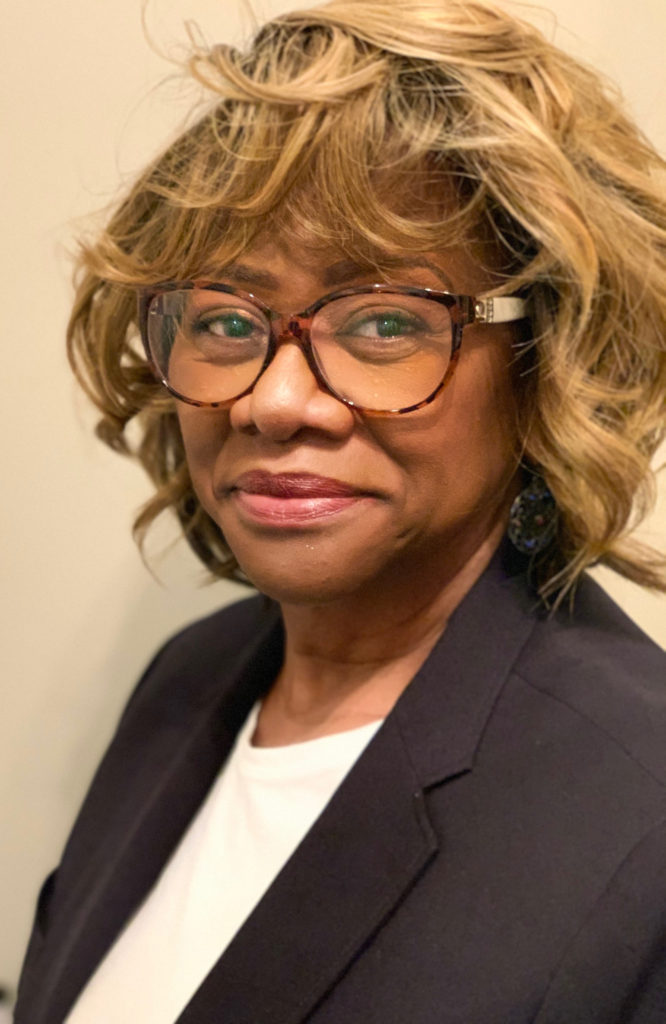
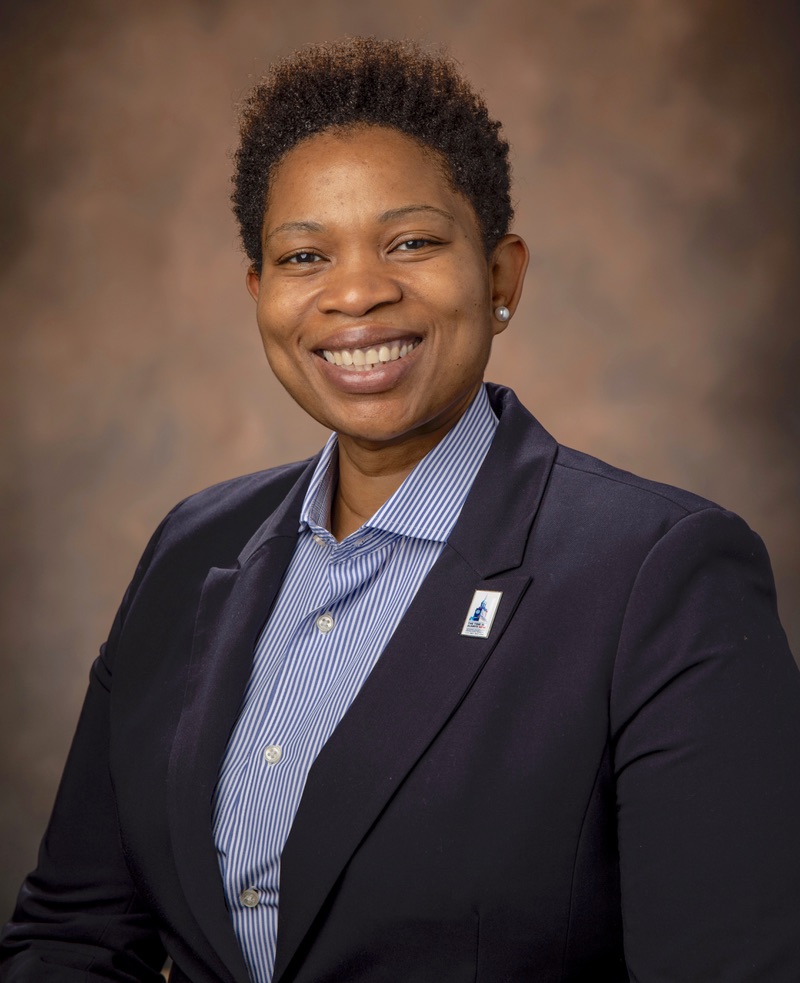
 Dr. Wendelyn Inman

 Dr. Wendelyn Inman, professor and director of the public health program in the College of Health Sciences, warns that the flu, COVID-19 and RSV are highly contagious respiratory infections caused by different viruses, with flu activity increasing in October and peaking between December and February. 

 “Get your flu shots and get vaccinated for COVID-19 as soon as possible if you already haven’t,” she cautions. “We are seeing that people who are immunized against COVID and the flu are still not in the majority of the cases that are severe and dying.” 

 Inman says before the pandemic, the United States averaged between 60,000 and 85,000 people dying every year from the flu. But with isolation techniques employed during the pandemic – masking, washing hands, social distancing – those numbers plummeted and almost disappeared.  

 “We had so few flu-related deaths. Now that we are back together, we have to remember those rates can go back up because we have people who do not get immunized for the flu, and that we are in closer contact,” says Inman, previously the chief of epidemiology for the State of Tennessee. 

Dr. Dorsha N. James

 Citing data from the Centers for Disease Control, Inman says the flu is not a grave concern in Tennessee, with the state in the ‘minimal’ category when it comes to flu levels being reported nationwide. 

 “Tennessee is not at the bottom, but we could do better,” she says. 

 At TSU, officials say precaution are in place to help minimized the potential for flu and COVID-19 spread. 

Dr. Dorsha N. James, interim medical director of Student Health Services, says there is a significant decrease in COVID-19 cases on campus – from about 7 percent a month ago to 0.1 percent now. She however, reports a slight uptick in people with upper respiratory infection, or flu symptoms. She encourages students to get their flu shots or get vaccinated for COVID-19. 

 “We are doing well on the COVID front but we are not doing well washing our hands,” James says. “We have been trying to tell students to wash their hands multiple times a day or use the hand sanitizing stations across campus. And if they have the cold, to make sure they do not cough in the air, and stay a good distance from people when they are talking to them.”

TSU offers COVID-19 vaccines on campus in collaboration with Meharry Medical College.

Kenneth A. Rolle II, president of Student Government Association, says TSU’s proactive effort is commendable.  “The university has already laid out a strategic plan for if and when the viruses (COVID, flu) make their way to campus,” says Rolle. “Although we have not seen any threats from them on campus, we are most definitely ready to expect the unexpected.”

Dr. Curtis Johnson, associate vice president and chief of staff, says most of the prevention measures from the pandemic are still in place.

“First and foremost, we want the university to remain safe and encourage and/or adopt practices protecting the health of faculty, staff, students, visitors or others,” Johnson says. 

According to the CDC, from October 1, 2021, to April 23, 2022, the United States has seen an estimated 3,200- 9,400 flu deaths reported in the preliminary flu season.


TSU part of $30 million U.S DOE investment for next generation STEM leaders

NASHVILLE, Tenn. (TSU News Service) – Tennessee State University will serve as the lead institution to promote STEM education and careers for Nashville’s HBCUs. TSU is one of 11 minority serving institutions that will share a $30 million grant from the U.S Dept. of Energy to invest in the next generation of STEM leaders. The goal is to develop highly qualified students and foster a well-trained, technically skilled, and a more inclusive workforce. 

TSU in partnership with Fisk University and Meharry Medical College were awarded $5 million in total. 

“Preparing more technically skilled students will allow TSU graduates to be more competitive in the global marketplace,” said TSU President Glenda Glover.  

TSU is serving as the lead institution of a Tennessee HBCU consortium with Meharry Medical College and Fisk University to create an education workforce pipeline for the DOE’s Environmental Management Office.

“With our efforts, this grant will provide access to internships and career opportunities that have traditionally been non-existent or very limited for the HBCU student population.”  

Dr. Quincy Quick, professor and interim assistant vice president for Research and Sponsored Programs at TSU, said this is an outstanding effort for Tennessee HBCUs. 

“Tennessee State University is serving as the lead institution of this Tennessee HBCU consortium with Meharry Medical College and Fisk University to create an education workforce pipeline for the Department of Energy’s Office of Environmental Management as part of the Minority Serving Institutions Partnership Program,” Dr. Quick said. 

“Socially, this partnership will also contribute to the DOE’s commitment to diversity, equity, and inclusion. This is an outstanding opportunity for all Tennessee HBCUs and the students we serve. Tennessee State University is honored to lead this effort.” 

Dr. Quincy Quick, professor and interim assistant vice president for Research and Sponsored Programs .

These grants are distributed by DOE’s Office of Environmental Management’s (EM) Minority Serving Institution Partnership Program (MSIPP).

U.S. Secretary of Energy Jennifer M. Granholm said leveraging the full potential of America’s best and brightest means including students from every pocket of the nation, and of all races and ethnicities. 

“DOE is following through with our previously announced commitments to MSIs to remove barriers and unlock opportunities for millions of Americans—inspiring the next generation of science and technology leaders and positioning America to lead the world in the industries of the future, from artificial intelligence and clean energy to quantum computing and advanced engineering,” Granholm said. 

By advancing the education and training of a culturally diverse workforce of scientists, engineers, and managers, MSIPP builds upon the Biden-Harris Administration’s efforts to increase the participation, leadership, and success of students from underrepresented and historically marginalized communities. 

Photo CUTLINE: TSU is serving as the lead institution of a Tennessee HBCU consortium with Meharry Medical College and Fisk University to create an education workforce pipeline for the DOE’s Environmental Management Office.  

TSU celebrates International Education Week

NASHVILLE, Tenn. (TSU News Service) – Tennessee State University’s Office of International Affairs (OIA) is celebrating International Education Week (IEW) 2022, and kicked off events Nov. 7, as students are spreading awareness about their countries and interacting with fellow students who are also studying abroad. 

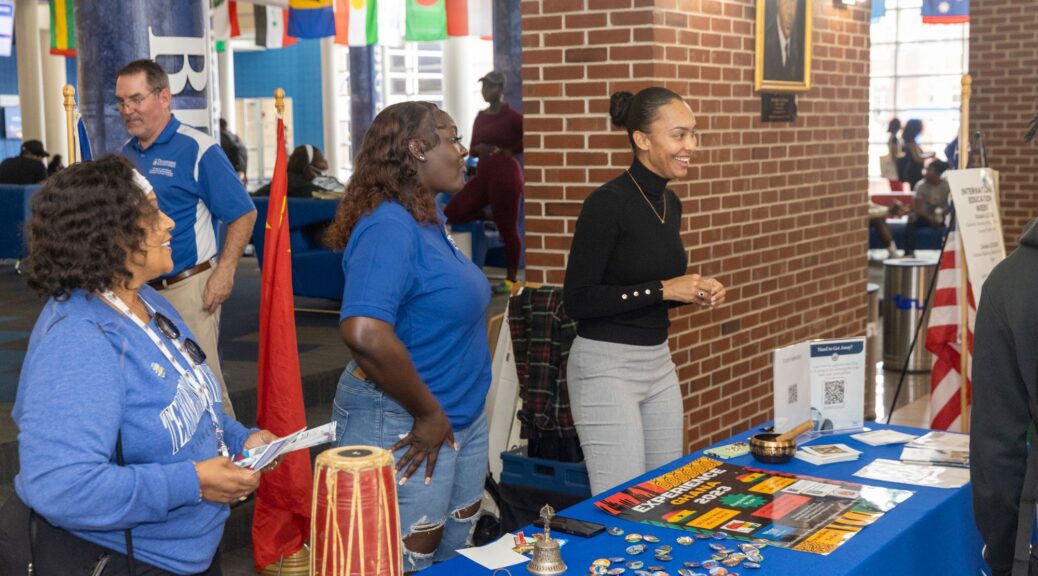
The week, which began Nov. 7 and concludes on Nov. 11, features many activities that highlight international students countries and culture, including a Cultural Sharing Day, Dance Hall Night, and Lunch-N-Learn Story Circles. The OIA even visited local HBCUs throughout the week.

Nirmal Thapa in the student center during International Education Week shows represents his country by waving a Nepal flag. (Photo by Aaron Grayson.)

Nirmal Thapa, a PHD student from Nepal, South Asia, said this is his first semester at the university and IEW has provided an inclusive environment.

“It was exciting for us,” Thapa said after participating in the weeks first event. “We had a chance to exchange ideas between different countries … a great event for the exchange of cultures.”

Thapa, who is studying agricultural sciences, said he was able to speak with another student from Nepal, along with students from all around the world.

There are over 200 international students at the university representing 40 countries across the world. (Photo by Aaron Grayson.)

Mark Anthony Brinkley, Director of the Office of International Affairs, said this is an opportunity to celebrate the benefits of international education and exchange worldwide. 

“This initiative is a joint venture between the U.S. Department of State and the U.S. Department of Education which was created to promote programs that prepare Americans for a global environment and attract future leaders from abroad to study, learn, and exchange experiences,” Brinkley said.

“We encourage all Tennessee State University students, faculty, and staff to participate in our week of events.” OIA provides leadership in advocating and promoting excellence in student services, cultural programming, collaborative partnership, and international education.

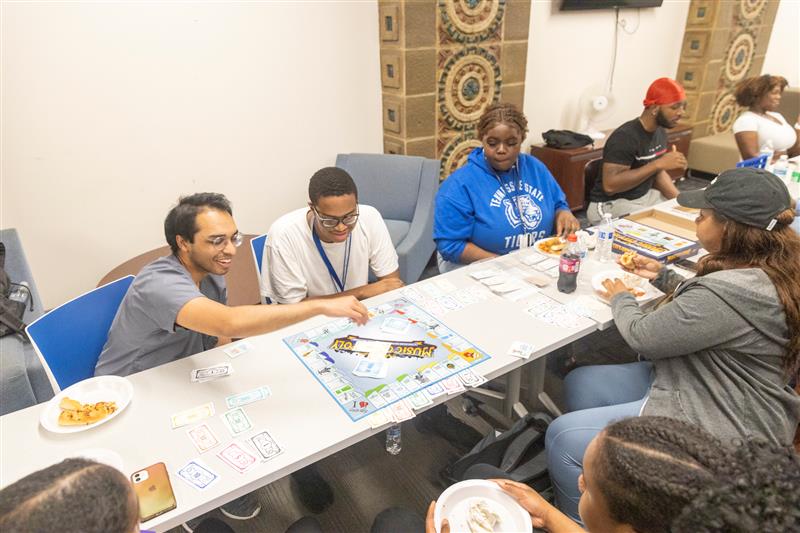
Students at game night during International Education Week 2022. (Photo by Aaron Grayson.)

There are over 200 international students at the university representing 40 countries.

OIA’s office suite provides the space needed to holistically provide international students with support. The office also has designated meditation areas where students can pray and continue to observe their culture, as well as a conference room where study abroad workshops can be held.

For the third consecutive year, TSU has been selected as a Fulbright Historically Black College and University Institutional Leader from the U.S. Department of State Bureau of Educational and Cultural Affairs (ECA). The recognition is for demonstrating exemplary work with its foreign exchange program for students, faculty and staff.

TSU in-house studio prepares Men’s Initiative program students for the music industry

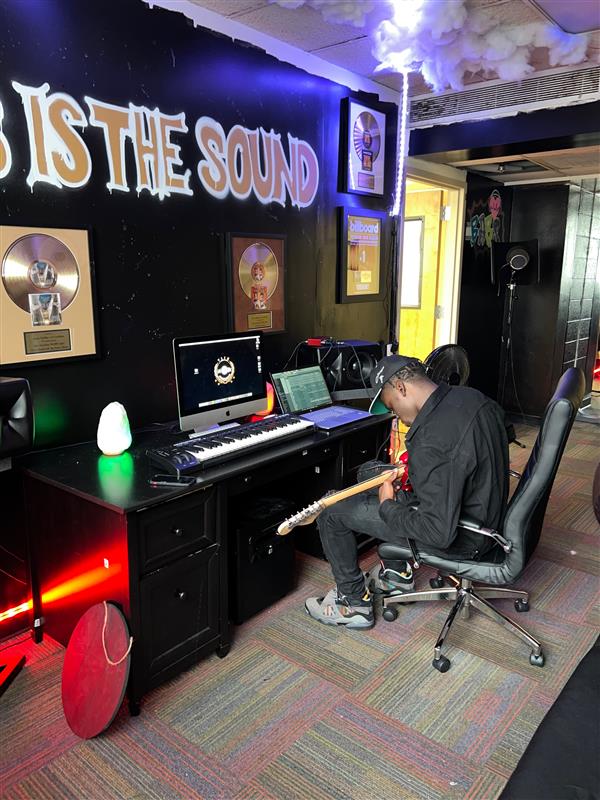
NASHVILLE, Tenn. (TSU News Service) – More space, more resources, and a better opportunity. This semester, Joshua Akhidenor spent time crafting his talent in a new music studio located on campus that he considers a safe haven.

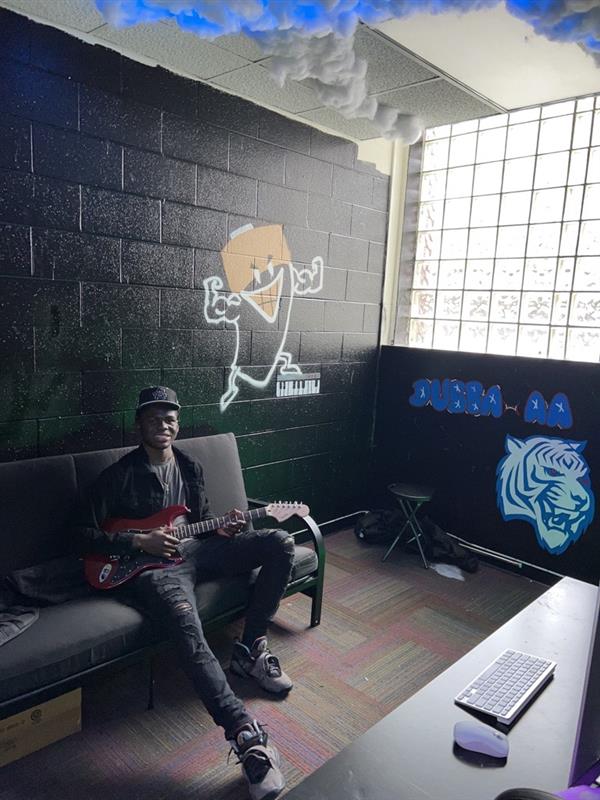
Joshua Akhidenor, also known as LilCEOJosh, practices his guitar while listening to music at TSUs campus studio. (Photo by Alexis Clark)

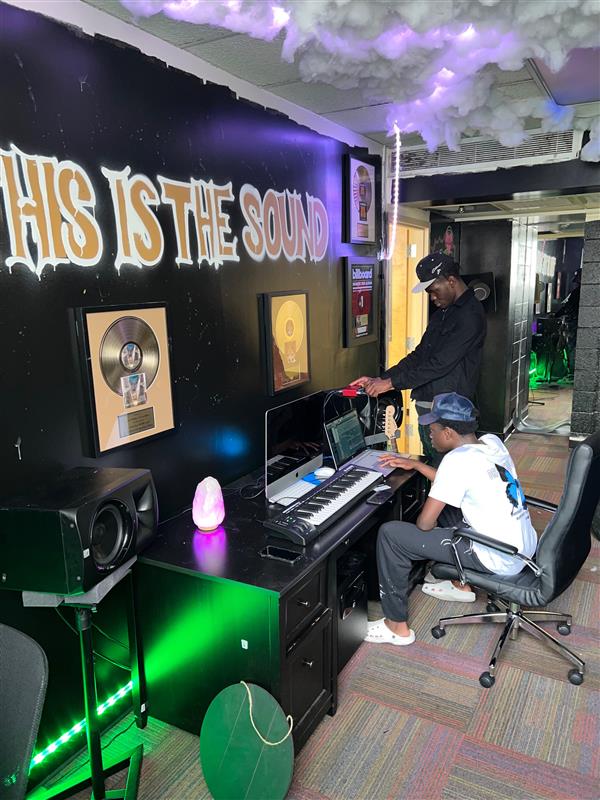
The music studio, which is accessible to members of the Men’s Initiative campus program, is fully loaded with quality equipment to engineer, record music, and produce beats. Akhidenor, a sophomore majoring in business, said he has been producing music since he was in high school, and is grateful to now have a place on campus to express his passion.

“I feel like I belong in here,” Akhidenor said as he sat in the studio. “It (the studio) helps me visualize who I can become. I came to college and took advantage of the networking opportunity.” Since his arrival at the university, Akhidenor has taught himself how to play the guitar and piano.

As many students utilize the space to break into the music industry, Hahidenor looks forward to one day owning a record label focused on finding talent from students enrolled at a HBCU.

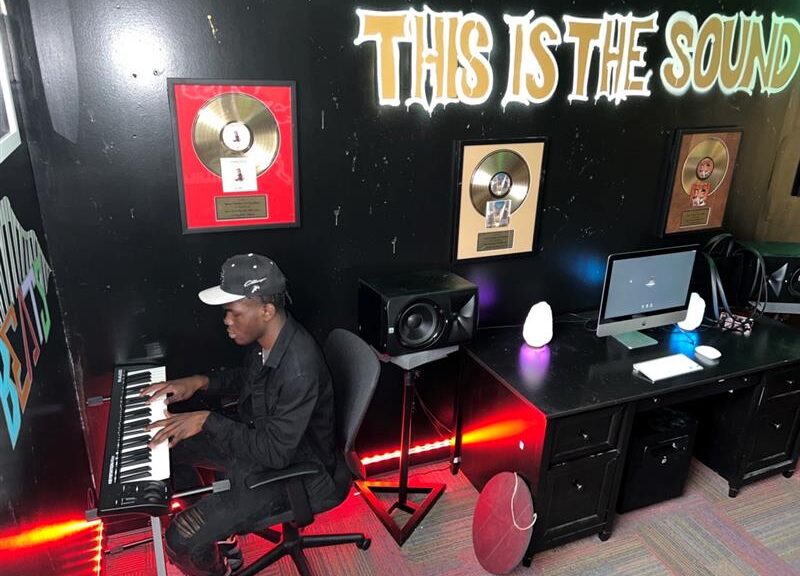
The studio, located on the ground floor of Kean Hall, is painted black with neon lights around the perimeter. On the walls are graffiti art, music plaques and awards dedicated to music phenom and TSU alum Aaron ‘DUBBA-AA’ Lockhart, who funded the studio.

TSU alum, platinum recording artist and producer Aaron ‘DUBBA-AA’ Lockhart graduated in 2016. (Photo by T Time Productions)

Lockhart, a platinum recording artist, and one of the executive producers for the Aristocrat of Bands’ gospel album The Urban Hymnal, said his efforts came about to give students studio space that he didn’t have when attending TSU.

“I wanted to give my resources and use my talents to give back to the institution that helped me become who I am today,” Lockhart said.

Joshua Akhidenor and David Nyenwe said the music studio is a safe haven to help express their passion for music. (Photo by Alexis Clark)

“I want to give the students the opportunities that they should be having on a college campus. We need something on our campus for us, by us.”

David Nyenwe, a TSU freshman majoring in business administration who also produces music, said he has not utilized the studio yet, but looks forward to the sound he can create once he does.

“A lot of people are better at music than they think, they just need the resources. So, supplying a studio for people to use, will help shed light on the talent that’s at the school,” Nyenwe said.  “I feel like this is a safe haven.”

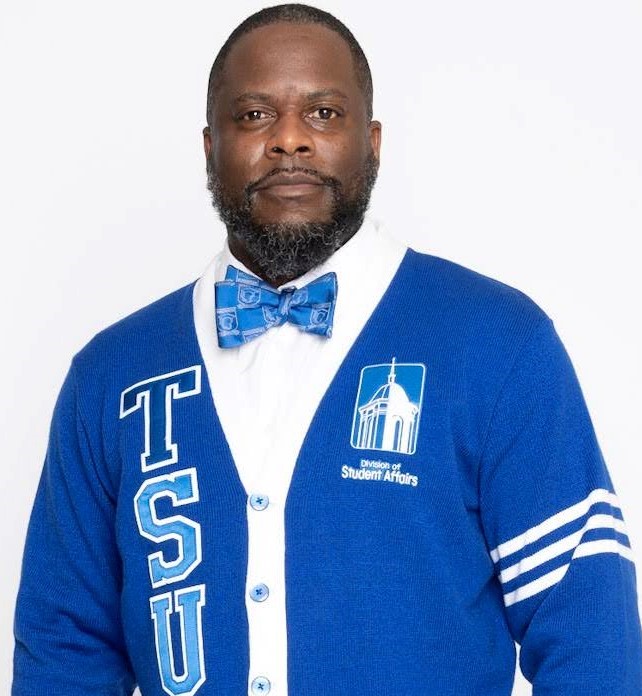
Dr. Andre Bean, director of the Men’s Initiative and interim assistant dean of student activities, said the program is all about providing support to Black male students on campus.

The Men’s Initiative currently has more than 100 members. Bean said the studio offers a great opportunity for the students to discover their hidden talents.

Dr. Andre Bean, Director of the Men’s Initiative program.

“We have to find new and innovative ways to engage the Black male students that are enrolled in higher education,” Bean said.

“And this space is open and available to our Men’s Initiative guys … to create beats and have an opportunity to tinker and toy with things of their interest.”

The studio is an engagement tool for the university. According to Bean, although the studio is for students in and or connected to the program, the university looks forward to one day opening another studio on a larger scale that will be accessible for everyone.

Joshua Akhidenor said he looks forward to breaking into the music industry and one day creating his own record label to find artist from HBCUs.

For Akhidenor, a Memphis native, who has already spent a number of hours in the facility, said it afforded him the chance to produce and “show off my talent” to Lockhart, he said.

“I appreciate the opportunity,” he added.

The Men’s Initiative mission is to plan, implement, and coordinate high-impact programming that holistically promotes persistence, academic success, and sense of belonging. The goal is to support African American/Black Male students to help them succeed each semester as they continue their studies towards graduation.

If you are interested in becoming a member of the Men’s Initiative program, email [email protected].

TSU tops in innovation, wins first place at inaugural T-Mobile ‘Unconventional’ Awards

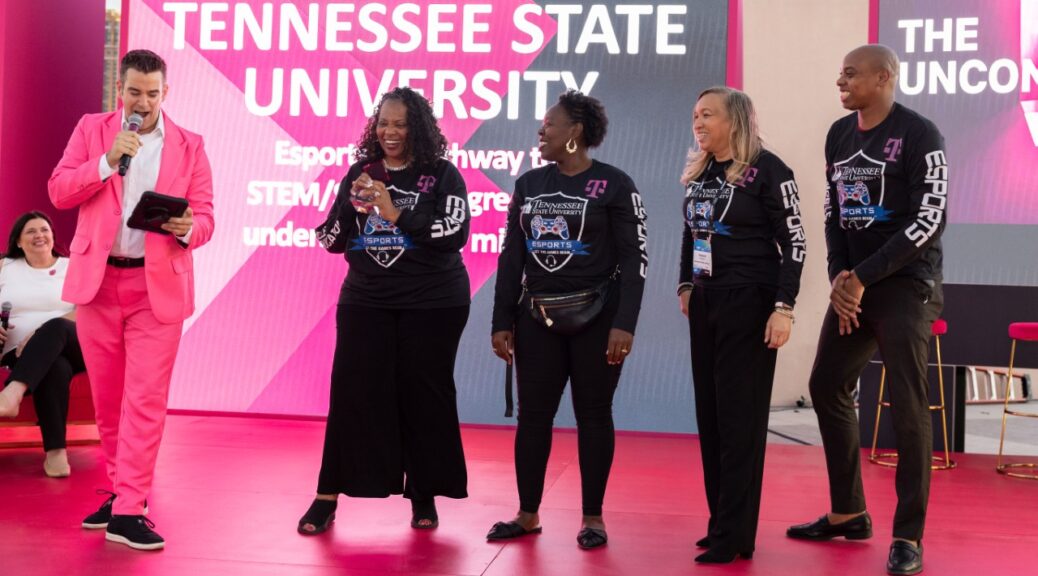
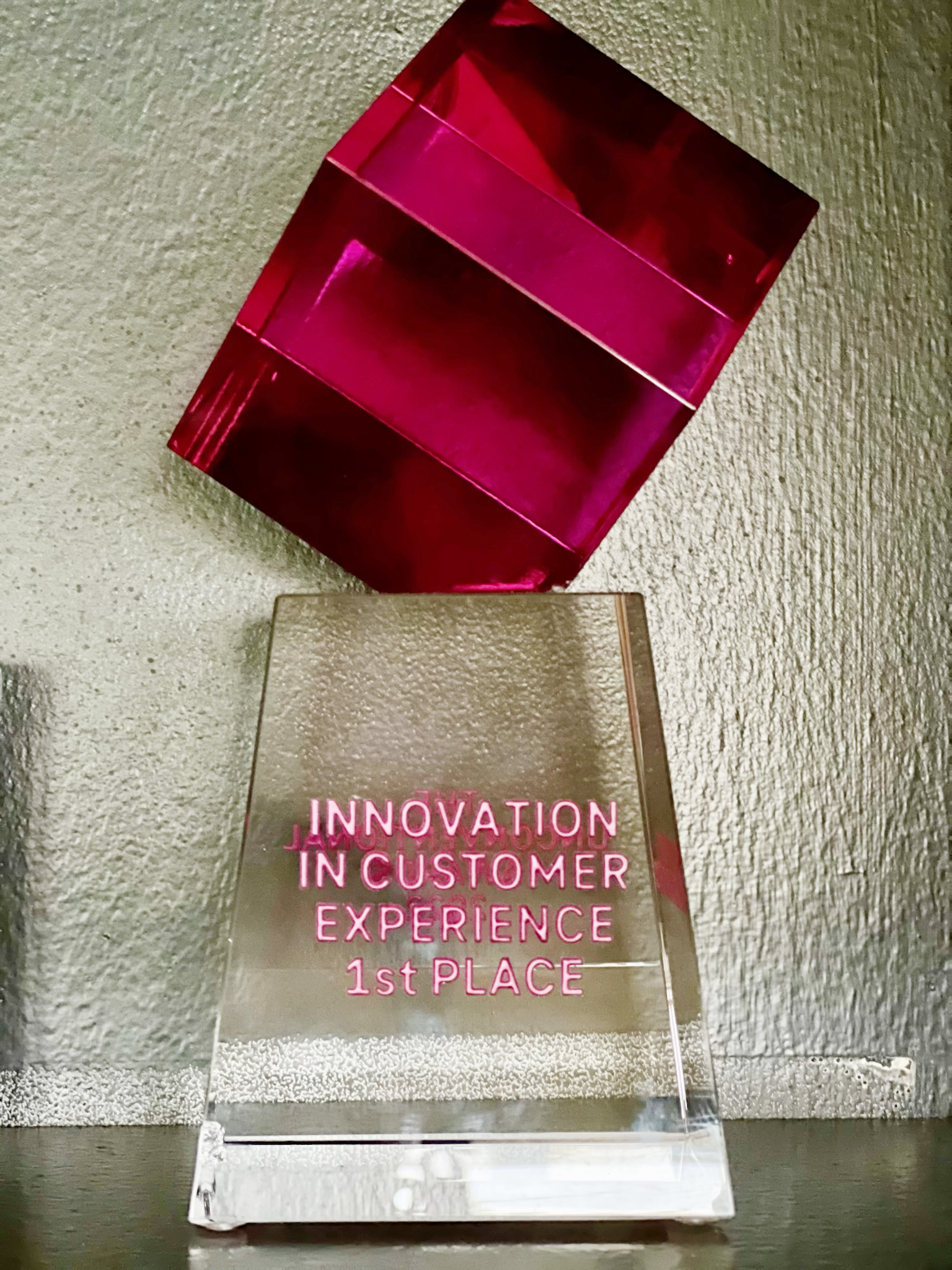
NASHVILLE, Tenn. (TSU News Service) – Tennessee State University has received a major recognition for innovation. A program developed by the university using 5G technology to recruit and retain underserved students in the STEM field, won first place in the inaugural T-Mobile “Unconventional” Awards for innovation in customer experience, at the Mobile World Congress in Nevada, Las Vegas. The TSU academic eSports program, geared toward creating pathways for students from gaming to STEM, took the top honor in the first-ever awards created to recognize and celebrate T-Mobile’s business customers who dare to innovate. 

TSU beat out several top institutions and companies to win first place for innovation. (Submitted photo)

As a first-place winner, TSU was awarded a $25,000 in in-kind donation to the university’s favorite charity. 

“Being chosen by T-Mobile for Business as an Unconventional Award winner offers TSU more validation for its innovative and decidedly creative approach to addressing the issue of diversity in STEM fields,” says Dr. Robbie Melton, associate vice president for SMART Global Technology Innovation Strategies. 

“This award highlights the educational value of using 5G technology to support eSports as a pathway to STEM programs and careers. Students are rewarded, not punished, for their passion for playing video games.”  

TSU’s T-Mobile recognition in innovation comes in just the second semester of the opening of its Academic eSports Center, which aims to use video games as a crucial steppingstone toward STEM careers. 

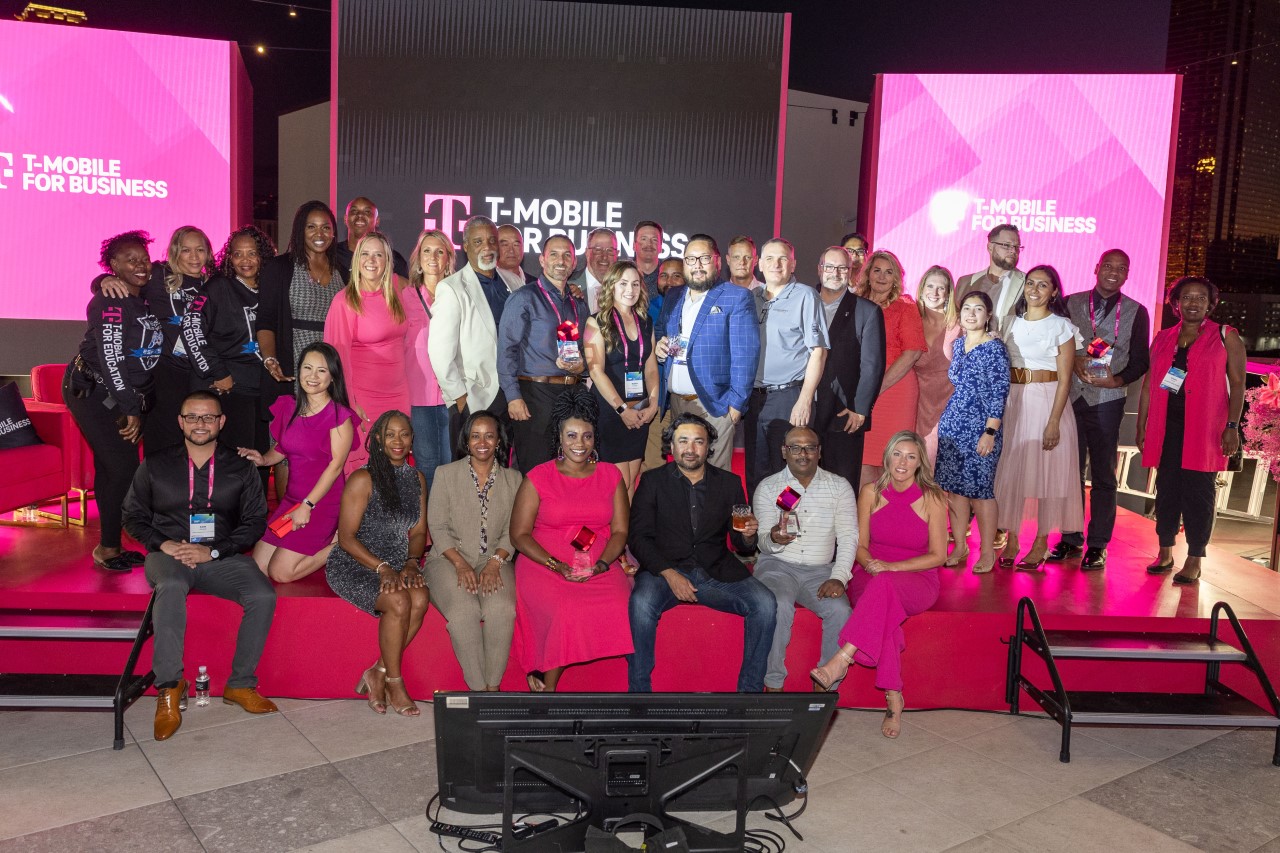
T-Mobile celebrates the winning teams at its inaugural ‘Unconventional” Awards ceremony. TSU’s team members appear far left. (Submitted photo)

Egypt Garrett, a competitive eSports gamer and freshman computer science major, says it is no surprise that TSU won the award.  

“I am very excited about TSU winning this award,” says Garrett, of Alexandria, Virginia, who is a member of one of the six teams at the university. “Personally, being at an HBCU, and someone one who enjoys technology and playing, having good gaming is having the best specs (PCs), the best wi-fi, and the center has those. I am so grateful for all the investment that went into it.” 

T-Mobile’s President for Business Group Callie Field says the Unconventional Awards was created to “honor organizations driving business and education forward with original thinking.”

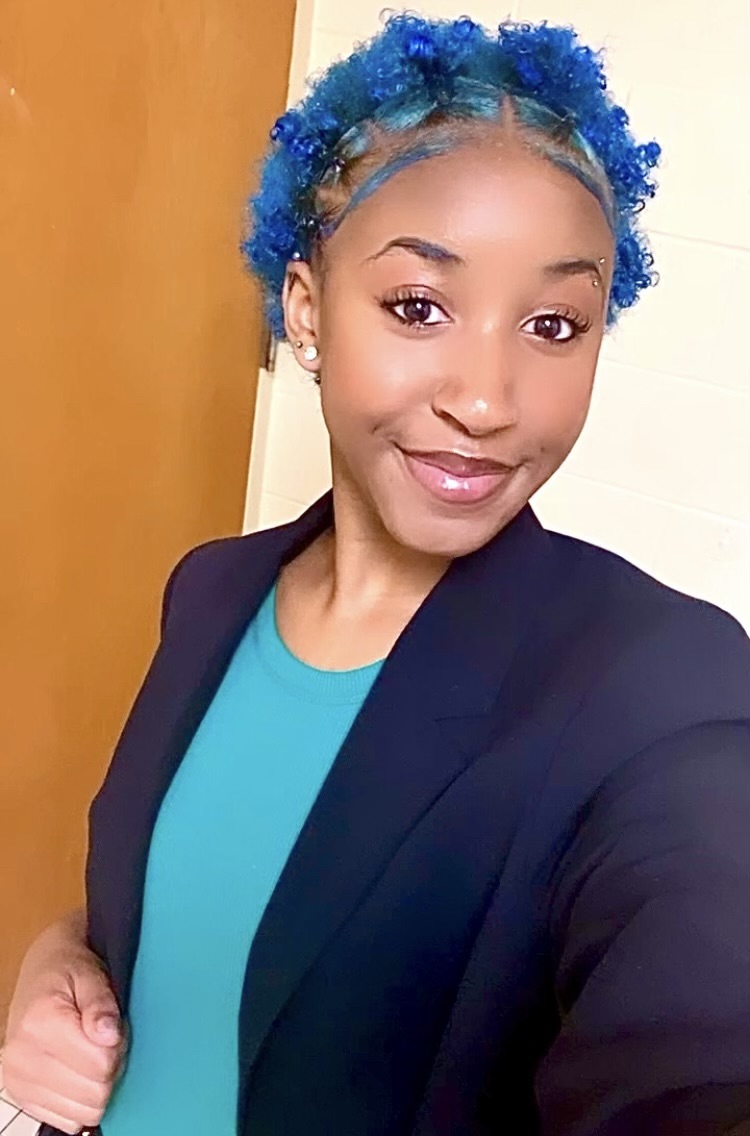
Egypt Garrett, a competitive eSports gamer and freshman computer science major, says she is not surprised TSU won the award. (Submitted photo)

“We know a thing or two about innovating and transforming how work gets done, and we wanted to recognize that same spirit in the customers we support,” says Field. “This is more than just celebrating the winners’ accomplishments — it’s also a tribute to being bold and taking risks to advance business and education.” 

Melton, who is also interim provost and vice president for academic afffairs, says the TSU Academic eSport Center offers a career pathway program to get students interested in “behind-the-scene” work in areas such as coding, programming, game design, business management and entrepreneurship.  

“A state-of-the-art eSports center built on cutting-edge 5-G technology gives students the tools to dive deeply in gaming,” she says. “It also helps level the playing field for those who may not have had access to the technology required to participate in eSports.” 

Following TSU in the category of “Customer Experience” at the Sept. 29 awards were: Amazon Explorer, second place; and Motlow Sate Community College, third place. Other categories were “Employee Enablement,” and “Industry.” 

Award criteria were based on embracing unconventional DNA, demonstrating originality, and measuring impact. 

For more information on TSU’s SMART Technology Center, visit https://tsu-smartinnovationtech.netlify.app/ 

Featured Photo (Submitted)
A T-Mobile representative presents the First Place Award for Innovation in Customer Experience to the TSU team. Team members are, from left, Dr. Robbie Melton, Associate Vice President for SMART Global Technology Innovation Strategies; Dr. Effua Ampadu-Moss, Director of Esports Programs; Dr. Deborah Chisom, Executive Director of eSports Programs; and Robert Hassel, Director of Faculty Training for SMART Technology.

TSU expert says midterm elections to determine nation’s ‘true political values’

NASHVILLE, Tenn. (TSU News Service) – With the extreme divide between Democrats and Republicans, and a “major strain” on the democratic process, a Tennessee State University political scientist says this midterm election will determine where “our political values truly lie” as a country. 

Dr. Shameka N. Cathey

“Our current political climate is one of the most intense moments that we have experienced in some time as a nation,” says Dr. Shameka N. Cathey, assistant professor of political science. “As we emerge from a global pandemic, while facing an economic recession and concern over climate change, our everyday existence – the very basic things in our lives – from gas prices to education, to inflation and healthcare are key political issues in this moment.”  

An estimated 125.6 million Americans are expected to turn out for November’s midterm elections, according to a national pollster. Voters are coming out in full force, with 25 million who have already cast their ballots in early voting, as of Oct. 31. With the stark differences in how to lead the country forward, Cathey says she understands why voters are coming out in huge numbers. Democrats want to hold on to power, while Republicans aim to change that. 

“If there is a shift in the current makeup of the House, Republicans can block the President’s agenda for the rest of his term. Everything from student debt release, women’s right to choose, police reform, and healthcare will be on the line,” says Cathey.  

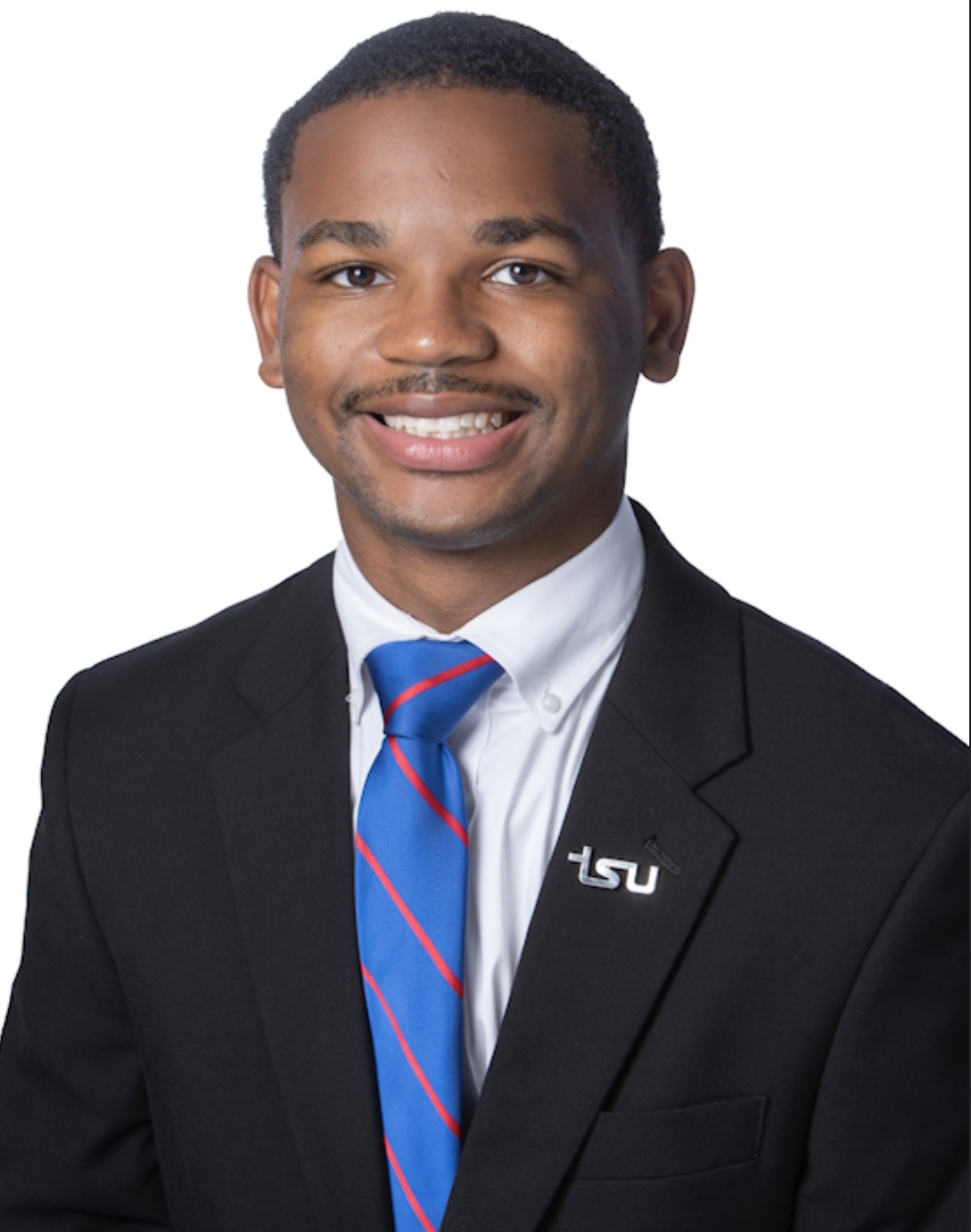
Jaiden Walker

She adds that with a flip in the entire makeup of Congress, Republicans will pass their own legislation, block any of Biden’s Supreme Court nominees, if that were to happen again, and stop any important investigations into former President Trump. Republicans will also be in a better position for a 2024 Presidential candidate, she says.

Jaiden Walker, a second-year political science student from Selman, Alabama, agrees that with the issues at stake, he’s not surprised at the record number of people expected to vote in the midterm. He calls on his fellow students to participate in the process, as “difference makers.” 

“I think that midterm elections always have important implications in the day-to-day lives of Americans,” says Walker. “It is important for students to participate because that’s one major way we can effect change by expressing our rights.” 

Historically, the outcomes of midterm elections have not been so favorable to the party in power. Could this term be any different? Cathey says with the surge in early voting and other factors, the outcome could go either way. 

“The tendency in midterm elections is to favor the out party due to what is called surge and decline theory,” she says. “Presidential elections often bring a surge of voters who are less partisan, and those voters stay home (decline) in the midterm elections. A change in direction could come from motivated voters due to Biden’s party pledge to protect abortion rights, student debt forgiveness, and his social and economic agenda.”  

Cathey also says several Republican candidates are being viewed as vulnerable. States like Georgia, Ohio, Arizona, and North Carolina can be a tossup for either party. In Georgia, for instance, more than 1.6 million have already cast their votes, according to recent projections. 

Election day is Nov. 8. Early voting is underway in many states, including Tennessee.

Two-day TSU/GSA training shows HBCUs how to gain access to federal contracting opportunities

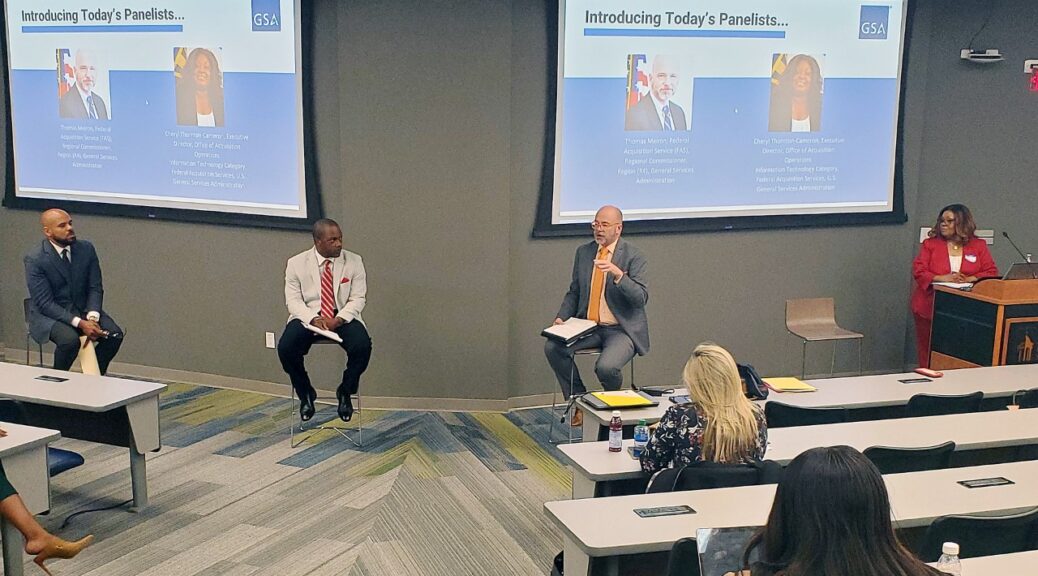
NASHVILLE, Tenn. (TSU News Service) – The U.S. General Services Administration recently held a two-day training session at Tennessee State University to educate historically black colleges and universities on seeking contracting opportunities with the federal government. Called “Growth ’22 Series,” the event was part of a GSA regional outreach training initiative geared toward advancing equity for HBCUs in the federal market place. It was part of the White Initiative on HBCUs aimed to ensure that these institutions have equal access to GSA contracting programs to purchase products and services.

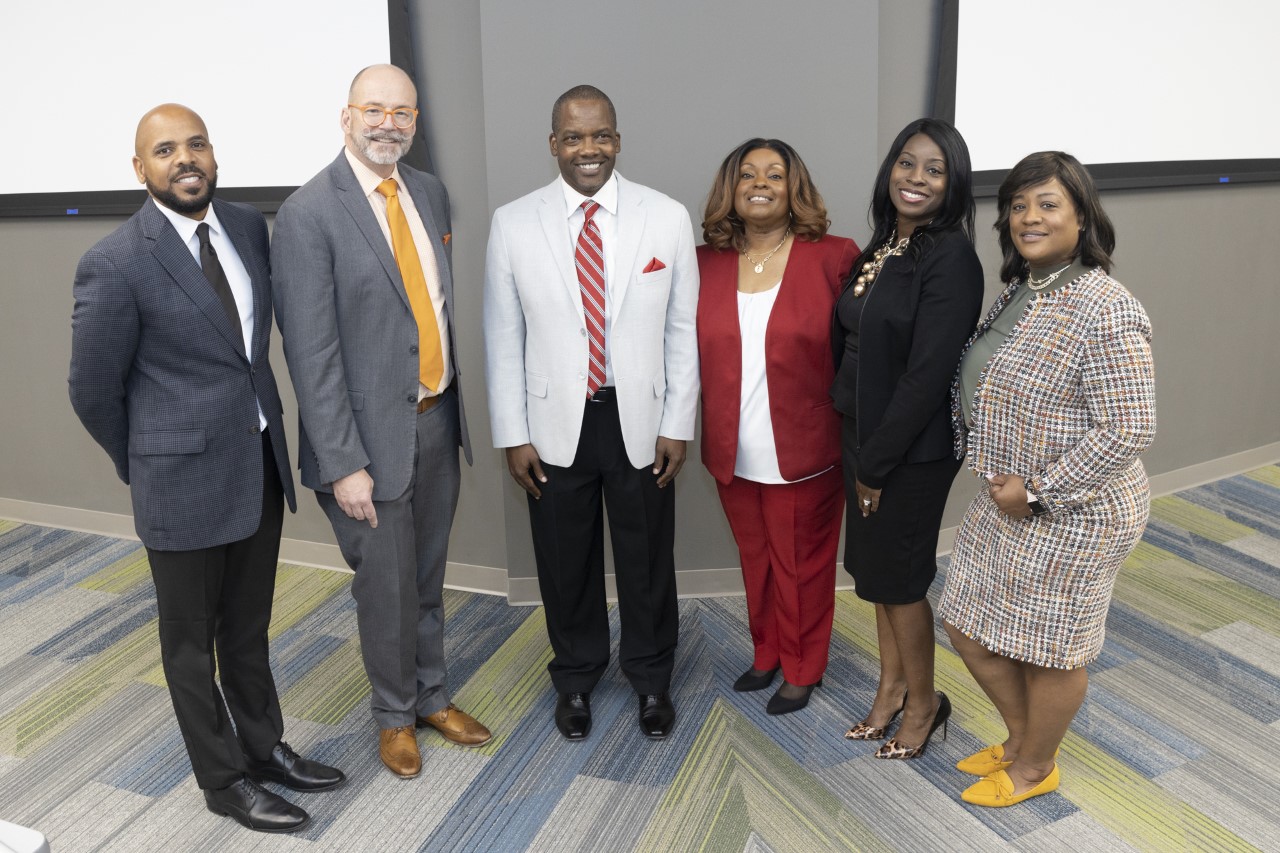
Dr. Quincy Quick, third from left, TSU’s interim Assistant VP for Research and Sponsored Programs, welcomes GSA officials. From left are: Dale Terry, Special Assistant to the Commissioner; Thomas Meiron, Federal Acquisition Service Regional Commissioner; Dr. Quick; Cheryl Thornton-Cameron, Executive Director; Trina Bilal, Program Manager; and Lanelle Chisolm, National Account Manager. (Photo by Aaron Grayson)

Representatives from several HBCUs including Clark Atlanta University, Alabama A&M University, and Jarvis Christian University joined TSU at the workshop, that also included presenters from the U.S. Departments of the Treasury and Energy.

Cheryl Thornton-Cameron, executive director of the GSA Office of Acquisition Operations, said the agency is “100 percent” committed to spending time with the HBCU community to make them aware of all federal funding and grant opportunities, as well as employment opportunities for HBCU graduates.

“Today we want to bring more awareness to our HBCUs organizations through our Growth ‘22 Series,“ Thornton-Cameron said. “The Biden/ Harris administration is committed to making sure that these institutions are given more opportunities to get federal government business and funding, and also look at hiring more HBCUs students. What we do know is that some of the brightest employees actually come from HBCUs.”

Among HBCUs represented at two-day training were Clark Atlanta University, Alabama A&M University, Jarvis Christian University, and TSU. (Photo by Reginald Cannon)

According to Thornton-Cameron, TSU was the first stop of the Growth ’22 training tour. The next workshop will be at Jackson State University.

“We want to thank President (Glenda) Glover for opening the doors and allowing us to come and set up to where we can have a conversation with other HBCU brothers and sisters, because lots of HBCUs don’t even know that they can play in the federal government market place. HBCUs can tap into billions, whether it is federal procurement, grants or hiring HBCU students.”

Dr. Quincy Quick, professor and interim assistant vice president for Research and Sponsored Programs at TSU, said the GSA training allows the university to enhance its systems, and helps staff to be more efficient in seeking contract opportunities.

“The forum provided an opportunity for HBCUs to partner with GSA, and gave us the ability to acquire contracts from the federal government,” Quick said. “The forum also gave us another way for us to be able to identify research opportunities that will be more contract base.”

The event at TSU followed a Feb. 16 roundtable discussion GSA held in Atlanta aimed at increasing the number of HBCUs with “Multiple Award Schedule” (MAS) contracts and provide training and education to help the institutions achieve success in the federal marketplace. The MAS, also known as the “Federal Supply Schedule,” is a procurement option often overlooked by public institutions of higher learning.

Kenny Sessions, a doctoral student and a representative of the Small Business Administration at TSU, said he went to the workshop to see how the GSA can expand its services to the university in ways that help business owners.

“We found today in working with the GSA that there is a lot of initiatives coming in from the White House in which HBCUs can expand their reach, as well as participate in projects that can bring them revenues for services that they can provide government agencies,” Sessions said. “There is a large reach and as most of the GSA representatives presented, they need to get familiar with us and we need to get familiar with them.”

TSU and Tennessee Titans expand historic partnership with launch of team’s Impact Program, ‘ONE Community’

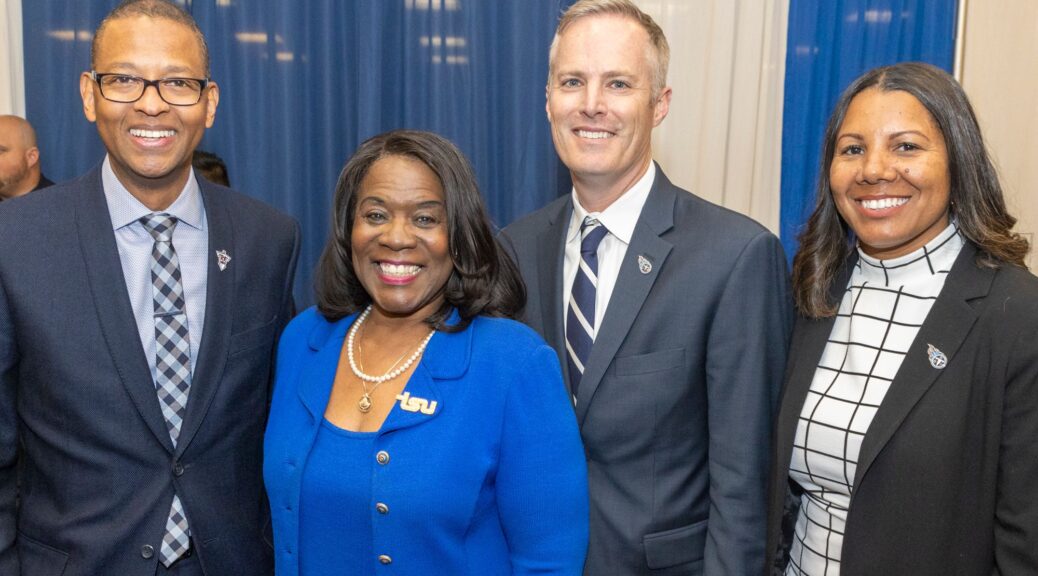
NASHVILLE, Tenn. (TSU News Service) – As the Tennessee Titans continue their long-standing partnership with Tennessee State University, on Thursday the team officially announced the launch of their Impact Program, ‘ONE Community.’

The ONE Community platform includes multi-faceted programs that reach many of Nashville’s most underserved communities with a focus on three areas – Opportunity, Neighborhoods, and Education.

TSU is one of 16 local and regional organizations that is a part of the community benefits platform.

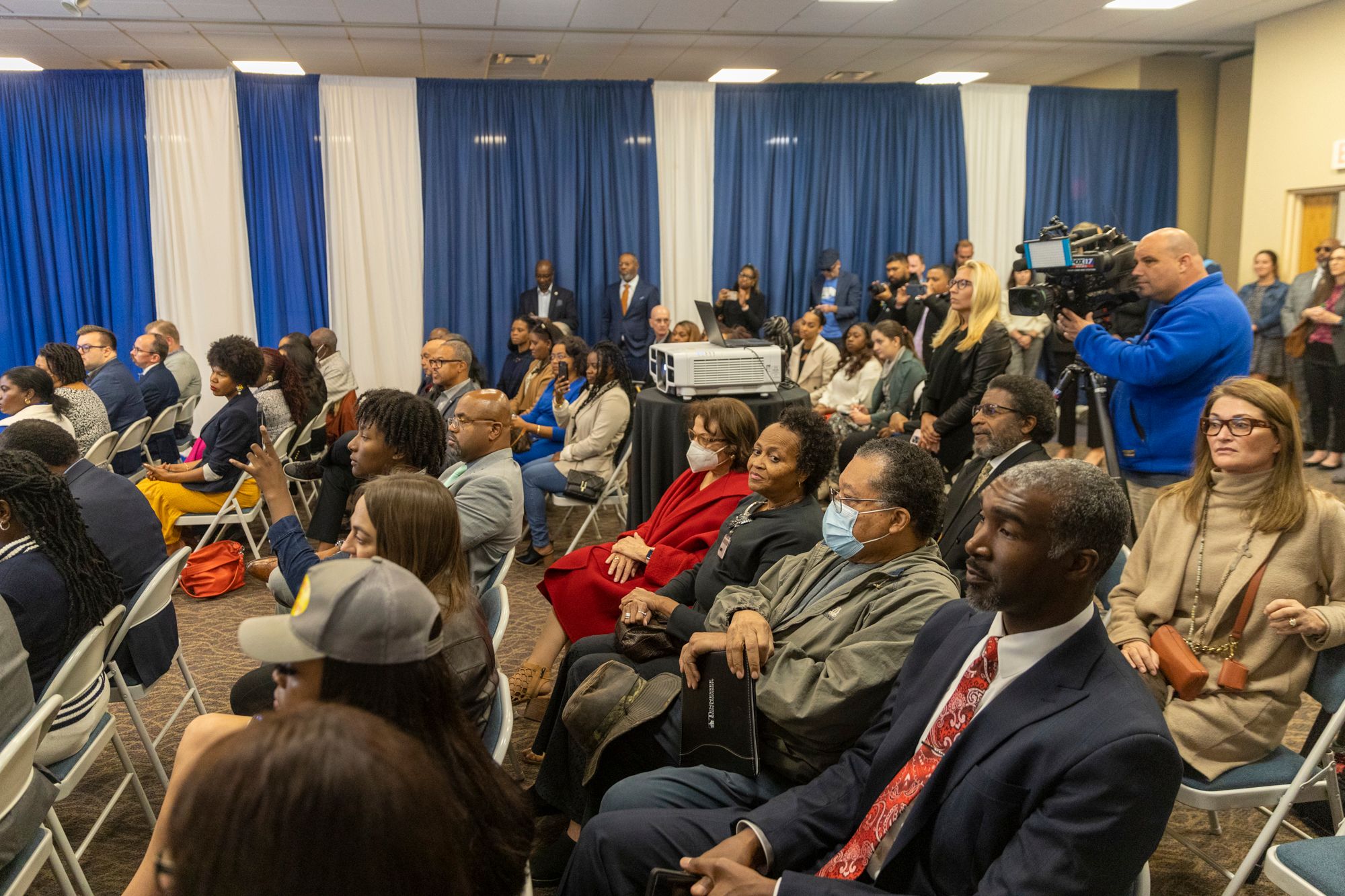
Tennessee Titans held a press conference at TSU on Thursday to officially announce the launch of their Impact Program, ‘ONE Community.’

“TSU is excited about the expansion of our partnership with the Titans and the opportunities students will gain to be successful through internships and employment with the team,” said Tennessee State University President Glenda Glover during a press conference held at the university.

“Our historic relationship, an HBCU and NFL franchise, spans over 25-years and centers around both organizations’ commitment to serve communities in the city we proudly call home, Nashville.”

With ONE Community, TSU and the Titans will be expanding their long-standing relationship by launching a new partnership that will establish several initiatives including athletics, academics, students and university support through scholarship and job shadowing programs, professional development opportunities, and employment opportunities.

The team will also continue its partnership by hosting TSU games at the new stadium and engage in other TSU-related initiatives.

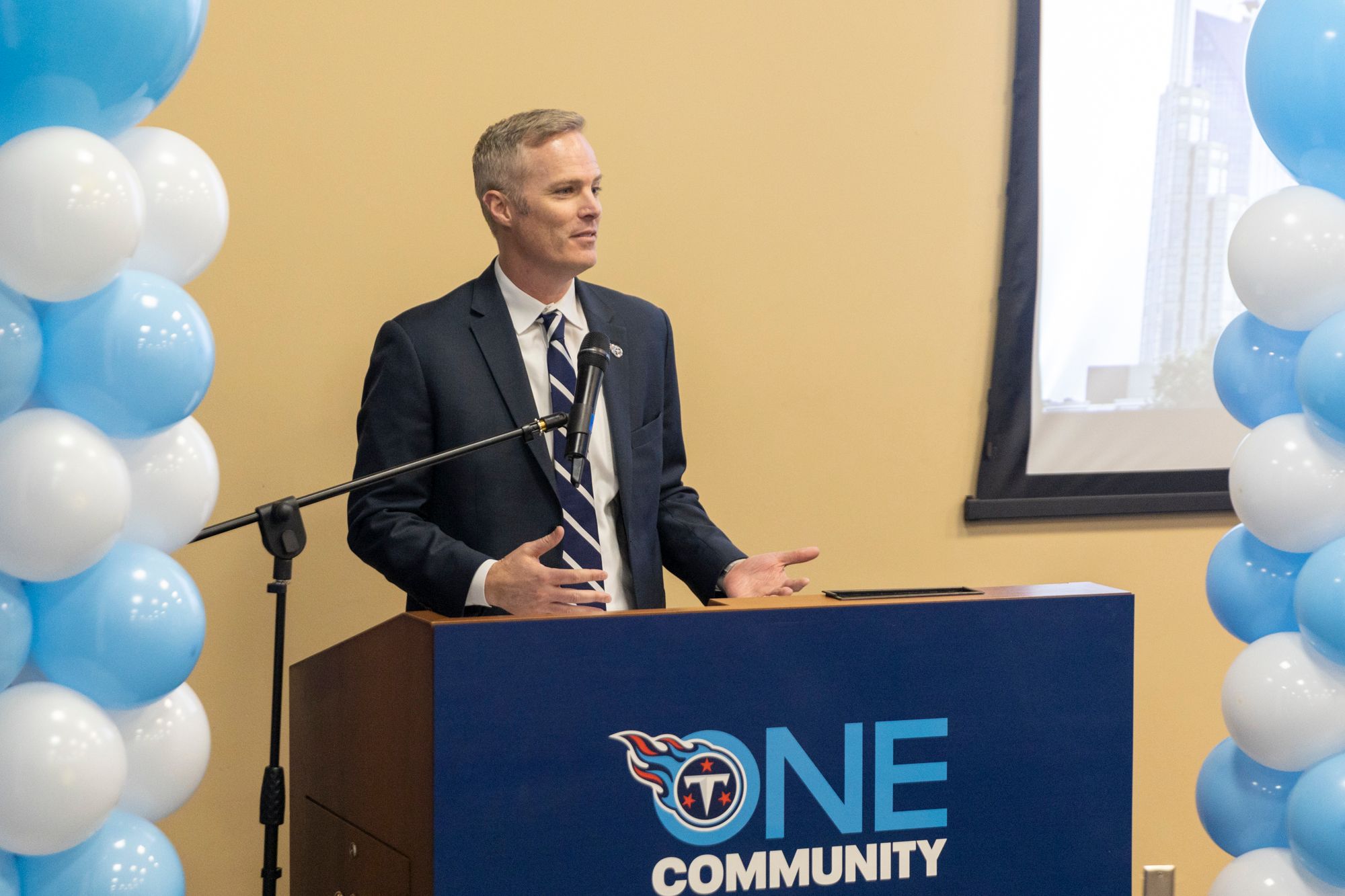
Tennessee Titans President Burke Nihill speaks during a press conference announcing the launch of, ‘ONE Community.’ (Photo by Aaron Grayson)

The Titans will serve as the annual presenting sponsor of the John Merritt Classic and partner with TSU to expand gameday activation and expanded branding opportunities.

TSU graduate student Nykole Allen-Clark, who is the division captain for Project Destined, an organization that also partners with the Titans, said this opportunity is huge for the university.

“I am extremely excited about the Tennessee Titans partnership,” Allen-Clark said. “This program will provide students and adult learners with unmatched exposure to a development in the community.”

Adolpho Birch, Senior Vice President and Chief Legal Officer for the Tennessee Titans, said ONE Community represents a substantial amount of work and effort and is a product of extensive interaction and feedback from residents and community leaders. 

“Ultimately, increasing opportunities for workforce and small business development, nurturing and enhancing our neighborhoods in need, and supporting education at all levels are what the community believed would be most impactful,” Birch said.

Johari Matthews, a TSU alum and Titans Foundation’s programs director, said they are proud to announce their partnership. “Our valued relationship with President Glover, the TSU athletic department and the students and staff are all very critical to the Titans story,” Matthews said.

The Titans Foundation’s Programs Director, TSU alum Johari Matthews (center) with TSU students during a Titans press conference. (Photo by Aaron Grayson)

“We believe that every student deserves an educational journey with the resources, experiences, and access necessary to create a meaningful path to vocational and life success.”

The project has been underway for more than two years. The announcement comes on the heels of the city of Nashville and the Titans reaching an agreement on a newly proposed football stadium earlier this week estimated at $2.1 billion.

For more information about ONE Community, visit www.tennesseetitans.com/news/titans-launch-impact-program-one-community.

About Tennessee State University

Founded in 1912, Tennessee State University is Nashville’s only public university, and is a premier, historically black university and land-grant institution offering 39 bachelor’s degree programs, 24 master’s degree programs, and eight doctoral degrees.  TSU is a comprehensive research-intensive institution with a R-2 Carnegie designation and has a graduate school on its downtown Avon Williams Campus, along with the Otis Floyd Nursery Research Center in McMinnville, Tennessee.  With a commitment to excellence, Tennessee State University provides students with a quality education in a nurturing and innovative environment that prepares them as alumni to be global leaders in every facet of society. Visit the University online at tnstate.edu.

Tennessee State University seeks ‘R1’ status, the nation’s highest research designation

NASHVILLE, Tenn. (TSU News Service) – Tennessee State University, Nashville’s only public university, aims to become only the second HBCU to reach the nation’s top research echelon with an “R1” designation under the Carnegie Classification of Institutions of Higher Learning. The designation would mean more doctoral programs, research initiatives and funding for students and the university. Currently, TSU is one of only 11 HBCUs with an R2 designation under the category of “high research activity.”

Dr. Quincy Quick is leading the university’s effort to achieve the ‘R1’ designation.

For its drive to “R1” status or “very high research activity,” the university is mobilizing its research enterprise – teaching faculty, researchers, graduate school, staff, students – to support its vision for the coveted designation. Howard University, an “R2” institution, achieved the “R1” designation in 2000 but lost it in a reclassification.

 On Friday, Oct. 14, under the theme, “R2 to R1,” the university’s Office of Research and Sponsored Programs held an open forum to acquaint the research community with what is needed to help move the university to an R1 status.

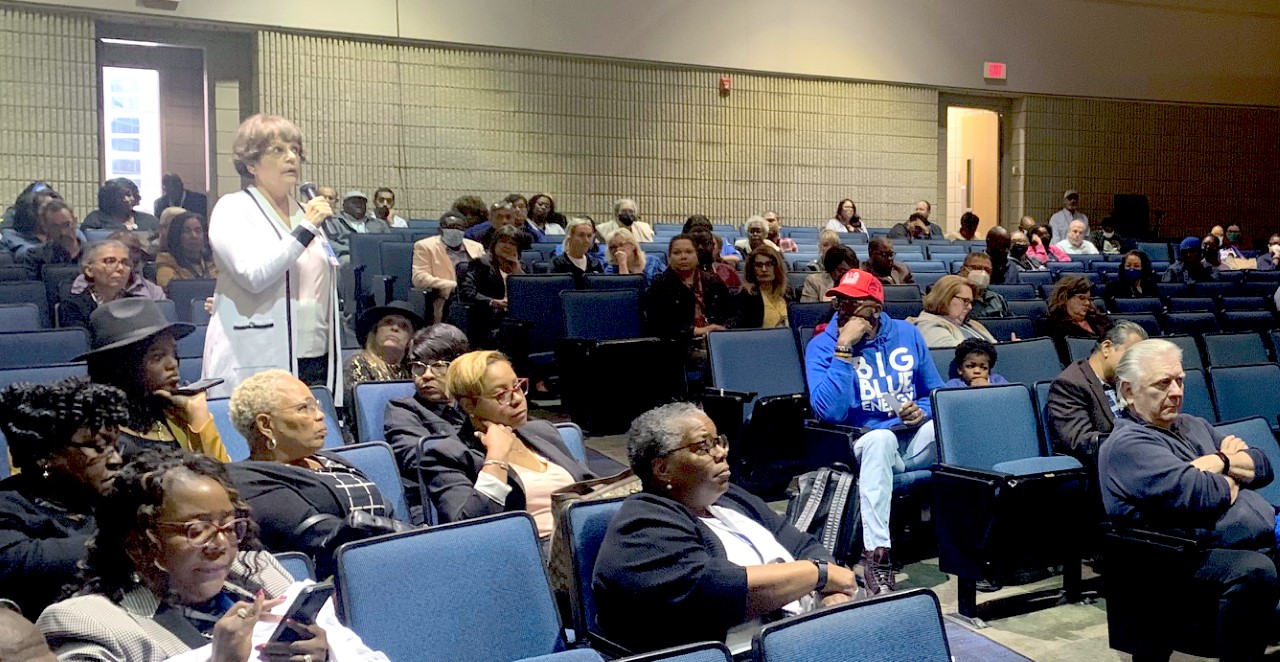
“One of the goals of the forum was to find out the needs of researchers as they commit themselves to the execution of the many grant-awarded research projects going on throughout the campus,” said Dr. Quincy Quick, interim assistant vice president of Research and Sponsored Programs.

TSU’s move to achieve an R1 designation comes just three years after receiving the R2 status. (File photo)

“Our goal was to provide an accurate understanding of exactly what is R1 and what going from R2 to R1 requires. We wanted to make sure everyone understood that research is important but it really comes down to programs and the number of Ph.D. completers that you have.”

The R1 designation by the Carnegie Classification of Institutions of Higher Learning is based on characteristics such as number of doctoral degrees conferred and money spent on research. In Tennessee, if TSU’s effort is successful, it will join the University of Memphis and the University of Tennessee Knoxville as the only institutions with the R1 designation.

 Branndon Jones, a Ph.D. candidate in engineering and computational sciences, said he’s very optimistic about TSU’s effort.

“The research enterprise here at TSU is led by professors and advisors who have immense passion and dedication to their work and field of study,” said Jones, of Franklin, Tennessee, who is in his second year of his doctoral studies. 

“The research areas are also unique since many are in the area of security and defense which forces researchers to think outside the box to develop novel approaches to solve today’s problems and problems that may arise 10 years in the future.”

A cross section of the university’s research community – faculty, staff, administrators – participated in the discussion to make the case for TSU’s quest for the top research designation. (Photo by TSU Media Relations)

TSU has a thriving research enterprise. Over the last two years, the University has been awarded more than $70 and $67 million in sponsored research and external funding, the highest in school history.

The university’s move to achieve an R1 designation comes just three years after receiving the R2 status, joining three of Tennessee’s four-year public institutions with that designation. Climbing to the top tier of R1 will be quite a fete. With nearly 4,000 colleges and universities classified by the Carnegie system, only 3 percent are R1s, considered the best research institutions in the world.

“The fact that there is no HBCU in that R1 classification, we are trying to set the standard,” said Dr. Robbie Melton, interim provost and vice president for Academic Affairs.

“We need to let everyone know that HBCUs have the same quality, rigor, and support for an R1 classification.”

To be considered for an R1 classification, an institution must award at least 20 research and or scholarship doctoral degrees during the update year, which takes place every three years, as well as spend at least $5 million in total research expenditures according to the National Science Foundation’s Higher Education Research & Development Survey. The institution must also score high on the Research Activity Index calculation, which is an aggregate level of overall and per capita research activity.

Quick, who is leading the university’s efforts and oversees the research enterprise, said achieving the R1 designation wouldn’t be easy, but TSU is up to the task.

 “We are in a much better shape than most people realize,” he said. “TSU is very strong in the STEM disciplines. We are producing a good number of Ph.D.s in those areas, as well as in education and agriculture. We are also doing well in the number of non-faculty Ph.D. researchers, which now stands at 18.”

Quick added that research expenditures, which stood at $15.4 million in TSU’s most recent ranking, is another area of improvement. The greatest challenge, he said, is in the humanities, which does not currently have doctoral programs. 

“Where we are going to meet the challenge is with the humanities, and there is a consensus across the board at the highest leadership, with President (Glenda) Glover, Academic Affairs, Research and Sponsored Program, and Institutional Research on what it is going to take to meet this challenge,” adds Quick.

Dr. Samantha Morgan Curtis, interim dean of the College of Liberal Arts, said the college is looking at a number of programs that could be elevated to the doctoral level.

“One of the first one we are looking at is criminal justice. There is also great interest in music, another incredibly strong program,” Morgan Curtis said. “We have a master’s program in music that will be rolling out shortly. The natural growth there is to look at the doctorate.”

For more information on research at TSU, visit https://www.tnstate.edu/research-1/

Featured Photo by Reginald Cannon
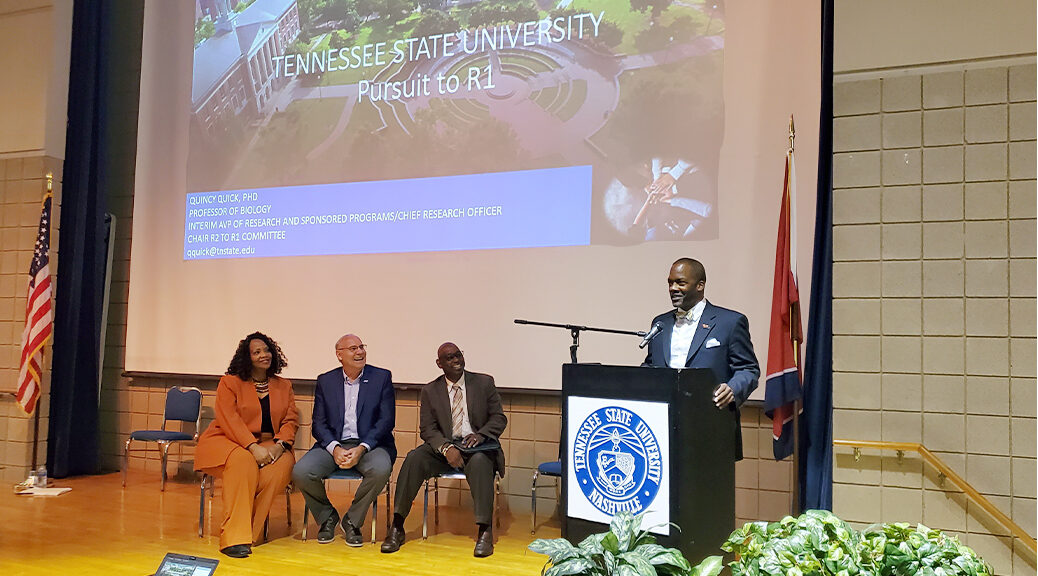
Dr. Quincy Quick (at the podium), head of TSU’s Office of Research and Sponsored Programs and the University’s chief research officer, spearheads the discussion as he and other officials present the institution’s case for an “R1” research designation. Sitting from left are: Dr. Robbie Melton, Interim Provost and Vice President for Academic Affairs; Dr. William Johnson, Executive Research Director for R2 to R1 for New Academic Programs; and DrJohn Robinson, Interim Dean of Graduate Studies.

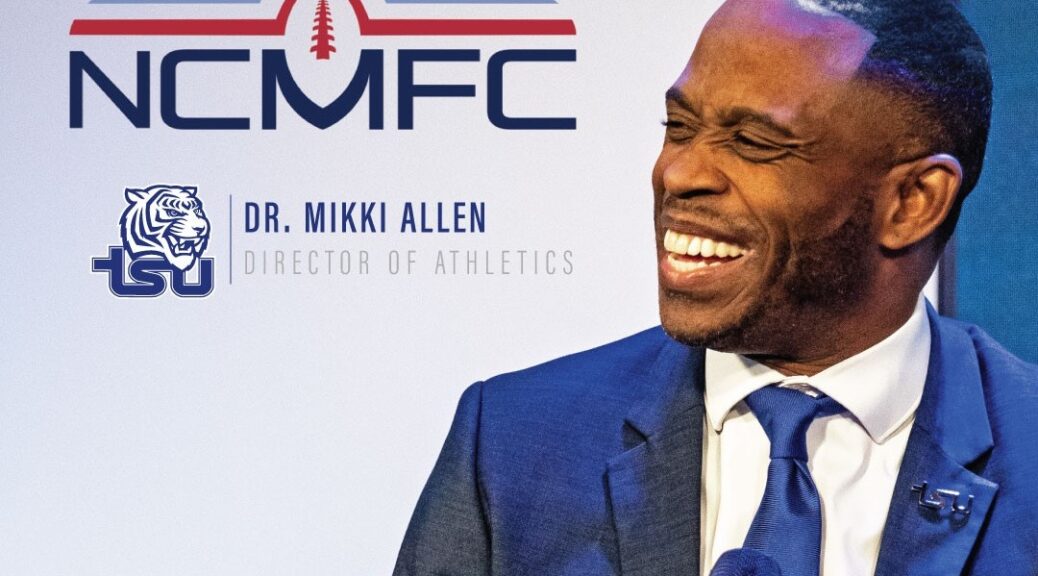
Dr. Mikki Allen Selected to coveted NCMFC Coalition Academy

By TSU Athletics

NASHVILLE, Tenn. (TSU News Service) – Tennessee State University Director of Athletics Dr. Mikki Allen  has been selected as one of 12 Athletic Directors to participate in the Coalition Academy coach mentorship program. The Coalition Academy was started in 2021 and it pairs Athletic Directors (AD) with minority head coach prospects.

Allen, who is entering his third year as TSU’s Athletic Directors, was the only FCS AD selected and the only AD from an HBCU. The list includes several power five ADs such as Greg Byrne from Alabama, Whitt Babcock from Virginia Tech, and Allen Greene from Auburn among others.
 
Dr. Allen will be paired up with Coach Dell McGee from the University of Georgia who is the Run Game Coordinator and the running backs coach. Tim Banks from Tennessee, Sherrone Moore from Michigan, and Des Kitchens are a few of the selected coaches. The Academy is coming off an incredibly successful first year, highlighted by the hiring of Marcus Freeman (Notre Dame), Tony Elliott (Virginia), and Jay Norvell (Colorado State).
 
“There is a certain closed-mindedness amongst decision-makers in college athletics who only hire candidates with coordinator experience,” Allen said. “The hiring philosophy, effective or not, limits the number of qualified minority applicants for available head coaching positions.

Throughout the history of college football, there has been a limited number of minority offensive and defensive play-callers,” Allen continued. “I believe that this is due, in part, because minority coaches many times ascend through the coaching professions by way of their recruiting process. This being the case, many times because they are so highly coveted as recruiters, they take lateral jobs and are not at the program long enough to gain coordinator experience.

The networking opportunities that the Coalition provides opens so many doors for these aspiring head coaches. College sports is a relationship-driven industry and its special that these individuals get an opportunity to be coaches and developed by leaders that share a vested interest in helping people and improving college sports,” he said.
 
In its first year, the Coalition Academy helped to counteract the narrative that there is a lack of qualified minority coaches to fill available positions and is helping to bring parity to the hiring process in college football. This is why, the Coalition Academy is excited to announce the launch of its second year and the new members of its class.

For more information about the National Coalition of Minority Football Coaches, please visit https://ncmfc.com/.