Tag Archive | "TSU School of Nursing"

Nursing Student is the New Face of Blood Safety Campaign


Tennessee State University School of Nursing student, Cheryll Collins, is now the new face for the advertising campaign “Risk for Mucocutaneous Blood Exposure for Nurses and Healthcare Professionals” sponsored by Becton Dickinson and Company (BD) Medical.

Collins, a registered nurse and an Oncology Certified Nurse (OCN), was exposed to a blood droplet by a splash across her face when a patient abruptly moved while having an IV placed into their arm. She approached her employer, BD, about creating an awareness initiative to protect health care workers from blood exposure and the company decided to adopt the ad campaign.

Pursuing to make a difference for workplace protection, the campaign brings insight to needle stick safety devices and heightens awareness to the risk factors of blood exposure among nurses and other health care professionals.

“Discovering how I was at risk for HIV through a blood droplet found in my eye makes me more cautious about blood exposure. From my experience and through the campaign, I anticipate that others will attempt in changing their attitudes of accepting any unnecessary blood exposure,” said Collins, a graduate from the Master’s School of Nursing (MSN) program at the University.

Collins is featured in the campaign published in several nursing magazines such as Nursing 2011, The Infusion Nurses Society (INS) Standards and Guidelines for 2011, and The Journal of Emergency magazine. She has been invited to travel to Paris, France as a guest speaker at a conference hosted by 30 different hospital systems. She will also be lecturing at the Association of Vascular Access (AVA) Convention this month and the Association for Professions in Infection Control (APIC) Convention in October.

Hoping to enlighten others about the issue, Collins shares her story about mucocutaneous blood exposure on her personal blog. She plans to return to TSU for a post certificate for Nursing Education.

More about the campaign: http://www.bd.com/bloodcontrol

Posted in NEWS, SCHOOLS AND COLLEGESComments Off

School of Nursing Reaches 100 Percent Pass Rate for Board Licensing Exam


Future nurses at Tennessee State University are making care and compassion count with their test scores. The 2009 class of the University’s School of Nursing completed the registered nurse state licensure exam with a 100 percent pass rate – making TSU the only public four-year Tennessee Board of Regents (TBR) institution to exceed the national percentage of students passing the National Council Licensure Examination for the 2009 calendar year.

“There’s no surprise that 100 percent of our class was able to pass the state licensure exam on the first attempt,” said School of Nursing graduate Renata Powers and president of the 2009 class. After receiving a bachelor of science degree in psychology from TSU in 2005, she later returned to find a no-nonsense nursing program with a challenging curriculum and a nurturing environment.

“The faculty fully prepared us for the exam and for the environments we would enter as registered nurses. Even with limited resources at times, they kept us energized and encouraged,” said Powers, who now serves as a registered nurse in the intensive care unit at Metro General Hospital.

Issued by the National Council of State Boards of Nursing, the exam evaluates how well students are prepared to enter the nursing workforce. Recorded by calendar year with periodic testing dates, the national pass rate for 2009 graduates averaged at 89.49 percent. All 28 bachelor of science in nursing (BSN) graduates at TSU passed the exam on first attempt.

Dr. Verla Vaughan, interim director of the BSN Program at TSU, said, “The success in achieving a 100 percent pass rate is a testament to the rigor of our program and the quality of instruction delivered by dedicated and committed faculty. We expect to maintain that level of achievement on the state board licensing exam.”

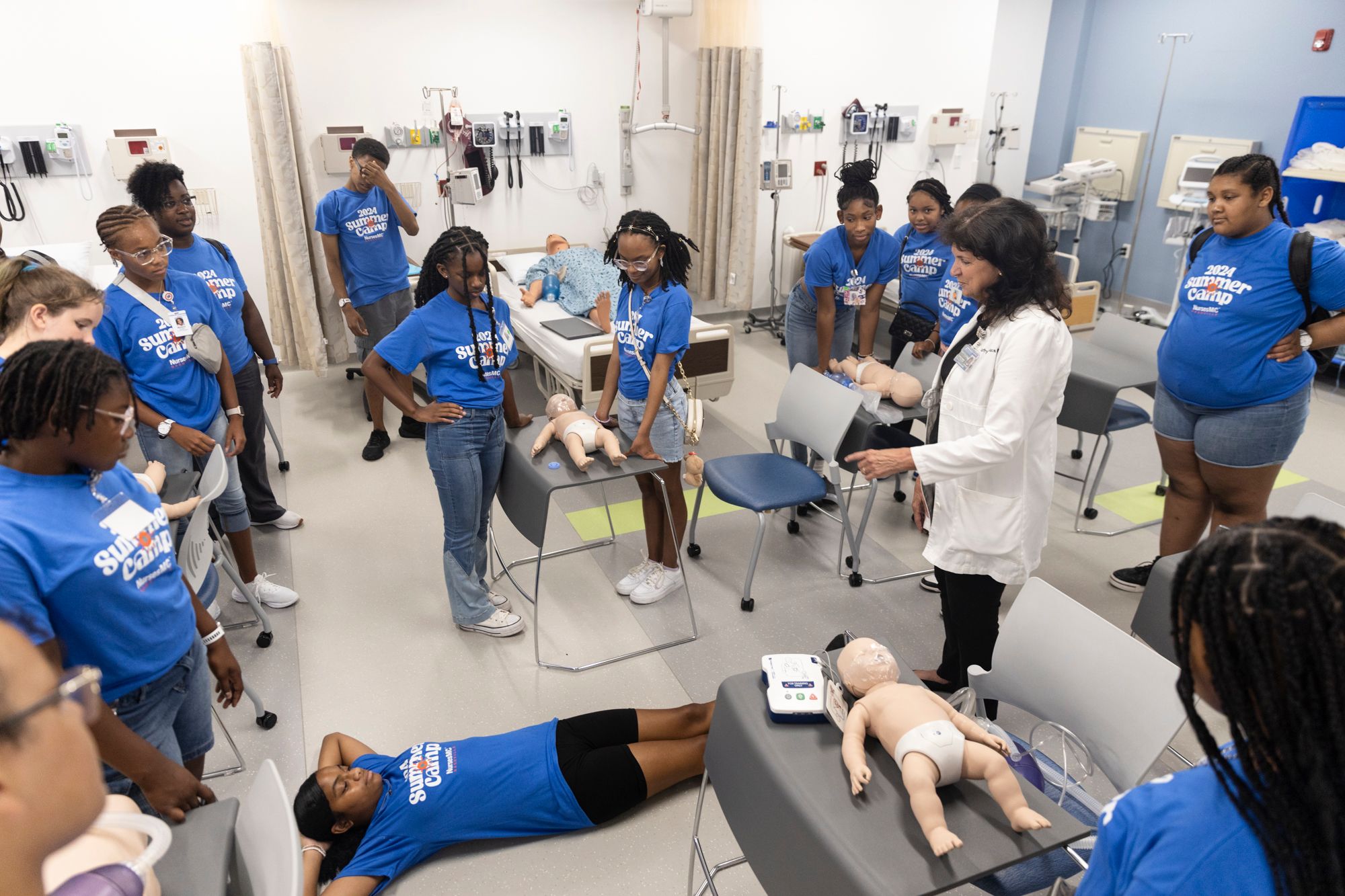
Vaughan, the faculty, and Dr. Kathy Martin, dean of the School of Nursing, have enhanced the nursing curriculum through the use of technology in the classroom. The school developed a simulation lab with state-of-the-art equipment that includes simulated mannequins that can be programmed to act as real patients. They also utilized computer-programmed simulations of complex hospital medical emergencies.

Posted in NEWS, SCHOOLS AND COLLEGESComments Off

TSU Photos on flickr

TSU Quick Facts

Motto: Think, Work, Serve
Established: June 19, 1912
Type: Public, HBCU
Endowment: $28,926,133
Chancellor: John Morgan
President: Dr. Portia Shields
Faculty: 431
Undergraduates: 7,105
Postgraduates: 2,060
Location: Nashville, Tennessee, United States
Campus: Urban, 500 acres (2 km²)
Former names: Tennessee A&I State Normal School for Negroes (1912); Tennessee A&I State Normal College (1925); Tennessee A&I State University (1951); Tennessee State University (1968)
Colors: Reflex Blue and White
Nickname: Tigers
Athletics: National Collegiate Athletic Association
Affiliations: Ohio Valley Conference
Web site: www.tnstate.edu
Phone: 615-963-5555

Tennessee State University

Tennessee State University (TSU), a Historically Black College/University (HBCU) and a 1890 land-grant institution, is Nashville’s only urban and comprehensive public University, as well as middle Tennessee’s first public Carnegie doctoral/research institution.

TSU consists of seven colleges: the College of Agricultural, Human and Natural Sciences, the College of Business, the College of Education, the College of Engineering, Technology & Computer Science, the College of Health Sciences, the College of Liberal Arts and the College of Public Service & Urban Affairs; and has a School of Graduate Studies and Research.

TSU offers 39 bachelor’s degrees, 23 master’s degrees and awards doctoral degrees in seven areas: biological sciences, computer information systems engineering, psychology, public administration, curriculum and instruction, administration and supervision and physical therapy.

Nearly 430 full‐time faculty and approximately 200 part‐time faculty serve a student population of more than 8,500 drawn from 42 states and 45 countries. More than 70% of the student population is African-American, while 22% is white. A growing number of Latino, Asian, and international students is also present at the University.
Lower Main Cap Image