Category Archives: FACULTY

TSU secures top jobs for students, graduates with spring career fair

NASHVILLE, Tenn. (TSU News Service) – Amid the pandemic, job prospects continue to look very bright for TSU students and recent graduates, thanks to the university’s rigorous career readiness programs that have some major companies offering full-time employment to students. Many of the students will have solidified and secured job placements before graduation.  
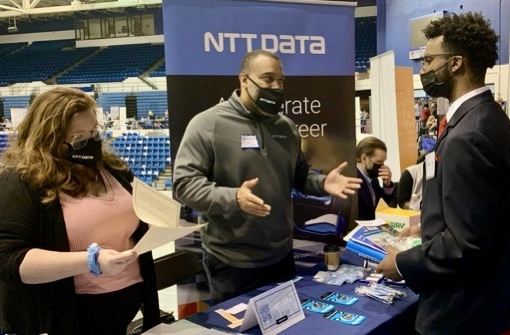
NTT DATA representatives Whitney Wells, Campus Recruiter, left: and Horace Jones, Director of Project Program Management and a TSU alum, talk to a student at the Career Fair. The company has already hired three students from the university since February. (Photo by Aaron Grayson, TSU Media Relations)

At TSU’s Spring 2022 Career Fair on Feb. 25, it was disclosed that Bank of America, a longtime TSU partner, which last year contributed $1 million to help with students’ job readiness, and NTT DATA Services, a multinational information technology service and consulting company, were the latest among entities quickly recruiting students for high-paying positions.  

In just the last few months, the two companies reportedly have hired six computer science and business majors from the upcoming May graduating class, as well as offered internships to several others from various colleges.

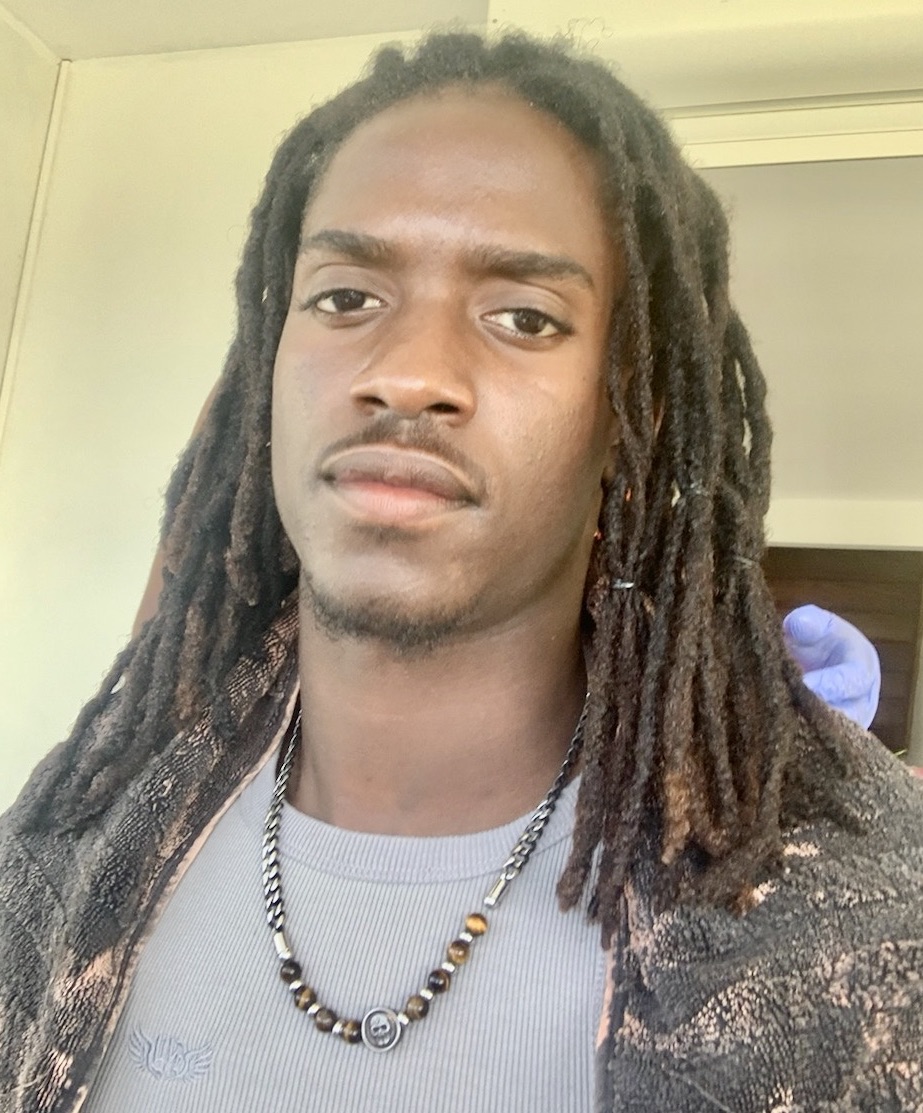
Russell Marcellus Waters will reportedly make more than $75,000 in starting salary with Bank of America. (submitted)

Among the new hires is Russell Marcellus Waters, a computer science major, from Huntsville, Alabama, who is expected to receive a starting salary of more than $75,000 as a technical analyst with Bank of America. He will join several other former TSU students who currently work for the company.  

“It is really a good feeling to not just go into any job, but one that’s paying well, just after graduation,” said Waters, a graduating senior, who has been interning with Bank of American since his sophomore year. He will be assigned in Charlotte, North Carolina, when he starts in July.  

“The first time I stepped on TSU’s campus my goal was to graduate with a job upon graduation,” added Waters. “The exposure I received from the classroom and the preparation from the Career Development Center, whether it was sharpening my interviewing skills or resume writing, allowed me to apply to Bank of America for an internship, and I was accepted in my sophomore year.”  
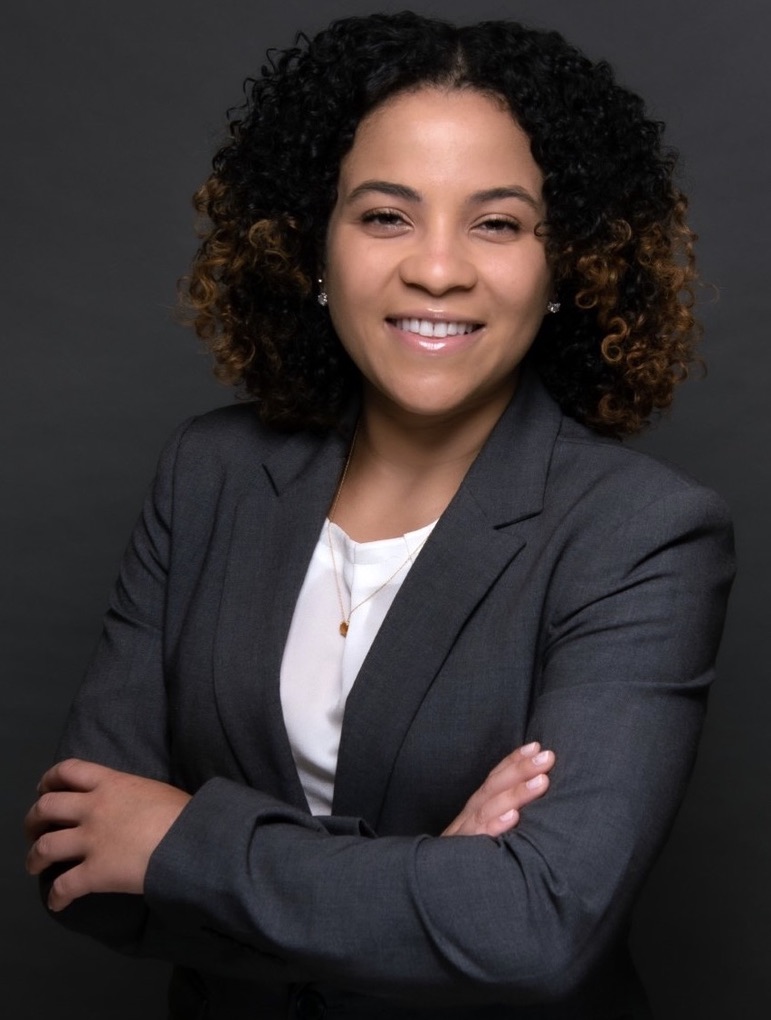
Peyton Williams is joining NTT DATA as a Business Technology Consultant. (Submitted)

Peyton Williams, who earned a master’s degree in business last fall, is one of three graduates joining NTT DATA as a business technology consultant. Williams and another former student started in early February in the company’s Nashville office. The third will start in August and will also be assigned in Charlotte.  

“I developed a relationship with NTT DATA Services earlier in my years at TSU by attending events hosted by the College of Business and the Career Development Center,” said Williams, of Sunset, Louisiana. “My education at Tennessee State University helped me to continue to build the interpersonal, strategic thinking, and an entrepreneurial spirit necessary to be an effective leader at a company like NTT DATA Services.”   
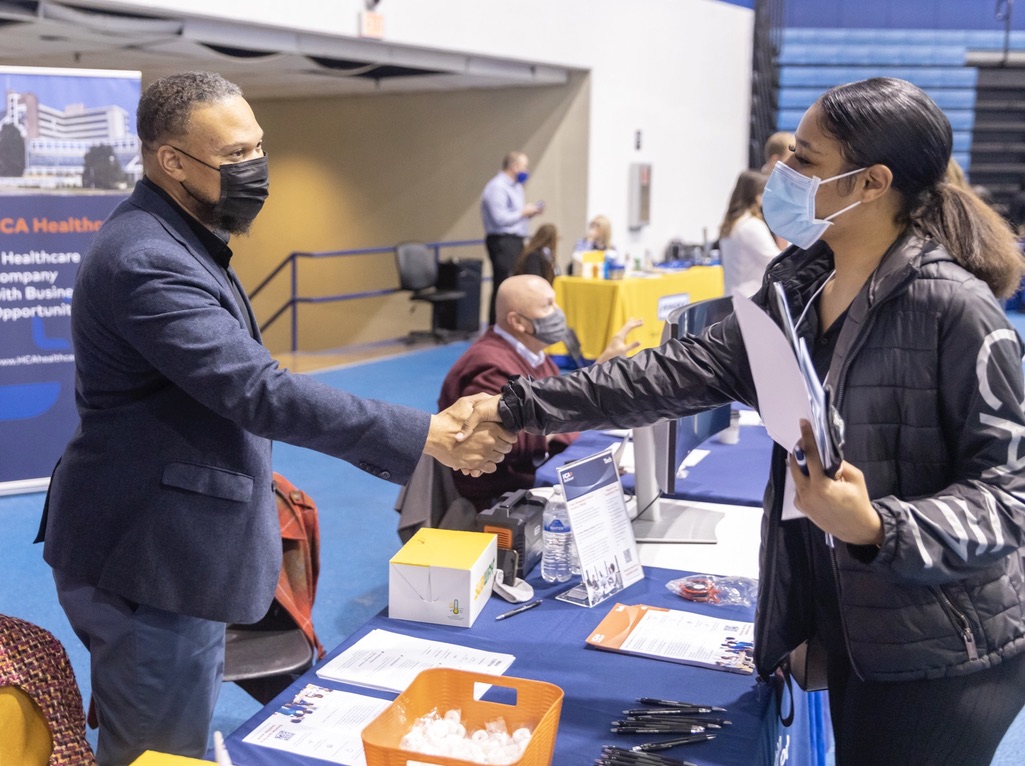
Sonecia Nard, a senior biology major, right, talks with Ronald Douglas, Jr., Senior Project Manager at HCA Healthcare. Douglas, a 1999 TSU graduate in Business Information Systems, returns to recruit at his alma mater. (Photo by Aaron Grayson, TSU Media Relations)

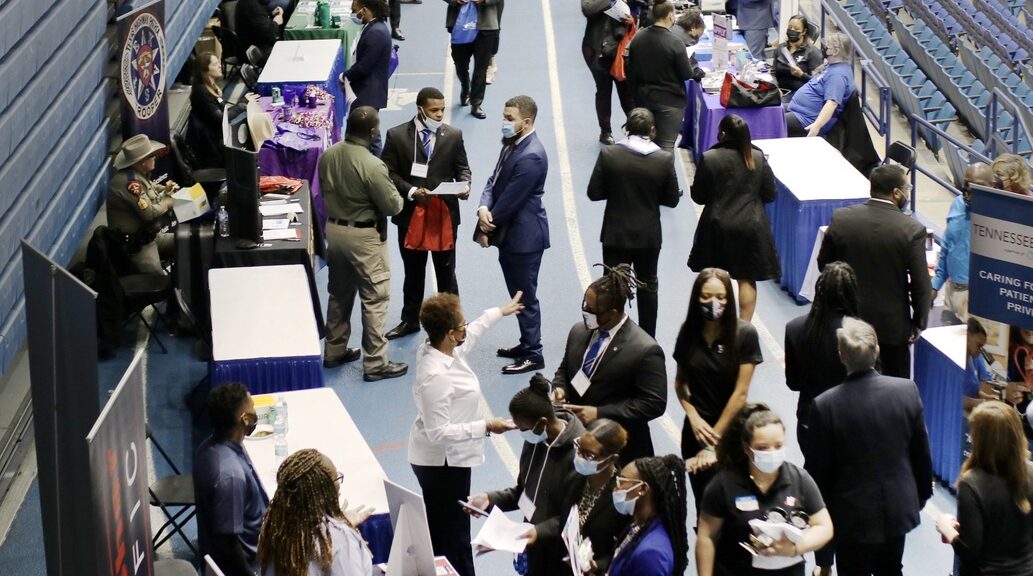
The Spring Career Fair, a potential springboard to internships, co-ops, and job opportunities for many students, this year brought together more than 140 employers, including Fortune 500 companies, federal and local government agencies, the U.S. military, educational institutions, and individuals. They set up booths and displays to review resumes and hold on-the-spot interviews with students.   

Organizers said more than 500 students attended the all-day fair in the Gentry Center Complex.   

Sonecia Nard, a senior biology major; and Khiri Jenkins, a third-year computer science major, were among the first students at the fair. Nard, who graduates in May, was looking for a full-time position, while Jenkins was looking for an internship opportunity.  
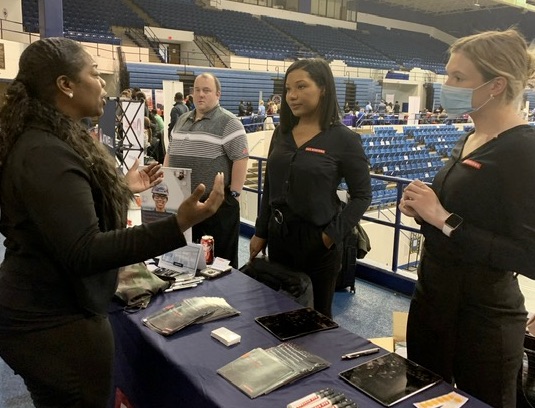
Antoinette Duke, Director of the TSU career Development Center, left, interacts with representatives of BAE Systems, one of the more than 140 companies at the Career Fair. (Photo by Aaron Grayson, TSU Media Relations)

“I am looking for opportunities that will help me get more experience in my career field and give me more options of what I want to do with my life,” said Nard, of Fort Wayne, Indiana, who was seen talking with representatives of HCA Healthcare. “Although I am a senior, this is my very first career fair. The employers have been very receptive and helpful. It’s been a nice experience.”  

For Jenkins, a native of Atlanta, he is looking for opportunities that can further his education and position him for a bright career.  
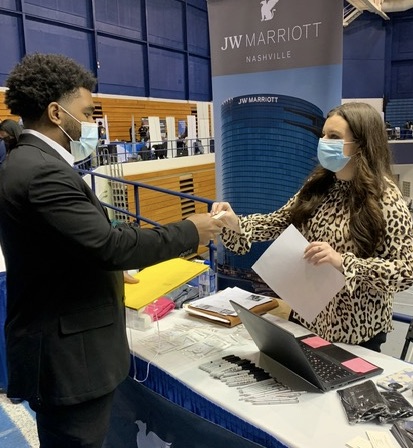
Khiri Jenkins, a third-year computer science major, discusses his resume with Emily Burton, Talent Acquisition Manager at JW Marriott. (Photo by Aaron Grayson, TSU Media Relations)

“The employers I met were very interested in what I had to say,” said Jenkins. “I am very optimistic about my chances of getting an opportunity with one of these companies.”

The career fair was the second in-person fair since the pandemic. Prior fairs were held virtually. 

Frank Stevenson, associate vice president of student affairs and dean of students, called this year’s career fair a “home run.” 

“It feels amazing to know that our students are going to be leaving this institution with jobs,” said Stevenson. “That’s our whole goal, to know that they are employable, and have the skill sets that these companies and organizations are looking for.”  

“This is probably one of the better career fairs we’ve had,” added Antoinette Duke, director of the Career Development Center. “We have companies here that have already hired some of our students for the summer. So, this is the place to show up in one location to get as many Tigers as they can.” 

For more information on the TSU Career Development Center, visit https://www.tnstate.edu/careers/ 

Department of Media Relations

Tennessee State University
3500 John Merritt Boulevard
Nashville, Tennessee 37209
615.963.5331

About Tennessee State University

Founded in 1912, Tennessee State University is Nashville’s only public university, and is a  premier, historically black university and land-grant institution offering 39 bachelor’s degree programs, 24 master’s degree programs, and eight doctoral degrees.  TSU is a comprehensive research intensive institution with a R-2 Carnegie designation, and has a graduate school on its downtown Avon Williams Campus, along with the Otis Floyd Nursery Research Center in McMinnville, Tennessee.  With a commitment to excellence, Tennessee State University provides students  with a quality education in a nurturing and innovative environment that prepares them as alumni to be global leaders in every facet of society. Visit the University online at tnstate.edu.
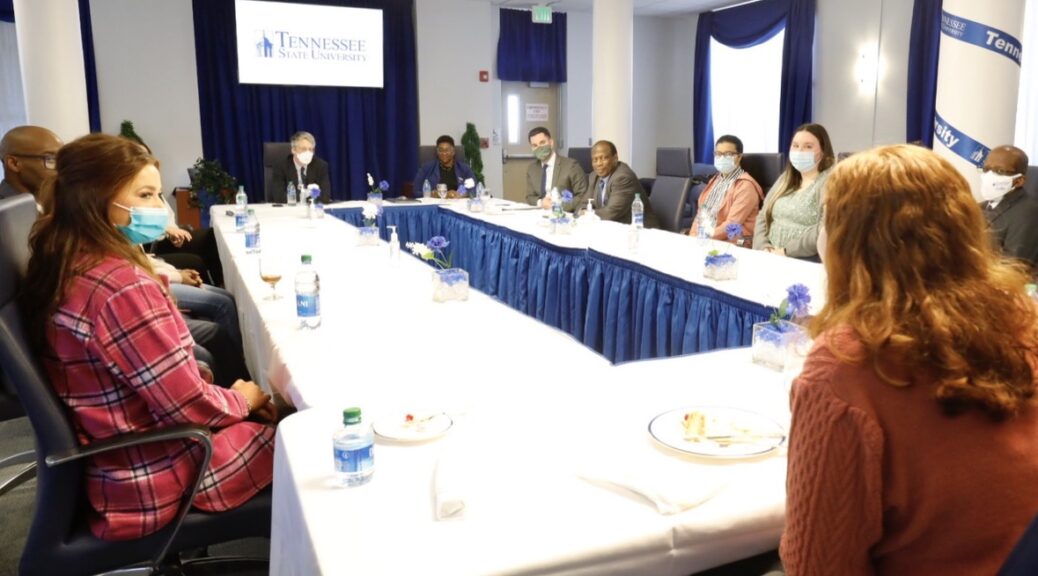
U.S. Under Secretary of Education James Kvaal discusses college affordability at TSU workshop

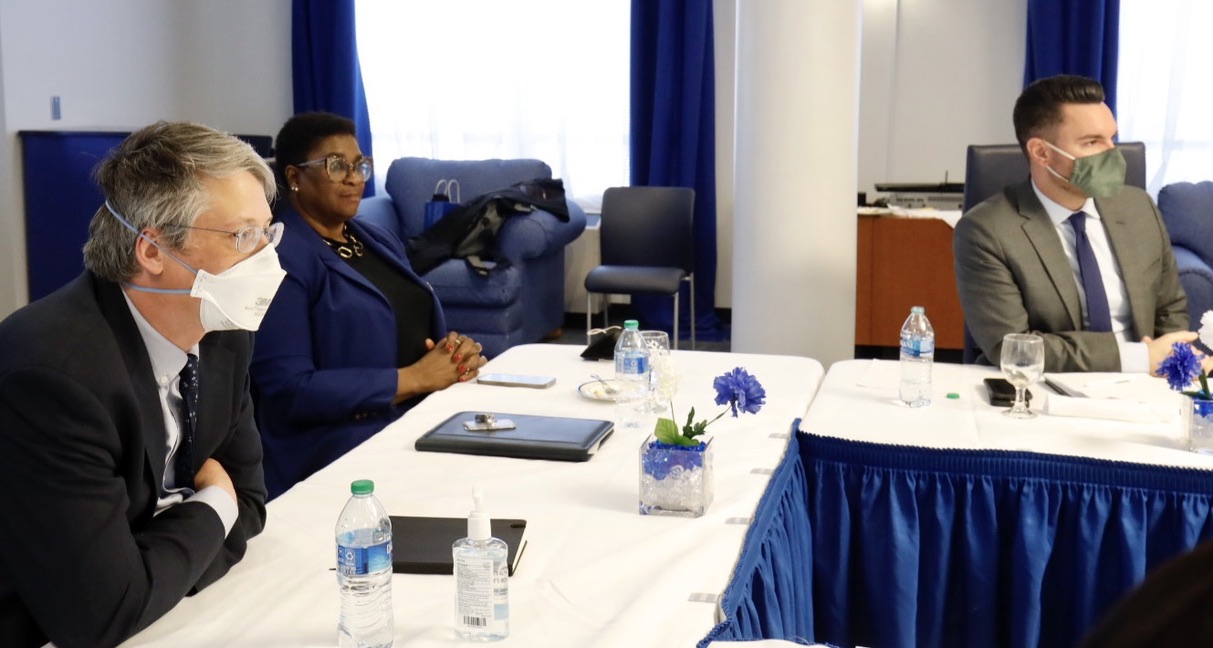
NASHVILLE, Tenn. (TSU News Service) – U.S. Under Secretary of Education James Kvaal held a workshop on Feb. 18 at Tennessee State University to discuss college affordability. It was part of a daylong visit by U.S. Secretary of Education, Dr. Miguel Cardona, to address teacher shortages and other educational needs.  

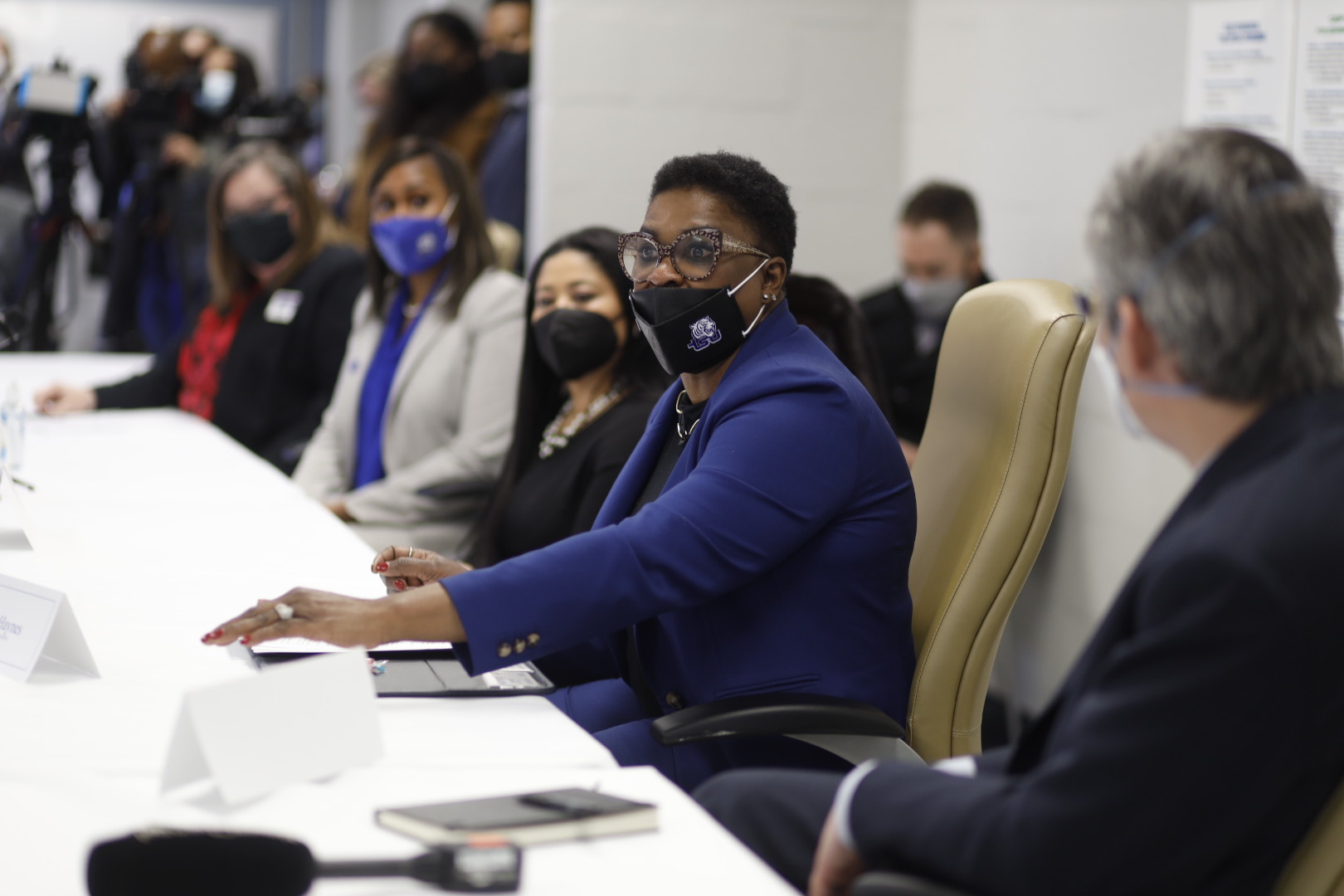
James Kvall, U.S. Under Secretary of Education, left; Dr. Jerri Haynes, Dean of the TSU College of Education; and Rich Williams, Chief of Staff of the U.S. Department of Education, participate in the discussion at the workshop. (Photo by Aaron Grayson, TSU Media Relations)

Organizers of the workshop said its main purpose was to allow Kvaal to hear directly from students about their concerns. They included the challenge of paying tuition and the effectiveness of Tennessee Promise, a state initiative that allows high school graduates to attend a community or technical college free of tuition.  

For instance, while Tennessee Promise takes care of tuition, students say they still have to pay for their books, which can sometimes be expensive.  

“They shared problems as students, and things they want to see happen in the future,” said Dr. Jerri Haynes, dean of TSU’s College of Education, and one of a number of educational stakeholders who also attended the workshop.  

Hartlee Hill, a first-year TSU dental hygiene major from Livingston, Tennessee, said she liked the fact that Kvaal took time to listen to their issues.  

“It was so good to be here and to hear everybody’s views and how to help improve the system,” said Hill.   

Accompanied by Rich Williams, chief of staff of the U.S. Department of Education, Kvaal said he wanted to gather information on the needs of students and educators, as well as make them aware of existing services. He said he was impressed by the level of “talented young people” at the workshop.   

“They were very sharp and very passionate about the issues they presented,” Kvaal said. “We talked a lot about the challenges of covering living expenses, books, and the challenges of student support services, such as mental health challenges and the difficulties first-generation college students face in navigating the system.”  

Dr. Curtis Johnson, TSU’s associate vice president and chief of staff, and Jessica Macy, senior director of student impact at Tennessee Achieve, a partnering organization to Tennessee Promise, were among stakeholders at the workshop.  

“This opportunity helped us highlight our students and all of their hard work and persistence, in attending college,” said Macy.  

Earlier in the day, the highlight of Education Secretary Cardona’s roundtable discussion was TSU’s Grow Your Own teacher pipeline initiative in the College of Education. TSU is the number one HBCU for producing teachers and a top institution in the field across the nation. 

“I’m really proud of what I see here,” Cardona told reporters after the roundtable. “We want to see more of this across the country. We know that with the American Rescue Plan funds, and what we’re pushing with Build Back Better, there’s going to be more support for this. It takes seeing programs like this to keep us pushing really hard because we know they work.” 

To learn more about TSU’s College of Education, visit https://www.tnstate.edu/coe/

For more information about the state’s Grow Your Own initiative, visit https://bit.ly/36oIgKN.

‘Long overdue,’ TSU weighs in on nomination of first Black woman to nation’s highest court

NASHVILLE, Tenn. (TSU News Service) – When President Joe Biden nominated Judge Ketanji Brown Jackson for the U.S. Supreme Court, for many it was more than just keeping a campaign promise. The historic move, in the eyes of civil rights groups and women’s organizations, is viewed as “long overdue.” 

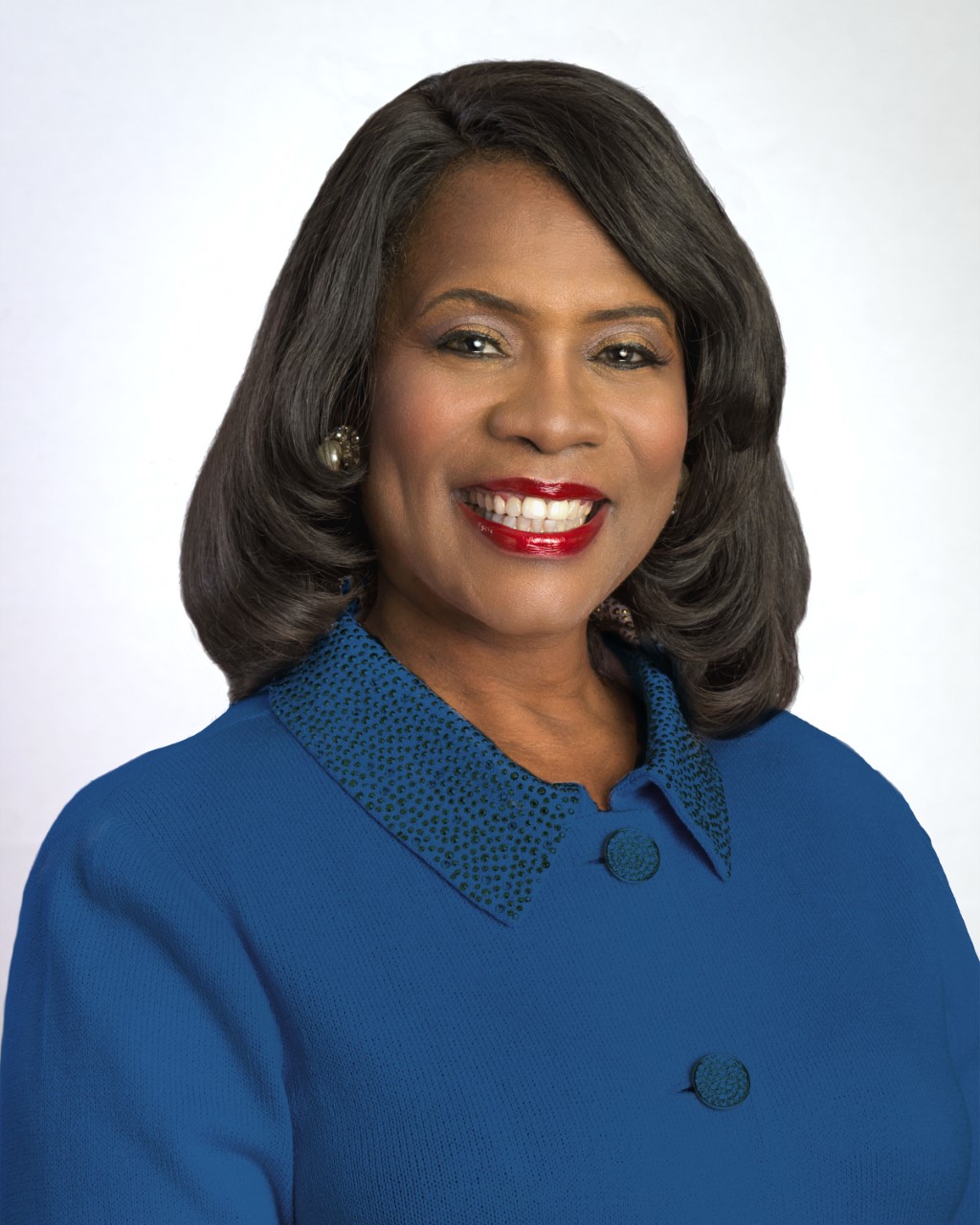
President Glenda Glover

Biden nominated Jackson on Feb. 25. If confirmed, she would not only be the first African-American woman, but also the third Black justice and sixth woman to serve on the nation’s highest court. 

Tennessee State University President Glenda Glover, who also serves as vice chair of the President’s Board of Advisors on Historically Black Colleges and Universities (HBCUs), explains the nomination has been a longtime coming considering the contributions of Black women to the success of the country and their influence on the judicial system in general. 

“It was 55 years ago in 1967 that Justice Thurgood Marshall — the first African American — was appointed to the nation’s high court and 40 years ago in 1981 when Justice Sandra Day O’Connor — the first woman ― was appointed to the Supreme Court.  Rather than a long time coming, for many, this appointment is a long time overdue,” says Dr. Glover.

Brianna Lang

“There are countless Black women in the legal field who have distinguished themselves as brilliant jurists, fierce advocates, and venerable legal scholars who have made tremendous sacrifices to shape the laws of the land and help secure justice for all.”

Junior Brianna Lang is a political science major at Tennessee State University. The Atlanta native says she’s looking forward to seeing someone on the Supreme Court who looks like her.

“Since I was a kid, I have been interested in becoming a lawyer, or a judge,” says Lang. “So, seeing someone who looks like me, doing something that I want to do, just lets me know to keep going and stay motivated. And that anything is possible.”

Tiara Thomas

Tiara Thomas, a senior majoring in political science from Olive Branch, Mississippi, says she’s glad to see the Biden administration continue the cycle of “breaking glass ceilings,” referring to Vice President Kamala Harris as the first Black woman to hold that position in the White House.

“The appointment of the first African American woman as a Supreme Court justice will be a great step toward placing public trust back into our judicial system,” says Thomas, who serves as the student trustee on TSU’s Board of Trustees. “Little girls everywhere will see her and dream, one day, to be her.“

Since 1790, there have been 115 Supreme Court justices. The confirmation of Jackson would also for the first time in history seat four women and two Black justices on the High Court. Judge Clarence Thomas is the current seated African American judge.

Dr. Samantha Morgan-Curtis

Dr. Samantha Morgan-Curtis, interim dean of the College of Liberal Arts at TSU and a Women’s Studies faculty member, says she’s also looking forward to the inspiration Jackson will provide young people aspiring to go into the legal or judicial field.

“I have had the privilege of working with many TSU students who have gone on to become successful attorneys,” says Morgan-Curtis. “I am eagerly awaiting the first one to become a judge. If confirmed, Judge Jackson opens up for all of those women in college to dream of even greater possibilities.”

TSU History Professor Learotha Williams says Jackson’s nomination helps to rectify a history of Black women being overlooked for positions for which they are qualified.

Dr. Learotha Williams

“These ladies have to be fearless because they’re working within a framework that’s still in many regards racist and sexist,” says Dr. Williams. “For their whole existence, Black women have been judged. Laws have been made that impacted them. But they’ve never been at the top where they could interpret the laws. Judge Jackson may soon change that.”  

Jackson is expected to be confirmed before the Senate recesses in April, and she could be sworn in by early July. She would replace the retiring liberal Justice Stephen Breyer. The Supreme Court currently has a 6-3 conservative majority. 

For information about Women’s Studies in TSU’s College of Liberal Arts, visit https://www.tnstate.edu/cla/programs/womensstudies.aspx.

Department of Media Relations

Tennessee State University
3500 John Merritt Boulevard
Nashville, Tennessee 37209
615.963.5331

About Tennessee State University

Founded in 1912, Tennessee State University is Nashville’s only public university, and is a  premier, historically black university and land-grant institution offering 39 bachelor’s degree programs, 24 master’s degree programs, and eight doctoral degrees.  TSU is a comprehensive research intensive institution with a R-2 Carnegie designation, and has a graduate school on its downtown Avon Williams Campus, along with the Otis Floyd Nursery Research Center in McMinnville, Tennessee.  With a commitment to excellence, Tennessee State University provides students  with a quality education in a nurturing and innovative environment that prepares them as alumni to be global leaders in every facet of society. Visit the University online at tnstate.edu.
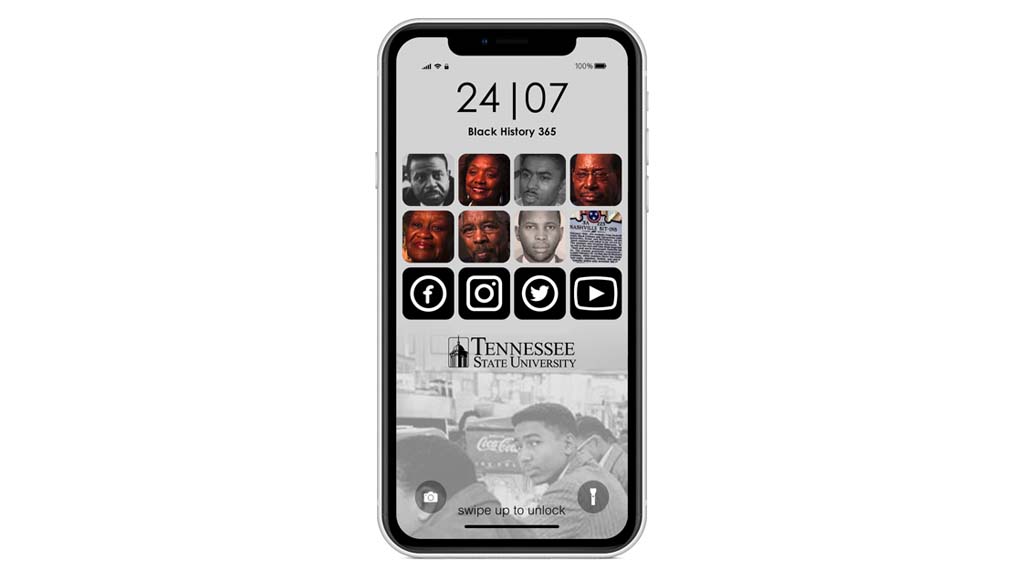
TSU professor, Apple creating app to highlight Nashville’s civil rights history

NASHVILLE, Tenn. (TSU News Service) – For more than a decade, Tennessee State University history professor Learotha Williams has worked to highlight those unsung heroes of the civil rights movement in North Nashville. Now, with the help of Apple, Inc. and TSU’s National Center for SMART Technology Innovations, Dr. Williams is creating an app to do just that, and more.

Dr. Learotha Williams

When completed, the app will guide people on a walking tour of key landmarks in the movement, including the cafeteria (now called Elliott Hall) where TSU students were recruited for activism. Along the way, people will be able to hear interviews Williams conducted with civil rights luminaries through his North Nashville Heritage Project, which collects historical information about that part of the city.

“I want to highlight some voices I feel have been marginalized,” says Williams, who is often sought nationally for his historical perspective. “I feel that we don’t get the credit we deserve in terms of the Nashville movement. I will be sharing things that may have been overlooked, or people just didn’t talk about.”

Jasmine Sears, a junior history major from Atlanta with a concentration in teaching, is assisting Williams with historical research for the app. She says she’s excited about the reach the device will provide.

“I think it will serve as a good educational tool for people who can’t sit in the classroom and learn about Nashville and its impact in the civil rights movement,” says Sears. “More people will have access to this information.”

Johnathan Glover, another history major from Atlanta, is also helping Williams with research for the app.

Jasmine Sears

“An app like this is important because not many people know the history of this community around TSU,” says Glover, who is minoring in geography. “And, point blank, people should know their history.”

John Lewis, James Lawson, Bernard Lafayette, and Diane Nash are well known names in the civil rights movement in Nashville. But there are others, like TSU alums Gloria McKissack, Elizabeth McClain, Ernest “Rip” Patton, and Kwame Lillard, who don’t receive the attention they deserve.

“If you can imagine being in a church that’s full of people fired up for the civil rights movement, I want to talk to the people on the back pew,” adds Williams. “The people whose presence was necessary, but oftentimes overlooked.”

Dr. Robin Blackman is senior program executive director for the HBCU C2 Initiative, which is part of the National Center for SMART Technology Innovations. She says the idea of the app stemmed from a conversation she had with Williams about his North Nashville Heritage Project.

“As we talked, I realized it was a great idea for the creation of an app by the Tennessee State University Inaugural HBCU C2 App Development Team,” says Blackman.

The team is a component of the HBCU C2 Grant Initiative, which is a partnership between TSU and Apple. TSU serves as the HBCU C2 national hub for training educators and preparing students by providing multiple pathways and opportunities to acquire essential digital literacies and technological skills of coding and creativity

Johnathan Glover

“The selection of the app was easy, given the mutual interest in history surrounding Tennessee State University and the focus of the research to highlight the impact of African American students, people, businesses, and the North Nashville Community on the struggle for civil rights,” says Blackman. “The app will provide a contemporary virtual, historical portrait of the significance and roles of the actors that influenced the life we currently live.”

Marc Aupont, an iOS Engineer with HBCU C2, is leading development of the app, and says he’s looking forward to “celebrating the rich history of North Nashville.”

“If we do our job correctly, we will inform, as well as celebrate, those folks that people may have not known before,” says Aupont. “And give North Nashville their due props.”

Dr. Robbie Melton, vice president of the SMART Technology Center and principal investigator for HBCU C2, says she plans to welcome 12 new historically black colleges and universities to the initiative in general.

“Our goal is to expand HBCU C2 to all our 106 HBCU Institutions,” says Melton. “This initiative is not just about coding, but empowering our HBCUs with the knowledge of digital literacy and technological skills required for today’s digital workplace and for tomorrow’s future technology innovations.”

The app is expected to be completed by May of this year.

To learn more about TSU’s National Center for SMART Technology Innovations, visit https://www.tnstate.edu/hbcuc2/index.html.

For more about the North Nashville Heritage Project, visit https://www.tnstate.edu/nnhp/.

Note: Featured graphic created by Donn Jobe in TSU’s Creative Services

Department of Media Relations

Tennessee State University
3500 John Merritt Boulevard
Nashville, Tennessee 37209
615.963.5331

About Tennessee State University

Founded in 1912, Tennessee State University is Nashville’s only public university, and is a  premier, historically black university and land-grant institution offering 39 bachelor’s degree programs, 24 master’s degree programs, and eight doctoral degrees.  TSU is a comprehensive research intensive institution with a R-2 Carnegie designation, and has a graduate school on its downtown Avon Williams Campus, along with the Otis Floyd Nursery Research Center in McMinnville, Tennessee.  With a commitment to excellence, Tennessee State University provides students  with a quality education in a nurturing and innovative environment that prepares them as alumni to be global leaders in every facet of society. Visit the University online at tnstate.edu.

U.S. Secretary of Education applauds TSU for efforts to bridge teacher shortage during visit

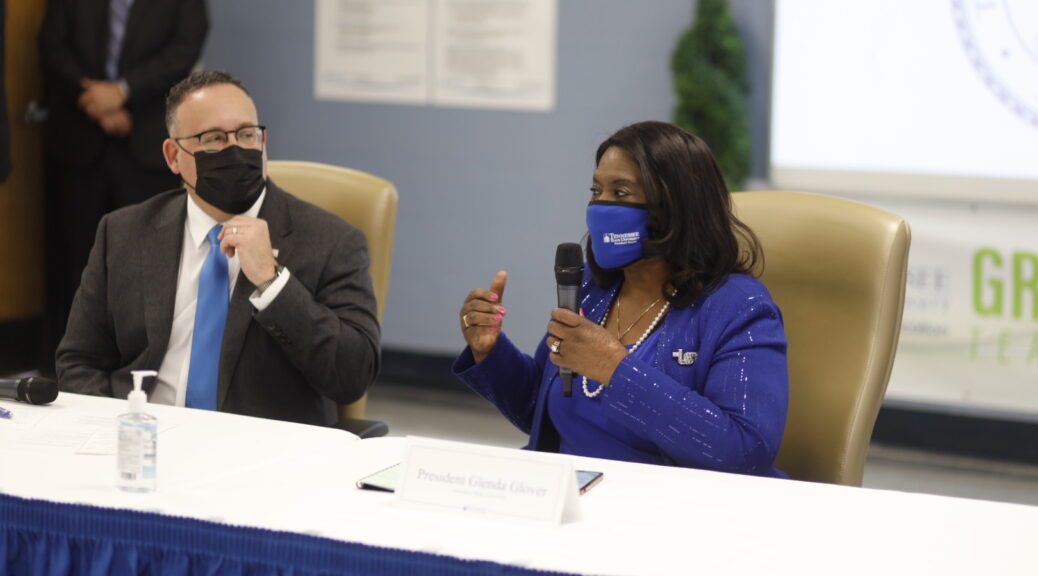
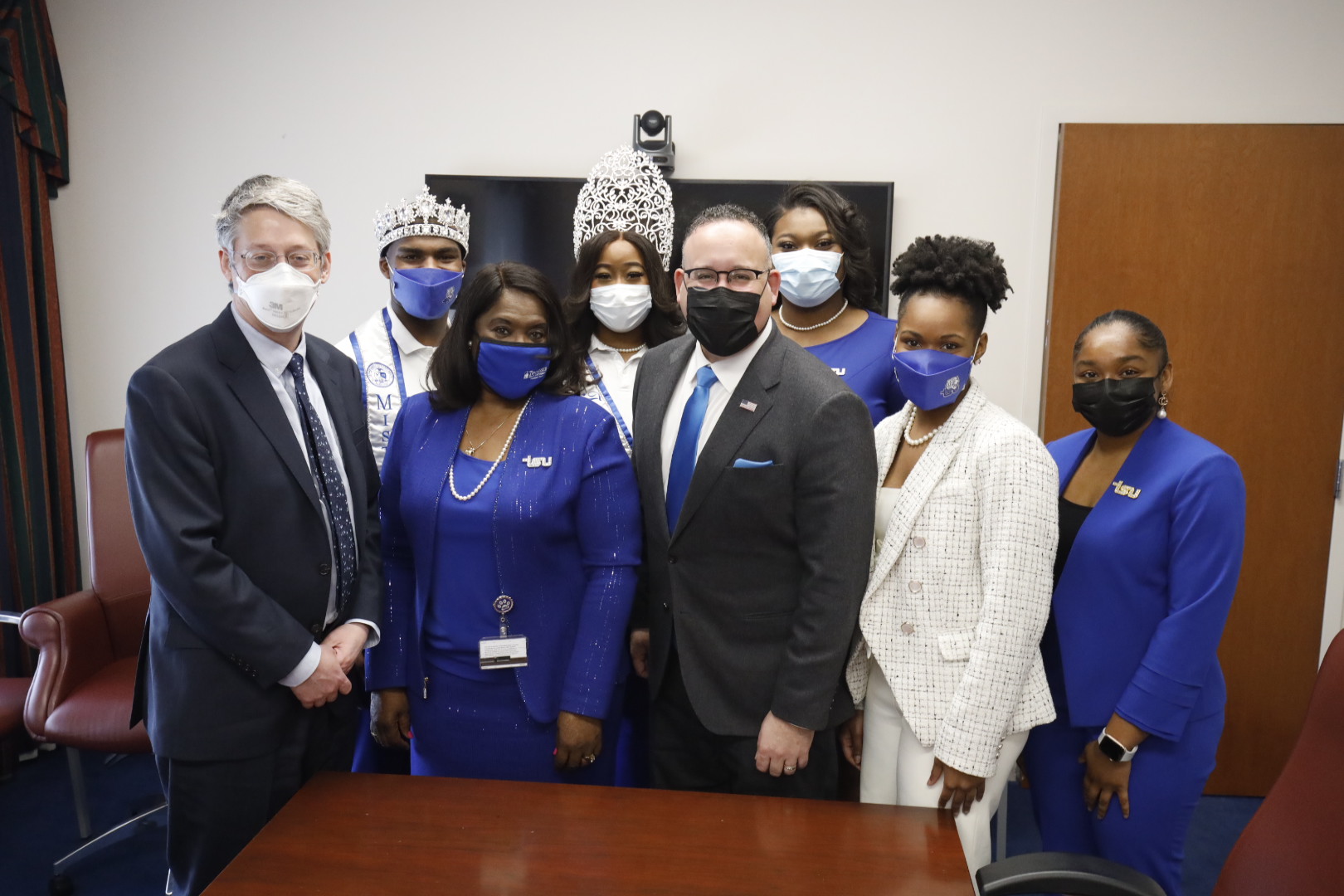
NASHVILLE, Tenn. (TSU News Service) – U.S. Secretary of Education, Dr. Miguel Cardona, hosted a roundtable discussion at Tennessee State University on Friday, Feb. 18, to address teacher shortages and other educational needs. The highlight of the conversation was TSU’s Grow Your Own teacher pipeline initiative in the College of Education. TSU is the number one HBCU for producing teachers and a top institution in the field across the nation. 

TSU President Glenda Glover (2nd from left in front) with U.S. Under Education Secretary James Kvaal (left) and U.S. Secretary of Education Miguel Cardona with student leadership. (photo by Aaron Grayson, TSU Media Relations)

TSU graduate and undergraduate students from the Grow Your Own program, faculty and local educational leaders participated in the dialog that allowed them to talk openly about issues impacting their lives and work environment, including diversity and the pandemic.

“This has been so amazing to have the Secretary of Education visit the campus of TSU and have such engaging discussions with our faculty and students,” said TSU President Glenda Glover. “TSU has a proud legacy of producing quality teachers who are committed to the profession and for providing them the tools to succeed, ultimately resulting in student success. We are glad to share the success and impact of our Grow Your Own program with Secretary Cardona and look forward to his next visit.”

Dr. Jerri Haynes, dean of the College of Education, speaks during roundtable discussion. (photo by Aaron Grayson)

“I’m really proud of what I see here,” Cardona told reporters after the event. “We want to see more of this across the country. We know that with the American Rescue Plan funds, and what we’re pushing with Build Back Better, there’s going to be more support for this. It takes seeing programs like this to keep us pushing really hard because we know they work.”

Cardona said TSU is “not only a place where you’re going to see great programs … but you’re going to see an environment that’s welcoming and nurturing to all students.”

Currently, TSU has more than 50 participants in its GYO programs. Tanisha Morrow, a paraprofessional at a local Nashville high school, is among them, and she’s thankful. 

“This is paving the way for me to obtain a master’s degree in special education, and also allows me to get an endorsement in ESL,” said Morrow, who participated in the roundtable. “But more than anything, I’ll be able to better serve kids in our community. That’s important to me because our classrooms are so diverse. I need to be able to reach all learners.”

GYO participant Tanisha Morrow address roundtable. (photo by Aaron Grayson)

Education officials say initiatives like GYO are necessary to address teacher shortages, which have been exacerbated by the coronavirus pandemic. According to the Bureau of Labor Statistics, the number of education job openings overall surged by nearly 75 percent this fall compared to the same period last year. And teacher shortages, in particular, are expected to linger when the pandemic wanes, experts say. 

However, TSU and its Grow Your Own initiative is doing its part to make sure school districts are supplied with enough qualified teachers, said Dr. Jerri Haynes, dean of TSU’s College of Education.

“Some schools are starting without teachers, some have interim subs,” said Haynes, who was part of the roundtable. “So, we want to make sure that all students get a fair chance at the beginning of school with a highly qualified teacher in their classroom.”

Junior Tre’veon Hayes, an elementary school major from Memphis, Tennessee, said the visit by the Education Secretary and what he heard about programs like Grow Your Own, were motivational.

TSU junior Tre’veon Hayes, an elementary school major, talks to reporters following the event. (photo by Aaron Grayson)

“I like where we’re heading with the education vision,” said Hayes, a roundtable participant. “I believe we have a strong plan to really encourage more students to get involved in education.”

Dr. Adrienne Battle, director of Metro Nashville Public Schools and a TSU alumna, was also part of the roundtable, and she too, liked what she heard.

“It takes these types of conversations to make things happen,” said Battle. “I commend all of you for what you do.”

U.S. Under Secretary of Education James Kvaal was also a part of the visit to TSU. To learn more about TSU’s College of Education, visit https://www.tnstate.edu/coe/.

For more information about the state’s Grow Your Own initiative, visit https://bit.ly/36oIgKN.

Department of Media Relations

Tennessee State University
3500 John Merritt Boulevard
Nashville, Tennessee 37209
615.963.5331

About Tennessee State University

Founded in 1912, Tennessee State University is Nashville’s only public university, and is a  premier, historically black university and land-grant institution offering 39 bachelor’s degree programs, 24 master’s degree programs, and eight doctoral degrees.  TSU is a comprehensive research intensive institution with a R-2 Carnegie designation, and has a graduate school on its downtown Avon Williams Campus, along with the Otis Floyd Nursery Research Center in McMinnville, Tennessee.  With a commitment to excellence, Tennessee State University provides students  with a quality education in a nurturing and innovative environment that prepares them as alumni to be global leaders in every facet of society. Visit the University online at tnstate.edu.

TSU President Glover pleased with progress of new residence hall set to open in the fall  

NASHVILLE, Tenn. (TSU News Service) – Tennessee State University President Glenda Glover says she is very pleased with the pace of construction of the new 700-bed ultra-modern residence hall that is scheduled to open in the fall.    

The new residence hall is situated between Eppse Hall and the Performing Arts Center on the main campus. (Photo by Aaron Grayson, TSU Media Relations)

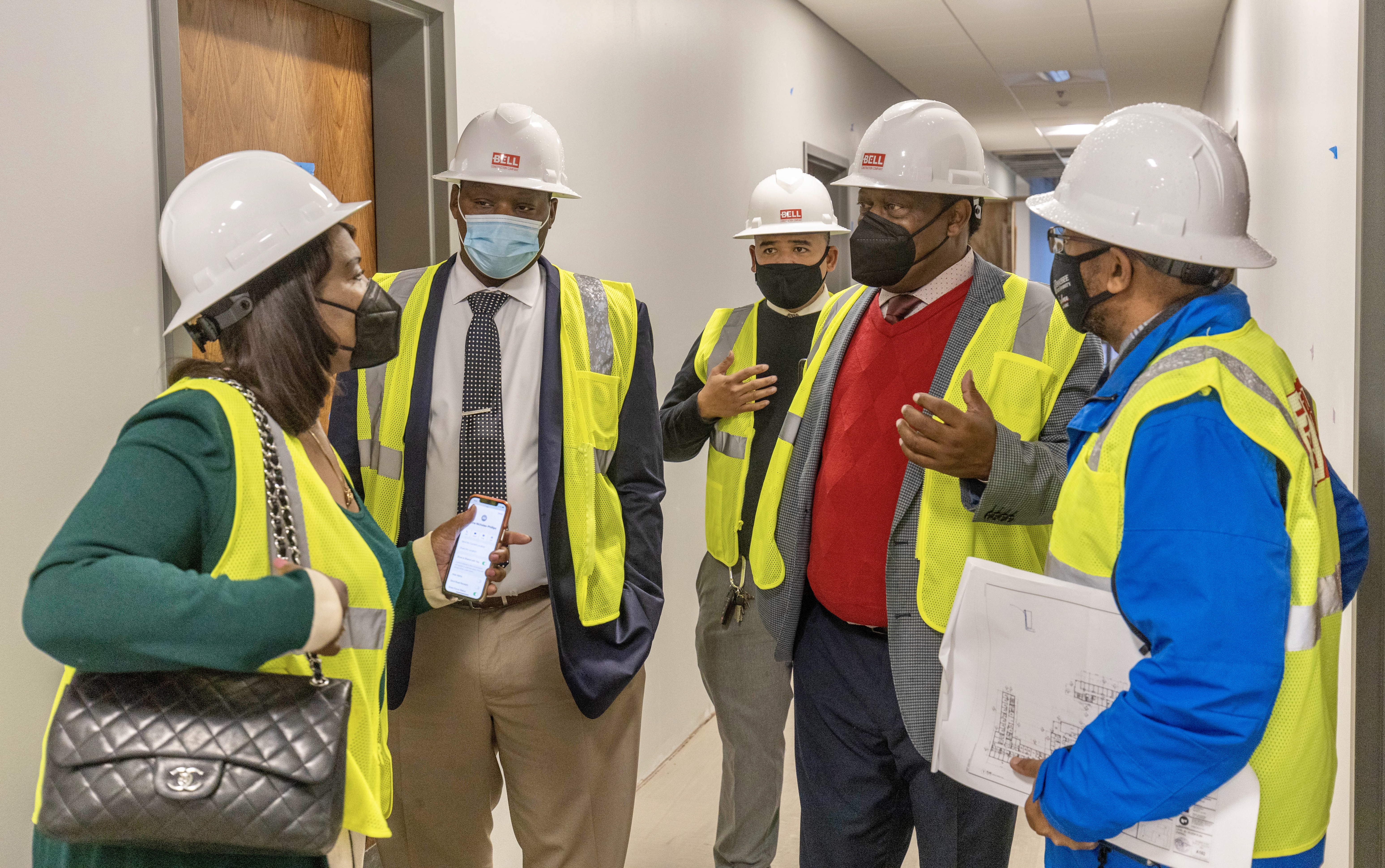
 The president toured the massive facility on the main campus on Feb. 3, accompanied by the project management team and senior administrative staff. She said not only is the project ahead of schedule, but she is also impressed by the cutting-edge technology and the types of amenities students will enjoy in the building.    

  “This is an exciting time for Tennessee State University and for our students coming in the fall,” Glover said. ‘They will be coming to a facility that is student centered, academically centered, and socially centered. It is just what the students need to study and excel. So, I am very appreciative of what I see today.”    

A rendering of one of the students’ recreation areas in the new residence hall. (Submitted)

 TSU officials have said the new residence hall, estimated at $75.3 million, and the first new residence hall on the campus in nearly 25 years, is indicative of TSU’s growth and desire to create a better living and learning environment for students. It will house lower and upperclassmen in a mixed living community that offers multiple upscale living, dining, recreational and leisure concepts.    

 “I think that this new addition is really good for the campus,” said Travion Crutcher, a senior mechanical engineering major from Huntsville, Alabama, who is a student ambassador. “That will help a lot with recruitment, and when we are talking to students about coming to TSU.” 

 Aaliyah Doss, a sophomore agricultural sciences major from Chicago, agreed.     

President Glover receives a briefing on the new construction during a tour of the facility. From left are: Dr. Glover; Associate Vice President for Student Affairs Frank Stevenson; Executive Director of Student Housing and Residence Life Brent Dukhie; Associate Vice President and Chief of Staff, Dr. Curtis Johnson; and Chief Project Manager George Herring. (Photo by Aaron Grayson, TSU Media Relations)

“I lived in Epps Hall my freshman year and now in Rudolph Hall. They are not bad, but they are outdated,” said Doss. “This new building will definitely give the campus a great look and make lots of students want to come to TSU.”     

Dr. Curtis Johnson, chief of staff and associate vice president; Frank Stevenson, associate vice president for student affairs; George Herring, chief project manager; and Brent Dukhie, executive director of student housing and residence life, accompanied Dr. Glover on the recent tour.    

“We are excited that we are on schedule to get this facility opened and able to accommodate the students in ways that we have not been able to do in the past,” Johnson said. “This particular facility is designed to be a city or community for the students. The intent is for the students to be able to do almost everything they need to do without having to go across campus.”     

Stevenson, who is also dean of students, lauded the progress of the project as well. “We started this five years ago by adding it to the campus strategic plan, and our partners on this have been amazing in working diligently to make sure we meet our target date,” he said. “We are excited about that, and what this space will mean for students as they experience campus life here at TSU.”  

As for living arrangements, the new residence hall has a variety of room types for students and employees. Among them, four-bedroom suites with bathrooms, common areas, kitchenettes, as well as doubles, and pods with community bathrooms that are shared with select groups of individuals.    

“The new residence facility is a mixture of spaces,” Johnson said. “When we initiated this project, one of the things we looked at was living spaces for traditional students and the non-traditional students. That brought us to the next question for our team to strategize around: How do you accommodate all those different groups? We also looked at being able to include space for camps and different programs should the need arise. So, having the building configured in a manner to accommodate those particular aspects was also important.”     

Kathryn Crockett, district manager of Aramark, the food services provider, disclosed during an earlier tour that dining in the new building will include brands such as Firehouse Subs, Twisters Tacos, Bojangles, Bento Sushi, and Noodle Rice Bowl. Chick-fil-A, Pizza Hut, and Starbucks are currently on campus.     

 “We are thrilled to be here at TSU. We really enjoy taking care of this campus community and serving the students, faculty, and staff,” said Crockett. “We are really looking to round out our footprint here and continue the evolution of dining services on campus.”     

  Johnson added that existing concepts will be upgraded and modified to blend in with the new offerings.

Department of Media Relations

Tennessee State University
3500 John Merritt Boulevard
Nashville, Tennessee 37209
615.963.5331

About Tennessee State University

Founded in 1912, Tennessee State University is Nashville’s only public university, and is a  premier, historically black university and land-grant institution offering 39 bachelor’s degree programs, 24 master’s degree programs, and eight doctoral degrees.  TSU is a comprehensive research intensive institution with a R-2 Carnegie designation, and has a graduate school on its downtown Avon Williams Campus, along with the Otis Floyd Nursery Research Center in McMinnville, Tennessee.  With a commitment to excellence, Tennessee State University provides students  with a quality education in a nurturing and innovative environment that prepares them as alumni to be global leaders in every facet of society. Visit the University online at tnstate.edu.

Black History: TSU’s Wendelyn Inman recounts family’s traumatic experience in the ‘Tuskegee Experiment’

NASHVILLE, Tenn. (TSU News Service) – It’s been nearly 50 years since the “Tuskegee Experiment” ended, but Wendelyn Inman is constantly haunted by the thought of what it did to her “Uncle Gus.” 

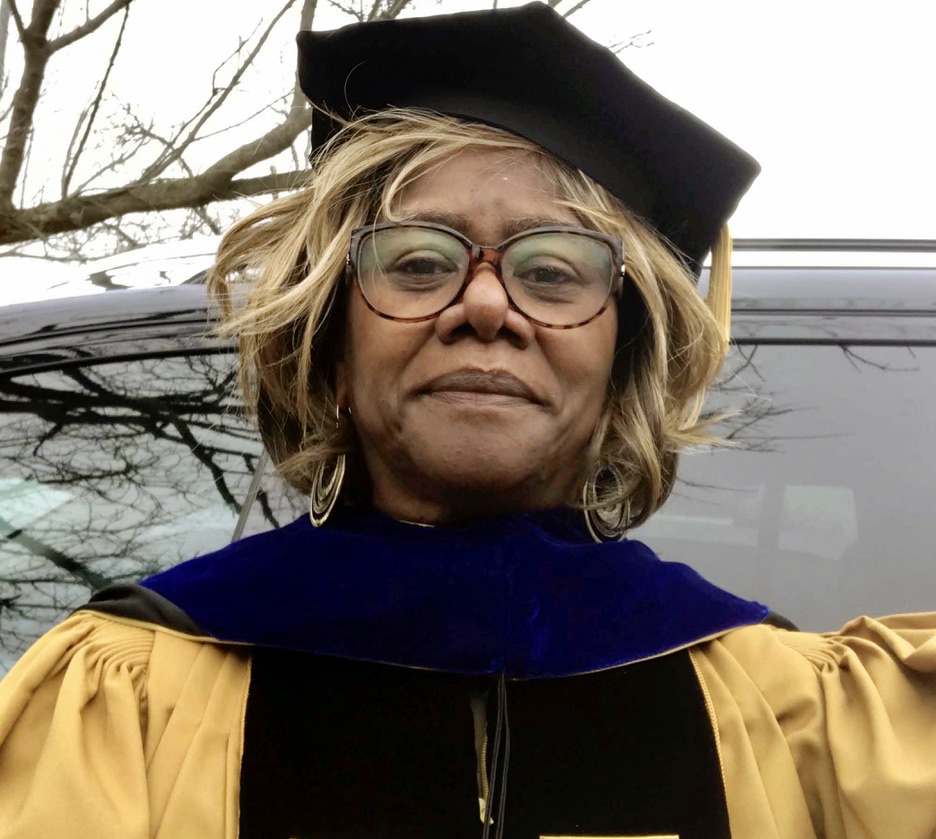
Wendelyn Harris Inman on receiving her Ph.D. from Vanderbilt Graduate School of Medicine (Submitted Photo)

“He was in that study and didn’t realize it was a study,” says Inman, sobbing, as she recounts her family’s trauma that resulted from the study, arguably the most infamous biomedical research study in U.S. history. 

“They gave him syphilis and he didn’t realize he had been given syphilis,” adds Dr. Inman, a professor and director of the public health programs in the College of Health Professions at Tennessee State University.

In the study, conducted between 1932 and 1972 by the U.S. Public Health Service and the Centers for Disease Control and Prevention, investigators enrolled a total of 600 impoverished African American sharecroppers from Macon County, Alabama. Of these men, including Inman’s uncle, Augustus Reynolds (Uncle Gus), 399 had latent syphilis, with a control group of 201 men who were not infected.  

Milton Reynolds, Inman’s grandfather, was the younger brother of Augustus Reynolds or “Uncle Gus.” (Submitted Photo)

As an incentive for participation in the study, the men were promised free medical care, but were deceived by the PHS, which never informed them of their syphilis diagnosis and provided disguised placebos, ineffective methods, and diagnostic procedures as treatment for “bad blood.” More than 100 died as a result. 

Inman, now a microbiologist and a nationally recognized infectious disease control expert, says as result of the study, her uncle contracted syphilis and eventually went blind. By the end of the study, Inman’s family, including her grandparents, had left Alabama, and moved to Sandusky, Ohio, where she grew up. Reynolds’ wife divorced him because of his syphilis diagnosis, accusing him of being unfaithful. Blind and no one to care for him, he moved to Ohio and stayed with his siblings.  

“He was blind, and I remember my siblings leading Uncle Gus out of the house to sit with us under the tree in the summer and having to lead him to go to church and things like that,” Inman recalls. “He died from it. That’s what I remember.” 

Inman says she became interested in medicine and public health to “help my people better understand and avoid the mistakes” of the past. 

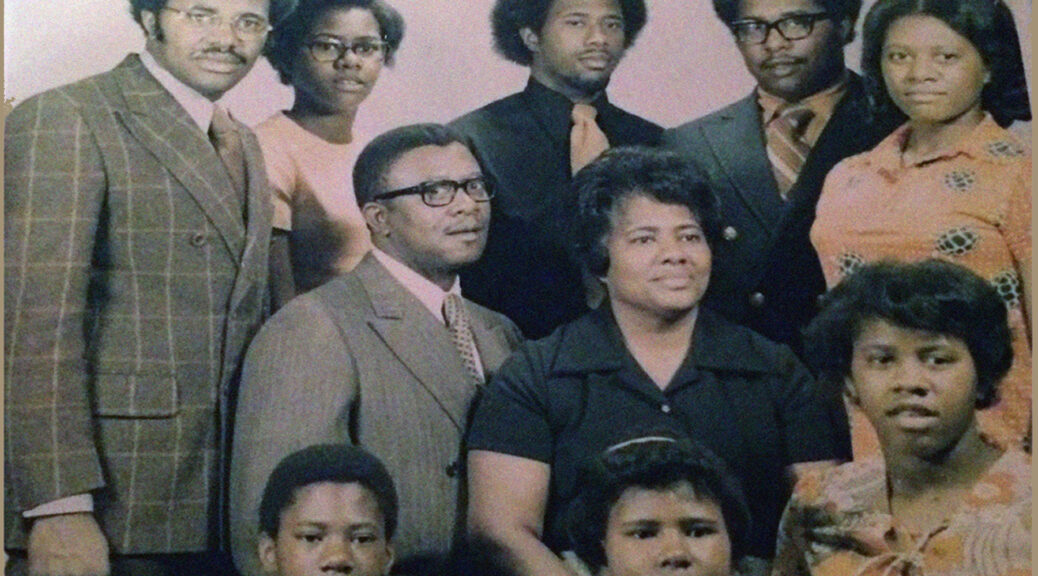
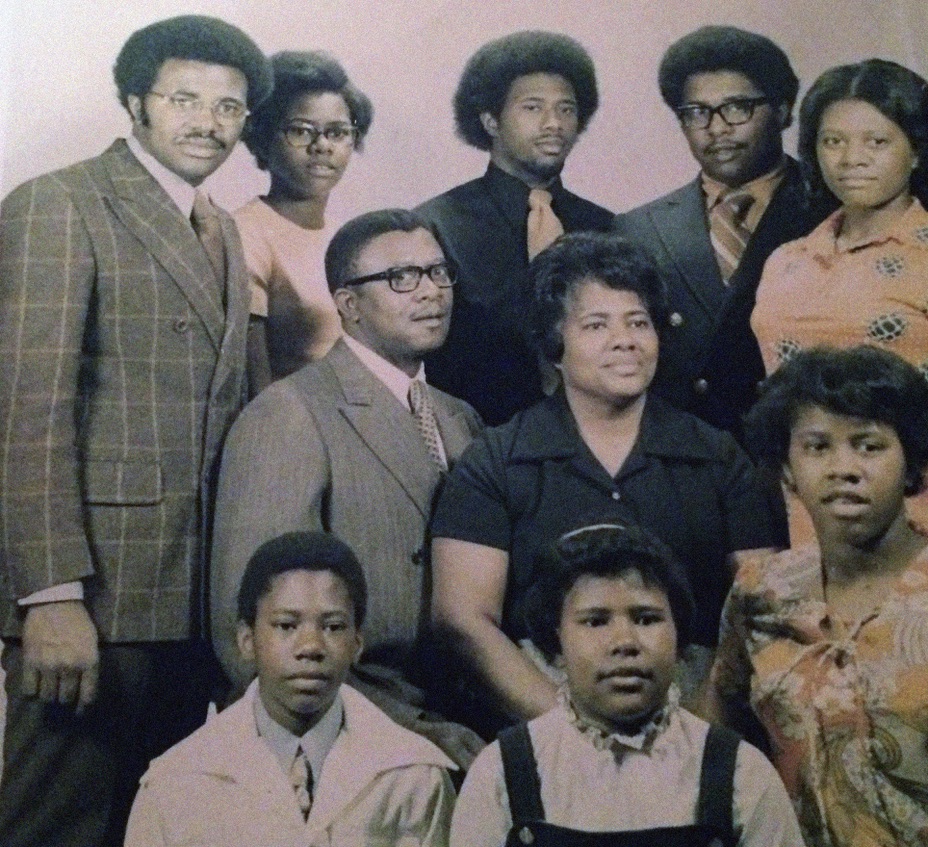
Inman is from a family of eight brothers and sisters, with accomplishments in medicine, law, military service and education. Back row, from left: Donald Harris, Inman, Anthony Harris, Howard Harris, and Helen Harris Abrams. Middle row: Howard Harris, Sr., father, a Ada Reynolds Harris, mother. Front row: Lt. Col. Steven Harris, Adrianne Harris, and Gaye Harris Miles. (Submitted Photo)

“When he (Uncle Gus) was going through this, I was a very young child,” says Inman. 

“So, I heard a lot of things about what my parents talked about. It did motivate me for a research career that I chose. What did my Uncle Gus die from? An infectious disease. So, I am on my path to helping my people be better, because now, I have a complete understanding of how a microbe works,” adds Inman. And she does! 

When COVID-19 hit the United States followed by widespread vaccine hesitancy, especially among black people, Inman was among those public health experts encouraging her fellow African Americans to take the available drug against the disease. The Tuskegee Study is often cited as one of the reasons African Americans do not trust the vaccine. Efforts to increase vaccination rates among African Americans often focus on misconceptions surrounding the study as a result. 

“This is no time for hesitancy,” says Inman. “The vaccines work.”

At TSU, in particular, Inman has helped in the effort to get employees and students vaccinated. Currently, close to 80 percent of the university’s full-time faculty and staff have received vaccinations, as well as hundreds of students.

Looking back at what happened to “Uncle Gus,” Inman has good reason to be optimistic about the vaccines. After all, she is a professor of public health, been an advisor on several national initiatives in that area, and previously served as the chief of epidemiology for the State of Tennessee. 

“There is great advancement in medicine today,” she says. “When you look at science, there are so many benefits that outweigh the negatives, and there is access. If they (Uncle Gus and others) had equal access to healthcare, they could have gone to another doctor, but they didn’t have access to other healthcare and they knew it. So, they (U.S. government) enticed them by offering them healthcare while they were destroying their health.” 

On May 16, 1997, President Bill Clinton formally apologized on behalf of the United States to victims of the Tuskegee study, calling it shameful and racist.

Department of Media Relations

Tennessee State University
3500 John Merritt Boulevard
Nashville, Tennessee 37209
615.963.5331

About Tennessee State University

Founded in 1912, Tennessee State University is Nashville’s only public university, and is a  premier, historically black university and land-grant institution offering 39 bachelor’s degree programs, 24 master’s degree programs, and eight doctoral degrees.  TSU is a comprehensive research intensive institution with a R-2 Carnegie designation, and has a graduate school on its downtown Avon Williams Campus, along with the Otis Floyd Nursery Research Center in McMinnville, Tennessee.  With a commitment to excellence, Tennessee State University provides students  with a quality education in a nurturing and innovative environment that prepares them as alumni to be global leaders in every facet of society. Visit the University online at tnstate.edu.

TSU economist says inflation is here for the long haul

Nashville, Tenn. (TSU News Service) – A Tennessee State University economist says inflation is not going away anytime soon and is poised to be the top economic challenge this year.

Dr. Achintya Ray

Since December 2021, the inflation rate rose to 7 percent, the highest in 40 years. A stronger consumer demand, continuing supply chain issues, and the emergence of the coronavirus omicron variant, continue to plague the economy, making it increasingly tough for working-class citizens to make ends meet.

Recently, U.S. President Joe Biden held a meeting with White House officials to discuss the administration’s plan for combating rising prices as inflation continues to surge throughout the U.S. He talked about steps the administration has taken to increase consumer choice and scrutinize what he called “mega mergers” that reduce competition. 

“The inflationary situation is extremely worrisome,” says Dr. Achintya Ray, an economics professor in the College of Business at Tennessee State University. “Furthermore, the inflationary pressures are likely to be here for a considerable period of time unless an intervening market crash or recession brings about deflationary pressures.”

In July, the president signed an executive order aimed at increasing competition by cracking down on larger firms in industries that the administration sees as too “consolidated.”

Dr. Ray says there is no reason to panic but the American people should be very cautious about what lies ahead.

“Rising inflation, rising public debt, declining employment to population ratio, declining consumer sentiment, unsustainably low tax base, steep increase in inflation causing money supply, rapid decline in blue chip stocks, worrisome unsustainable increase in house prices, all point to enhanced probabilities of a recession,” says Ray.

Here are some figures Dr. Ray cited on the state of the economy:

  • The producer price index has increased nearly 21 percent between January 2020 and December 2021.
  • Public debt in America is now about 23 percent bigger than the country’s gross domestic product (GDP), which is the total monetary or market value of all the finished goods and services produced within a country’s borders in a specific time period.
  • The American tax base may be reaching a breaking point, with more than 100 million U.S. households, or 61 percent of all taxpayers, paying no federal income taxes last year.
  • Median house prices have increased by nearly 26 percent between March 2020 and November 2021. Such a steep increase may be unsustainable over the long run. Discussions about a 2008-09 style housing market crash are increasing.

To learn more about TSU’s College of Business, visit https://www.tnstate.edu/business/.

Department of Media Relations

Tennessee State University
3500 John Merritt Boulevard
Nashville, Tennessee 37209
615.963.5331

About Tennessee State University

Founded in 1912, Tennessee State University is Nashville’s only public university, and is a  premier, historically black university and land-grant institution offering 39 bachelor’s degree programs, 24 master’s degree programs, and eight doctoral degrees.  TSU is a comprehensive research intensive institution with a R-2 Carnegie designation, and has a graduate school on its downtown Avon Williams Campus, along with the Otis Floyd Nursery Research Center in McMinnville, Tennessee.  With a commitment to excellence, Tennessee State University provides students  with a quality education in a nurturing and innovative environment that prepares them as alumni to be global leaders in every facet of society. Visit the University online at tnstate.edu.

TSU a priority for TN lawmakers, as Gov. Lee proposes funding in State of the State Address

By Kelli Sharpe

NASHVILLE, Tenn. (TSU News Service) – Governor Bill Lee presented a budget proposal that would enhance the growth and development of Tennessee State University during his State of the State address on Jan. 31.

TSU President Glenda Glover

The Governor is proposing that the University receive $60 million for a new engineering building, and $250 million for strategic initiatives. This would include infrastructure improvements, repairs, renovations of multiple buildings, as well as planning, design, and out year construction. It also includes a new library and new food science building. Another $8 million is included for building maintenance. This is the largest funding recommendation in the University’s 110-year history. It will be up to lawmakers to deliver on Lee’s budget recommendation.  

“We are pleased that Governor Bill Lee made Tennessee State University a priority in his budget,” says TSU President Glenda Glover. “Governor Lee has taken a crucial step in highlighting the State’s commitment to our infrastructure needs, but more importantly to our students. His budget recommendation will enhance TSU, directly benefiting our faculty, staff, students, and all Tennesseans. This is a historic moment for TSU and our legacy. I am hopeful that lawmakers will help us build upon that legacy and be a part of it.”  

Rep. Harold Love, Jr., also a TSU alumnus, agrees that Governor Lee’s proposal is important to the competitive growth of the university. “I appreciate the governor including in his budget proposal to the legislature a significant investment in the infrastructure of Tennessee State University’s campus,” says Love. “Now the work begins to keep it in the budget and get the budget passed.”  

Rep. Harold Love, Jr.

The Governor also is proposing $90 million to fully fund the outcomes-based funding formula which will benefit each of the State’s 4-year public universities.

Dr. Glover adds that the administration will bring forth a bill for lawmakers to consider that will increase the Hope Scholarship dollars to $5,100 per year for all four years at TSU. This is a much-needed increase over the current $3,500 for years one and two, and $4,500 for years three and four.

Glover is optimistic Governor Lee’s plans for TSU will come to fruition with lawmakers passing his funding bill. She and key administrators will continue working with lawmakers to try to make that happen. The legislative session could end as early as April.  

Department of Media Relations

Tennessee State University
3500 John Merritt Boulevard
Nashville, Tennessee 37209
615.963.5331

About Tennessee State University

Founded in 1912, Tennessee State University is Nashville’s only public university, and is a  premier, historically black university and land-grant institution offering 39 bachelor’s degree programs, 24 master’s degree programs, and eight doctoral degrees.  TSU is a comprehensive research intensive institution with a R-2 Carnegie designation, and has a graduate school on its downtown Avon Williams Campus, along with the Otis Floyd Nursery Research Center in McMinnville, Tennessee.  With a commitment to excellence, Tennessee State University provides students  with a quality education in a nurturing and innovative environment that prepares them as alumni to be global leaders in every facet of society. Visit the University online at tnstate.edu.

TSU students excited to return to campus despite pandemic

NASHVILLE, Tenn. (TSU News Service) -New and returning Tennessee State University students say they are glad to be back on campus despite continuing challenges posed by the pandemic. Classes began on Monday, Jan. 24, following a one-week delay due to the COVID-19 omicron variant. 

A father helps his daughter to unload her luggage at Wilson Hall. (Photo by Aaron Grayson, TSU Media Relations)

For the first two weeks of class, the university is enforcing a safer-in-place policy for students arriving on campus. The policy requires students to stay in their places of residence unless they need to perform essential activities, such as getting food, or going to medical appointments. During this time, all classes will be online. 

Even with these policies, many students are highly enthusiastic about returning to campus. Just ask senior health sciences major Tredarius Lassiter, of Atlanta.

Tredarius Lassiter

“I am very excited, and I am sure other students are as well,” says Lassiter. “Of course, safety protocols are in place but it’s been so long that we haven’t actually had a college experience. I think that’s the reason why we are so ready and anxious to get back.”

Dr. Curtis Johnson, associate vice president and chief of staff, leads the university’s COVID taskforce. He says students want to come back because the university has “gone to great lengths” to be as accommodating as possible. 

Chandler Cotton

“The safer-in-place policy allows us to create a bubble for the students in the event that they are positive (for COVID),” Johnson says.  “We are better equipped to deal with it immediately and to also conduct contact tracing to determine if others have the potential to test positive and be quarantined right away.”

Chandler Cotton, a freshman, who spent his first semester taking classes online, says he was able to interact with some classmates virtually and even join some student organizations.

“Even though my first semester was virtual, I was still able to connect with other students, join other organizations, such as the Freshman Institution,” says Cotton, a biology major from Tulsa, Oklahoma. “So, I am excited to get back to that. I first came here in my sophomore year of high school during a college tour. When I stepped on campus during that visit I felt right at home. I said right then that TSU is the place for me.”

Carla Boudal

Tasha Andrews, TSU’s executive director of new student programs, says that because many incoming freshman students missed out on starting in-person classes in the fall, the delay further fueled their excitement about being on campus.

“They are very excited to know that after all that the world has been going through, being able to come to college for the very first time, live in a residence hall, and be a part of organizations and clubs is really very exciting,” says Andrews. “It is a great time to be at Tennessee State University, and to be a Tiger.” 

Carla Boudal and Nil Moinet, now in their second year at TSU, are student athletes from France. Boudal is a junior international business major on the volleyball team, while Moinet, also a junior majoring in exercise science and kinesiology, plays tennis for the Tigers. The students say although they miss their families and friends back home, their experiences at TSU make them anxious to come back.

Nil Moinet

“I get to keep all of my classes, finish my major, and get to prepare for our next season,” says Boudal, who is from Cannes. “It’s been a tough time …missing family and friends, but coming back gives me more time to work out and practice with my teammates.”

Adds Moinet, “It might sound kind of childish, but I met some friends here that I have missed, and I get to see them again. It is a whole new experience living in the United State and coming to TSU. I just enjoy everything about it.” Moinet is from Guadeloupe, France.

Frank Stevenson, associate vice president for student affairs and dean of students, says students are going the extra mile to adhere to the university’s safety measures.

“We feel good about how we will manage this spring semester, especially as it relates to our COVID protocols,” says Stevenson. “Our students have done a great job of following rules and regulations from fall 2021 and I am hopeful it will continue.”

Excitement about campus living is expected to continue next fall when TSU opens its new 700-bed ultra-modern residence hall on the main campus. The building, estimated at $75.3 million and the first new residence hall on the campus in nearly 25 years, will house lower and upperclassmen. It is described as a mixed community living facility that will offer upscale living, dining, recreational and leisure concepts.

FEATURED PHOTO BY Aaron Grayson
A Family from Massachusetts made the overnight drive to Nashville to check their son in at Eppse Hall on the main campus.

Department of Media Relations

Tennessee State University
3500 John Merritt Boulevard
Nashville, Tennessee 37209
615.963.5331

About Tennessee State University

Founded in 1912, Tennessee State University is Nashville’s only public university, and is a  premier, historically black university and land-grant institution offering 39 bachelor’s degree programs, 24 master’s degree programs, and eight doctoral degrees.  TSU is a comprehensive research intensive institution with a R-2 Carnegie designation, and has a graduate school on its downtown Avon Williams Campus, along with the Otis Floyd Nursery Research Center in McMinnville, Tennessee.  With a commitment to excellence, Tennessee State University provides students  with a quality education in a nurturing and innovative environment that prepares them as alumni to be global leaders in every facet of society. Visit the University online at tnstate.edu.