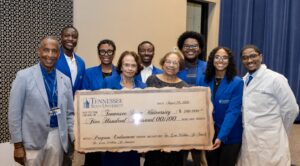
NASHVILLE, Tenn. (TSU News Service) – Tennessee State University’s College of Engineering, in collaboration with the TSU SMART AI Innovation Technology Center, has been awarded a $3 million grant from the National Science Foundation to transform undergraduate STEM education through artificial intelligence and hands-on research.

The five-year initiative, titled “Implementation Project: Integrating Artificial Intelligence and Research-Based Experiential Learning into STEM Curriculum to Enhance Education and Student Retention,” runs from 2026 to 2031. It aims to build a coordinated, stage-based engineering pathway from pre-freshman through senior year to boost math readiness, course success, and workforce preparation.
The multimillion-dollar investment directly expands career-defining opportunities and hands-on access to TSU students.
“I think this grant will give students more opportunities to get involved in research and gain experience with technology that we will use in our careers,” said Sanaiya Choute, a senior architectural engineering major from Nashville. “Having access to more hands-on research and new resources will allow us to learn outside of the classroom, build our technical skills, and work on projects that can have a real impact.”

Sophomore architectural engineering major Zaria Bryant agreed, noting the grant’s potential to reinvigorate campus life and recruitment.
“Personally, my class came in during a year of our university reconstructing our finances, which resulted in a smaller class,” Bryant said. “I feel that this will increase the opportunities, as well as increasing student engagement on campus.”
The principal investigators leading the project are Dr. Lin Li, dean of the College of Engineering; Dr. Robbie Melton, vice president for SMART Applied Technology Innovations; and Dr. Jin Yan, associate professor of STEM Education in the College of Engineering.
Li explained that the initiative integrates AI-supported tools, including diagnostic platforms, adaptive tutoring, and design simulations, alongside hands-on programs such as the Engineering Exploration Program, Extreme Winter Break Program, Rising Engineering Institute, course-embedded research, and a capstone-aligned Certificate Program in Applied Engineering Practice.
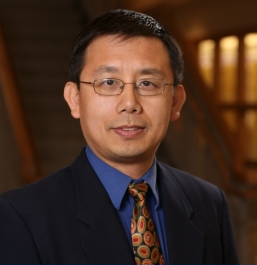
“The project is expected to serve more than 1,000 undergraduate engineering students and approximately 80 high school students annually, build long-term faculty capacity in AI-supported and culturally responsive instruction, and produce a scalable model for improving engineering retention and workforce readiness at HBCUs and beyond,” Li said.
He added that the program will actively recruit local students from Martin Luther King High School, Gallatin High School, and Republic High School to join the TSU Engineering Concept Institute (ECI) and Engineering Exploration Camp (EEC), where AI will be embedded directly into early training.
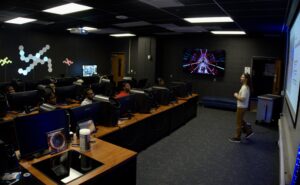
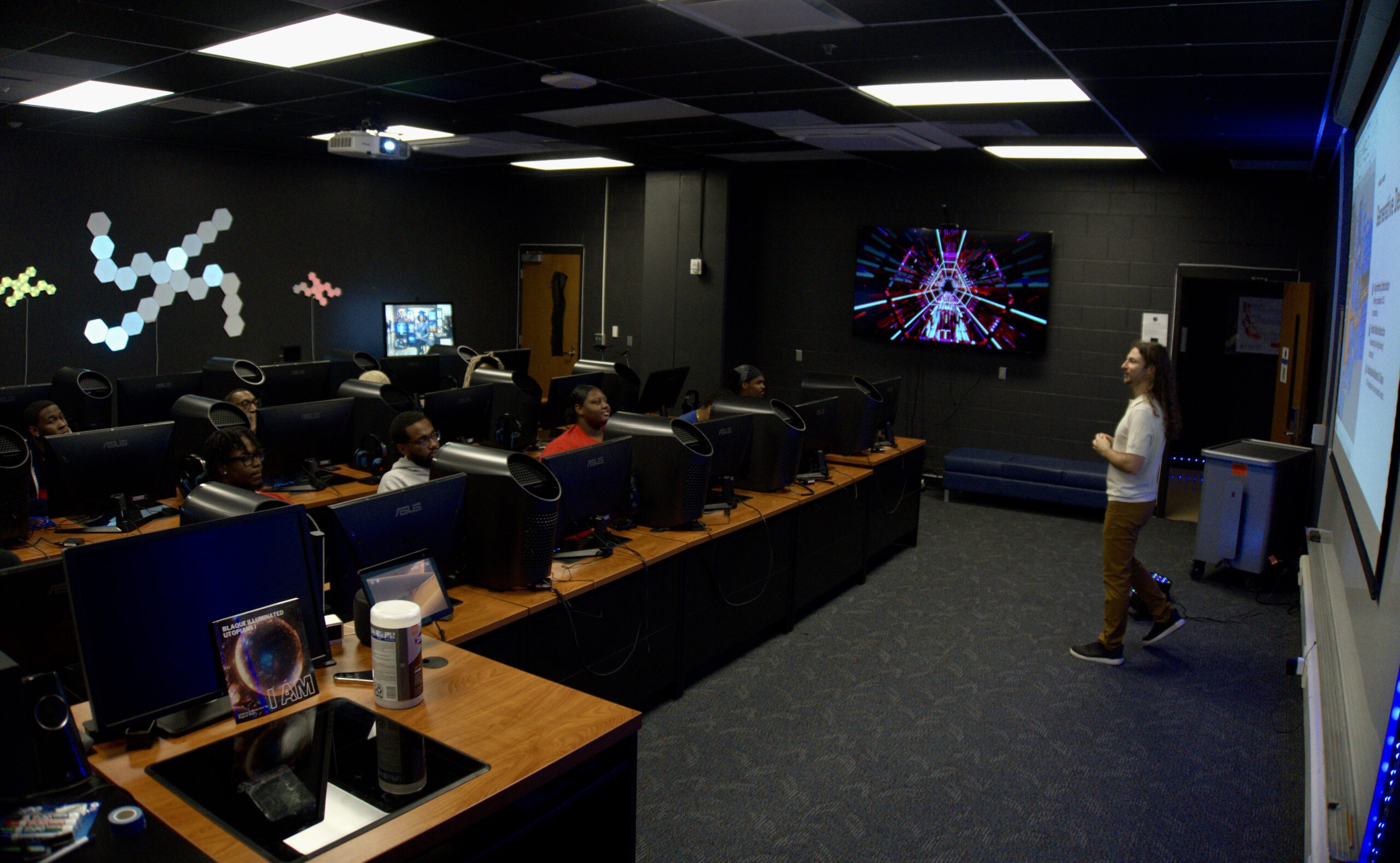
By pairing the College of Engineering with the TSU SMART AI Innovation Technology Center, the project anchors learning in real-world application.

“The collaboration anchors the NSF project in ‘AI in Action,’ immersing engineering students directly in the hands-on exploration and innovation of AI as an active, lived experience,” Melton said. “Through the Center’s labs and studios, students engage with adaptive tutoring, design simulations, robotics, and immersive technologies, actively experimenting and creating alongside AI tools.”
The project also advances broader institutional and state goals for technology leadership.
“This AI grant award further supports and strengthens our research capacity and capabilities in AI at Tennessee State University by bridging basic and applied AI,” said Dr. Quincy Quick, associate vice president of Research and Sponsored Programs. “Additionally, this project aligns with Tennessee’s statewide AI Initiative and enables TSU to contribute to the national and global competitiveness in AI.”

For Dr. Yan, she emphasized the project’s educational research impact, noting it uses a longitudinal, mixed-methods approach to study how personalized AI learning builds problem-solving skills and a sense of belonging among students.
“Findings will inform scalable, technology-enhanced engineering curricula, faculty development, and national dissemination through scholarly publications, professional conferences, and partnerships with other institutions,” Yan said.
About Tennessee State University
Founded in 1912, Tennessee State University is Nashville’s only public land-grant university offering 41 bachelor’s degrees, 15 graduate certificates, 27 master’s degrees, and nine doctoral degrees. TSU’s campus spans 500 acres. The university is committed to academic excellence, providing students with a quality education in a nurturing and innovative environment that prepares them as alumni to be global leaders. Visit tnstate.edu for more details.